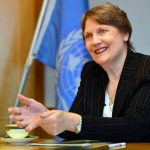
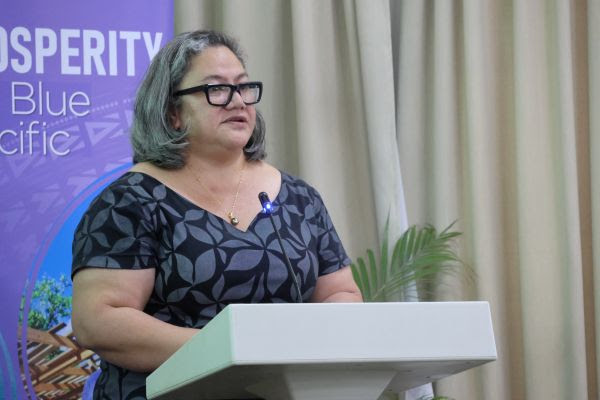
Pacific Islands Forum Deputy Secretary General Desna Solofa says the region must improve access to climate finance, warning that global commitments have not translated into funding that Pacific countries can readily access.
Opening the Climate Finance Access and Mobilisation Strategy (CFAMS) Preparatory and Prioritisation Workshop in Nadi on Wednesday, Solofa said climate change has become one of the region’s biggest development challenges.
“Climate change is no longer simply an environmental issue. For the Pacific, it is a development challenge, an economic challenge, a fiscal challenge, and ultimately, an existential challenge. It influences every aspect of our economies – from infrastructure and agriculture to health, fisheries, water security and disaster resilience,” said Solofa.
She said the scale of the challenge requires investments well beyond the fiscal capacity of Pacific Island countries.
While the international community recognises the vulnerabilities of Small Island Developing States, Solofa said access to climate finance remains a major obstacle.
“Despite growing global commitments, many Pacific countries continue to face lengthy approval processes, fragmented funding arrangements, limited institutional capacity and increasingly complex financing requirements.”
Solofa said these challenges prompted Forum Economic Ministers to endorse the Climate Finance Access and Mobilisation Strategy (CFAMS) as the region’s framework for improving climate finance access.
“CFAMS represents much more than another regional strategy. It provides a practical roadmap for improving coordination, strengthening institutional capacity, building investment-ready pipelines, expanding partnerships and ultimately increasing the scale and effectiveness of climate finance reaching our countries and communities,”
She stressed that CFAMS is intended to complement, not replace, national climate finance priorities.
“Importantly, however, let me emphasise that CFAMS is not intended to replace national priorities or national climate finance efforts.”
Instead, she said the strategy identifies common priorities across Forum Members that can be developed into regional programmes capable of attracting larger investments.
“By bringing together national priorities, we are able to tell a stronger regional story. A story that demonstrates not only the urgency of our needs, but also the scale of opportunities available to development partners, multilateral development banks, climate funds and private investors,” she said.
Solofa said the three-day workshop will validate country priorities, identify regional investment opportunities, examine financing pathways and begin preparations for the Pacific Climate Finance Investment Forum planned for 2027.
“Our objective is to leave this workshop with a clearer understanding of where our collective priorities lie, what investments are ready to progress, where additional preparation is required, and how regional collaboration can help accelerate access to finance.”
She called for stronger collaboration across governments, regional organisations and development partners.
“This requires open dialogue. It requires collaboration across ministries. It requires stronger partnerships with regional organisations and development partners. And above all, it requires that we continue working together as one Blue Pacific Continent,” she said
Solofa said the Pacific Islands Forum Secretariat remains committed to supporting members in coordinating regional action and strengthening international partnerships to improve climate finance access.