

New Zealand may become one of the first nations to join a historic defence alliance between Australia and Fiji as alarmed Pacific capitals prepare a robust response to China’s test launch of a nuclear-capable intercontinental ballistic missile from a nuclear-powered submarine.
Beijing’s first strategic missile test into the region since September 2024 – only the third time it has conducted a long-range missile test across the Pacific since 1980 – has united neighbouring countries in condemnation of China’s “provocation” and reinvigorated Australia’s regional diplomacy.
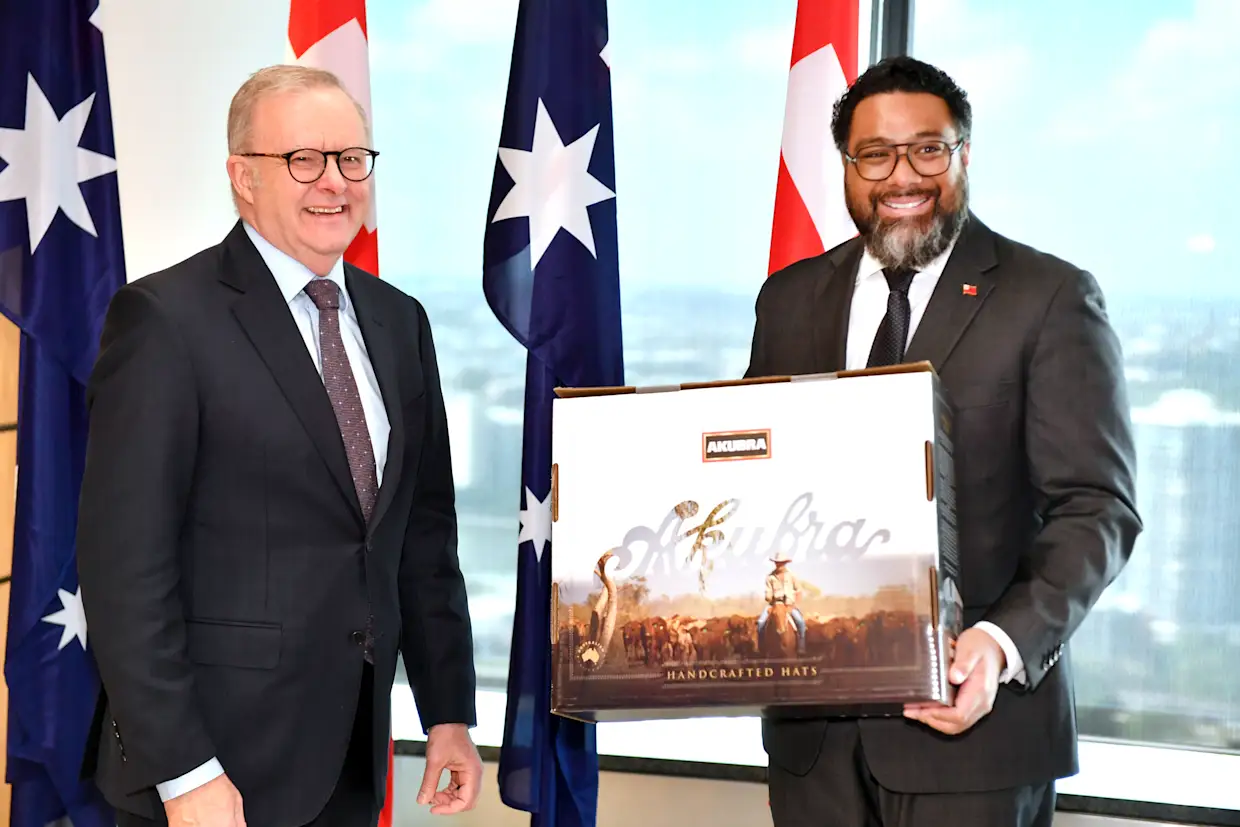
Prime Minister Anthony Albanese, who hosted the leaders of Papua New Guinea, Tonga and Samoa in Brisbane on Wednesday, said the Pacific Island Forum was negotiating a united and “strong” statement over China’s actions.
“Pacific, of course, derives from the word peace, and so it is appropriate that Pacific leaders issue a strong statement,” he said.
“The Pacific, we want to be responsible for our security. Pacific leaders coming together to provide security for our own region as members of the Pacific family.”
The firing of the missile on Monday came as Australia inked the pivotal “Ocean of Peace” military alliance with Fiji, which commits the two nations to come to each other’s aid at times of greatest need.
Australia and Fiji have indicated they would be open to other nations joining the pact. “The more, the stronger, the better,” said Fijian Prime Minister Sitiveni Rabuka.
While Tonga, as one of three Pacific Island nations with its own standing military, would be a logical future partner, officials and experts say China’s test has boosted the prospects of New Zealand coming on board first.
New Zealand Prime Minister Christopher Luxon flagged interest in joining the agreement on Monday, although he said final decisions were yet to be made by cabinet.
Asked about the new alliance, he confirmed he had spoken to both the Australian and Fijian prime ministers about it, Radio New Zealand reported.
“New Zealand being in early would be a good thing, because also you would have an ability to ultimately determine which other countries could join from across the Pacific,” he said.
On Wednesday, a spokesperson for New Zealand’s Ministry for Foreign Affairs and Trade said Wellington welcomed the commitment between two of its closest partners.
“New Zealand already shares a close bond with Fiji, and an existing military alliance with Australia. We will continue to work with both countries on realising our blue Pacific as an Ocean of Peace,” said the spokesperson.
The Ocean of Peace agreement marks a first for Fiji, but it is Australia’s fourth, building on existing alliances with the United States, New Zealand and Papua New Guinea.
It requires Fiji and Australia to consult on security threats and to “act to meet the common danger” if either is attacked, similar to a defence treaty Australia signed with Papua New Guinea last year.
The PNG pact, known as the Pukpuk Treaty, came into force on Wednesday, formalising an alliance between the Pacific neighbours that also recognises that an armed attack on either country is a threat to both nations and the security of the region.
The enactment of the treaty was a “momentous step” that reflected “deep trust,” Albanese said.
Both recent pacts bolster a step-up in Australia’s Pacific diplomacy as it forms a regional web of economic and defence deals in competition with China’s attempts to expand its own economic influence and deepen security ties.
Albanese, who was set to attend the State of Origin final with his Pacific guests on Wednesday night, said he would continue talks with the leaders of Samoa and Tonga, prime ministers La’auli Leuatea Schmidt and Fakafanua, to improve relations and engagement in a constructive way.
Pacific policy experts say China may have scored an own goal by firing a nuclear-capable missile as it also seeks to expand its soft power footprint.
Connor Graham, a research fellow in the Pacific Islands Programme at the Lowy Institute, said the test may have a “galvanising effect for the Pacific”, boosting interest in joining the Ocean of Peace alliance, and likely sparking this discussion between leaders in Brisbane.
“We’ve already got an alliance with PNG, but this would be a more region-wide security architecture,” he said.
“Rather than having the effect of deterring further cooperation with Australia, this strike may have galvanised the Pacific and certainly justified Australia’s narrative of Pacific-led security with Australia as the main partner.”
Graham said the possibility of New Zealand participating was also “on the table”, potentially paving the way for a multilateral alliance.
While questions remained about how the new pact would gel with existing defence alliances, China’s missile test had “probably pushed people more in that direction”, he said.