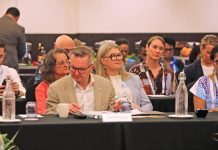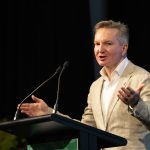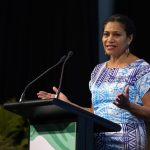
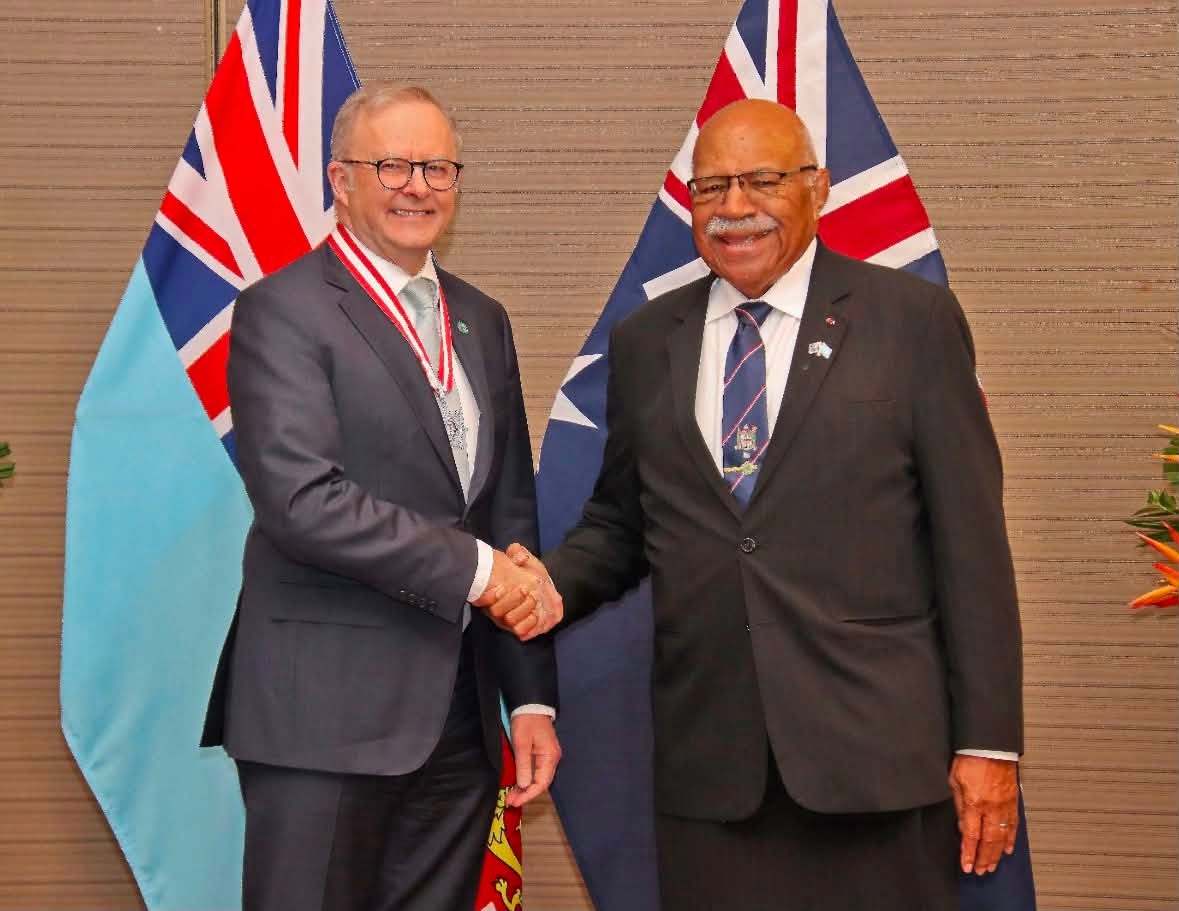
Australia and Fiji have signed two landmark treaties that elevate their bilateral relationship into a new strategic partnership, with Prime Ministers Sitiveni Rabuka and Anthony Albanese describing the agreements as historic for both countries and the wider Pacific.
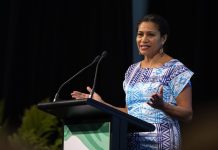
Speaking after the signing ceremony in Suva Monday, Prime Minister Rabuka said the agreements marked a defining moment in Fiji-Australia relations.
“Today represents a very defining moment in our relationship – Fiji-Australia relationship. Together as some of you witnessed, Prime Minister Albanese and I have just signed, with the President of Fiji as witnessing dignitary, he signed our treaty, the Vuvale Treaty and the Ocean of Peace Alliance, the Veitacini mutual security, brotherly or sisterly mutual security framework,” said Rabuka.
Rabuka said the agreements elevate the relationship into a new era.
“These landmark agreements mark a very significant elevation of our bilateral relationship into a new era of strategic partnership.
These instruments formalise a comprehensive and enduring framework anchored on three central pillars – deeper security cooperation, enhanced economic integration and resilience, and strengthened people to people connection.”
He acknowledged Australia’s financial commitment since the renewal of the Vuvale Partnership.
“In advancing this particular partnership we acknowledge with very deep appreciation Australia’s commitment of over FJD$280 million (US$140 million) in new investments since the renewal of the Vuvale Partnership in October of 2023. This reflects the tangible depth of our cooperation and its expanding footprint across key sectors of national development.”
Rabuka also welcomed Australia’s increased support for the Pacific.
“We also recognise Australia’s expanded development assistance to the Pacific now totalling AUD $2.2 billion (US$1.63 million), including a further increase of AUD$63 million (US$43 million). This is a clear affirmation of Australia’s sustained commitment to the stability, resilience and prosperity of the Blue Pacific region at a time of global uncertainty.”
He said the treaties respond to evolving regional challenges.
“These treaties reflect our shared understanding of the evolving and interconnected challenges that are facing our region. These include the increasing sophistication of transnational organised crime networks, illegal drug trafficking, cyber enabled threats, and emerging public health challenges including the rise of non-communicable disease and HIV in parts of our region.”
Rabuka said the agreements establish practical mechanisms for cooperation.
“Importantly, they established practical and forward looking mechanisms for cooperation to strengthen prevention, enforcement, intelligence sharing and regional resilience.”
He said the partnership also recognises the connection between economic and national security.
“Equally, this new framework recognises the inextricable, that’s an English word, link between economic security, or Australian word, and national security. It provides renewed emphasis on cooperation in areas critical to Fiji’s long term development, including circular labour mobility, transport and logistics systems, energy transition, digital transformation, cyber security and the protection of very important, even critical, infrastructure.
These are not only development priorities, they are foundational in the resilience and sovereignty of our economies in an increasingly competitive global environment,” said Rabuka.
Rabuka said the agreements are built on mutual respect and equality.
“These agreements, ladies and gentlemen of the media, are firmly grounded in the principles of mutual respect, sovereignty and equality of partnership. They reaffirm Fiji and Australia as trusted partners working together not only for bilateral benefits, but as contributors to a more stable, peaceful and resilient Blue Pacific continent,” he said.
He thanked Prime Minister Albanese for supporting Fiji’s Ocean of Peace initiative.
“In this regard I commend Prime Minister Albanese for Australia’s continued support and leadership and the leaders appeal for global peace. I thank him very much being one of the first to come up and support Fiji’s call and the Pacific call for an understanding of Pacific Ocean of peace and continuing that and spreading it on. Calling other leaders to appeal for global peace.”
Rabuka said the Pacific must continue promoting dialogue and international law.
“The Pacific must continue to assert its role as a principled voice for dialogue, diplomacy and respect for international law in an increasingly fragmented global order. But we’re hopeful, we’re still hopeful that we’ll come together.”
He said the agreements also support a rules-based international order.
“Today’s outcomes also give practical expression to our shared commitment to a rules based international order and advance the Pacific led vision of an ocean of peace. This is a vision that places the Pacific not at the periphery of global affairs, but at the centre of shaping norms of cooperation, peace and collective security.”
Rabuka also thanked Australia for supporting climate action.
“Climate change remains a defining challenge for our time. For Fiji and the wider Pacific, it’s not a futuristic but a lived and daily reality. I therefore express sincere appreciation to Prime Minister Albanese and the people of Australia and the Government of Australia for your leadership, particularly as Prime Minister, in ensuring strong Pacific participation in the COP31 process and for your support in the joint hosting of the pre-COP meeting in Nadi and Tuvalu in October of this year.
These are very important steps towards strengthening global ambition and ensuring climate justice for vulnerable states, particularly those island states of the Pacific,” said Rabuka.
He reaffirmed Fiji’s commitment to implementing the agreements.
“Prime Minister Albanese, I thank you for your leadership, your partnership and your commitment to advancing these historic agreements. Fiji remains fully committed to working with Australia to implement the Vuvale Union Treaty and the Ocean of Peace Alliance in a manner that delivers real measurable outcomes for all our peoples.
Together, we are not only strengthening bilateral ties, we are helping to shape a more peaceful, resilient and cooperative future for our region and beyond,” Rabuka stressed.
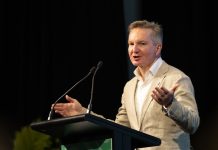
Prime Minister Albanese said the day marked a significant milestone for both countries.
“The significance of the ceremony was indeed an extraordinary honour for myself and for the Australian delegation on what was the beginning of a very significant day in our relationship and a significant day for relations in the Pacific.”
He said the treaties represent one of Australia’s most significant international agreements.
“Today, Australia and Fiji have come together as two proud sovereign nations to conclude not one, but two treaties – the Vuvale Union and the Ocean of Peace Alliance. Combined, these treaties represent one of the most significant endeavours Australia has ever undertaken in our history with any country,” said Albanese.
Albanese said the agreements reflect the close relationship between the two countries.
“They reflect our proud history of standing shoulder to shoulder to support each other and our region. We can achieve this level of ambition because we are Vuvale – family – with a relationship grounded in loyalty, in understanding and mutual respect. And in a more uncertain world, we know that we’re stronger when we stand together.”
He said the treaties answer the Pacific Islands Forum’s call to advance the Ocean of Peace vision.
“The Pacific Islands Forum called on members to act on your vision of the Ocean of Peace declaration, a declaration that you spearheaded and then saw through to fruition at the Pacific Island Forum meeting last year.
As regional leaders, we take seriously our responsibility to strengthen sovereignty, peace and stability in our region and have answered that call,” he emphasised.
Albanese said Australia was honoured to join Fiji in the initiative.
“Australia was honoured when Prime Minister Rabuka proposed the Ocean of Peace Alliance. This is Fiji’s first alliance and Australia’s fourth.”
He said the Ocean of Peace Alliance introduces a mutual defence obligation.
“The significance of this agreement cannot be underestimated for what it means for our two great nations and we are both stronger because of it. The Ocean of Peace Alliance introduces a mutual defence obligation and there’s no higher obligation than to come to each other’s aid at a time of need.”
Albanese said the Vuvale Union covers a broad range of cooperation.
“The Fiji-Australia Vuvale Union is a comprehensive treaty that sets out ambitious commitments across the breadth of our bilateral relationship. A relationship between our people first and foremost, but a relationship involving education, health, infrastructure and the full suite of security relations as well.”
He said the treaty is backed by long-term investment.
“It’s backed by investment of over $1 billion (US$690 million) over a decade and is designed to support the interests of our two countries as well as our Pacific family.”
Albanese said it commits both countries to work together on key issues.
“It commits us to combat transnational crime, to work together on health issues like HIV, to address the impact of climate change and to build the infrastructure like ports that will further connect our region.”
He acknowledged the cultural significance of the treaty.
“The Fijian people generously bestowed the word Vuvale on our union. And I also want to acknowledge the Yolngu people who have generously offered us the word bukmak for the treaty. This means ‘Everyone’ and conveys the sense of unity and collective purposes that these endeavours are all about.”
Albanese said the agreements would strengthen cooperation for decades.
“These treaties will set us up in the coming decades to tackle the major challenges that we face together, that will connect our region and bring our people and cultures closer together as well.”
He also highlighted discussions on Pacific-led regional architecture and climate talks.
“Today we also spoke about the importance of Pacific led regional architecture and the pre-COP meeting that will be held in Fiji from the 5th to 8th of October alongside a special leaders event in Tuvalu.”
Albanese described the occasion as historic.
“It is an enormous honour to be here in Fiji today with Prime Minister Rabuka on what is a historic day. It is extraordinary that we have been able as well to negotiate all of this in a discreet way and to be able to have this genuine announcement is quite extraordinary. It says something about the trust and the way that we work together that we’ve been able to do that,” he said.