

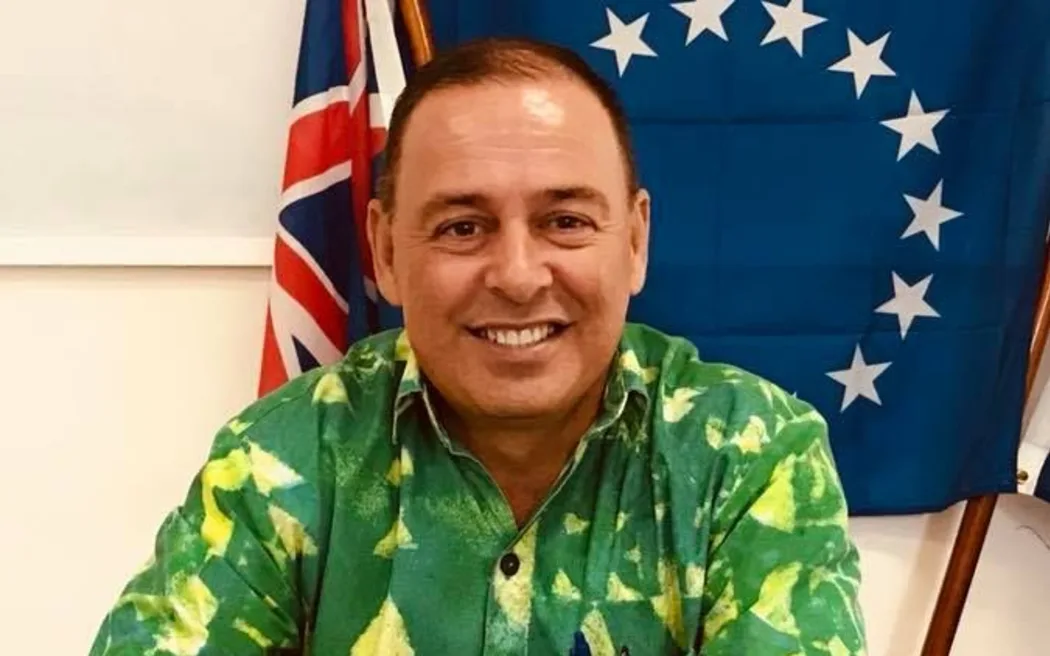
Cook Islands Prime minister Mark Brown says the country has managed to avoid a five percent Gross Domestic Product shrinkage that has not happened due to the island nation hitting record tourist numbers.
The country’s Ministry of Finance and Economic Management recently warned of the worst-case risk scenario to the country’s GDP and potential rise in inflation.
This comes amid an escalating conflict in the Middle East and subsequent disruptions to global oil supplies, such as the closure of the critical Strait of Hormuz, which drive up crude oil and diesel prices globally.
Speaking on Pacific Mornings, Prime Minister Mark Brown dismisses fears of an economic collapse.
“That was in a report and a worst-case scenario assessment. We haven’t seen any of that, despite the fact that there have been a couple of flights cancelled where New Zealand has consolidated those particular passengers,” Brown says.
“We’re still seeing growth in numbers. So, it was a scenario that was put forward, but the reality is that hasn’t occurred. In fact, we are seeing record numbers again coming through this year.”
According to the Cook Islands Visitor Economy Factsheet, the total calendar year arrivals for 2025 peaked at 187,018 visitors. This represents a 10 percent growth over the 170,525 arrivals in 2024.
Brown says they are “really happy” with their performance in regard to economics, where this year, Global agency S&P Global, upgraded the Cook Islands’ long-term international credit rating from ‘B+’ to ‘BB-‘ with a stable outlook, signalling greater confidence to international investors.
This rating acts as a financial report card that measures a government’s ability to pay back its debt and handle economic shocks.
“That’s been driven by the record tourist arrivals that we have coming into the country, and it’s continued on despite the fuel crisis issues that affected other destinations.
“We’ve been able to build in our economic resilience framework around making sure that the economy continues to grow.”
This financial turnaround is highlighted by a massive drop in national debt, with net general government debt plunging from a peak of 37.6 percent in fiscal 2022 down to 16.4 percent in fiscal 2025.
“Some restructuring that took place there. It gives us more room in the budget that we’re debating right now to be able to implement and fund new initiatives going forward. So overall, I’m really pleased with how the economy is tracking.”
With an election approaching before the end of September, Brown intends to campaign on this strong economic record.
He says a thriving economy is the only way the government can afford to fund its current budget commitments and welfare increases.
He also says that robust national performance is essential to ensure no one is left behind. To protect the country’s economic status against the very global energy shocks driving the worst-case GDP warnings, the Cook Islands is actively building bilateral fuel resilience.
“If a tanker doesn’t come in for whatever reason, we need fuel urgently. Where can we get it from? So, these are the resilience issues that we’re looking to build.
“That’s purely on a bilateral basis between us and American Sāmoa. So, we can help ourselves there. You might do something with Tahiti to the East, again, another big fuel depot is over there.
“[We’ll] see if we can reach an agreement that if we do get into trouble, can we get a small supply over here to help us out.”
Brown says individual self-reliance is essential because decades of regional discussions aimed at consolidating fuel volumes or lowering prices have historically proven difficult.