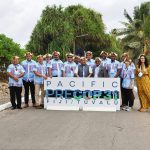
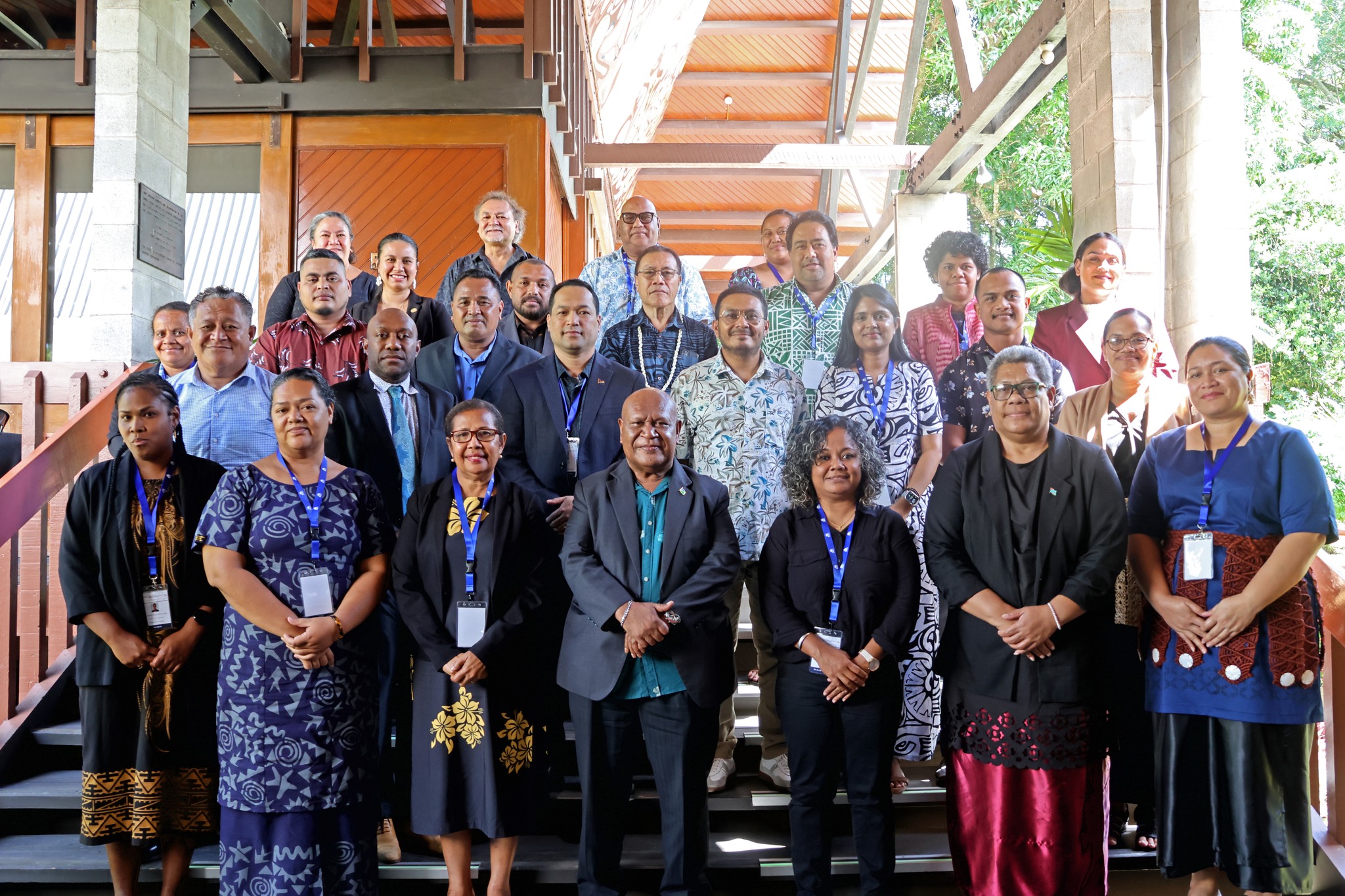
Pacific trade officials have been urged to strengthen coordination, prepare for emerging global trade challenges, and ensure that Pacific-European Union cooperation delivers practical results for member countries.
Opening the Pacific ACP Trade Officials Meeting, Chair and Joseph Ma’ahanua said the Pacific’s partnership with the European Union must move beyond transactions and become a driver of long-term economic resilience, regional integration, and sustainable development.
“In framing our discussions at the strategic level, focusing on the long-term vision that connects our work today to the prosperity and resilience of the Pacific region,” Ma’ahanua said.
Ma’ahanua said the Samoa Agreement provides a modern framework for expanding cooperation between Pacific ACP States and the European Union.
“The Samoa Agreement provides an important modern framework for deepening and broadening the Pacific’s partnership with the European Union, grounded in shared commitments to sustainable development, economic resilience, climate action, regional integration, and inclusive prosperity,” he said
Ma’ahanua said trade cooperation remains a key pillar of the relationship, supporting market access, productive capacity, trade facilitation, standards compliance and private sector development across the Pacific.
He highlighted the importance of the European Union’s Neighbourhood, Development and International Cooperation Instrument (NDICI), describing it as a critical tool for translating shared priorities into practical support.
“In this regard, the European Union’s Neighbourhood, Development and International Cooperation Instrument (NDICI) provides a critical mechanism for translating these shared priorities into practical support and implementation assistance.
Continued and enhanced cooperation under the NDICI framework will be essential to enable Pacific countries to respond to evolving global trade challenges, capitalise on opportunities under the interim Economic Partnership Agreement (iEPA), and advance the objectives of the 2050 Strategy for the Blue Pacific Continent,” he told PACP trade officials and delegates.
Ma’ahanua stressed that Pacific countries must position themselves to respond to rapidly changing geopolitical and economic conditions.
“Our partnership with the European Union cannot be merely transactional—it must be transformative.
The agenda before us reflects the Pacific’s ongoing journey towards deeper regional integration, sustainable economic growth, and enhanced global engagement,” he said
He warned that trade officials must look beyond immediate priorities and prepare for future shifts in global trade and technology.
“Amid the geopolitical developments within and outside of the region, it’s imperative that we look ahead and anticipate the needs of our region and the demands of global change through these new lenses.
During our discussions on the Pacific Trade and Sustainable Development (Pac-TSD) Programme, we must ensure that our recommendations not only address current priorities—like iEPA accession, implementation, and support for OCTs—but also anticipate future challenges.”
“We must prepare for shifting geopolitical relationships, new trade standards, and the accelerating influence of technology, particularly artificial intelligence, across our economies. Our deliberations must position the Pacific to respond proactively to these developments, safeguarding our interests and seizing emerging opportunities,” Ma’ahanua said
A major focus of the meeting, he said, should be improving coordination between regional programmes and national priorities.
“One of the critical questions that we must ask during this session is: how do we drive coherence and synergy across our regional and national priorities?”
He noted that officials would review progress under several major initiatives, including the Pacific Trade and Sustainable Development Programme, the SPIRIT Project, SAFE Pacific, and discussions on a possible Pacific-UAE Comprehensive Economic Partnership Agreement.
“The meeting agenda today includes updates on PAC-TSD, the SPIRIT Project, SAFE Pacific, and potential new strategic trade partnerships such as the Pacific-UAE Comprehensive Economic Partnership Agreement. Let’s strive to harmonise these initiatives, ensuring that resources, technical assistance, and policy interventions reinforce each other, recognising the human resource challenges that we face in our capitals.”
“By coordinating our actions and aligning our objectives at regional and national levels, we amplify our impact, reduce duplication, and create a unified Pacific voice in global trade discussions,” he said.
Ma’ahanua said digital trade, quality infrastructure and value chain development must remain central to the region’s economic strategy.
“Digital trade, quality infrastructure, and value chain development are at the heart of today’s agenda. As we review progress on the SPIRIT and SAFE Pacific projects, and deliberate on the successor Pac-TSD programme, let’s prioritise investments that enable Pacific businesses to embrace digital transformation, meet international standards, and access new markets.”
“We must remain agile, ready to adapt to disruptions in supply chains, regulatory changes, and new business models, ensuring the Pacific remains competitive in an interconnected global economy,” he said.
He also called for greater inclusion in trade programmes to ensure benefits reach all Pacific communities.
“Trade must serve all Pacific peoples. Our frameworks and programmes—whether under Pac-TSD, PEUMP II, or SAFE—must empower women, youth, and vulnerable communities to participate and benefit.”
“Let’s commit to building green, sustainable value chains that support healthy, environmentally conscious production and foster resilience in the face of climate change, economic shocks, and external pressures,” he emphasised.
Ma’ahanua said the meeting should deliver measurable outcomes rather than broad commitments.
“As your Chair in today’s meeting, my expectations for this meeting are clear. Let’s deliver actionable outcomes, backed by robust monitoring and genuine accountability.”
“Each agenda item—from Pac-TSD implementation arrangements to SPIRIT Project legacy and SAFE Pacific governance—requires decisions that translate into practical steps. We must establish clear timelines, responsibilities, and metrics for success, ensuring that our progress can be monitored and reported transparently,” he stressed.
He said Pacific leaders have consistently called for stronger cooperation and greater support from development partners.
“Let’s provide clear strategic guidance that translates into effective implementation, strengthens our partnership with the EU, and positions our Pacific to respond collectively to the challenges and opportunities ahead.”
“Our discussions must reinforce our shared priorities with the EU—including economic integration, sustainable development, and resilience—ensuring that future EU-Pacific programmes achieve these priorities. PACP Leaders have advocated for increased resources, deeper collaboration, and practical support for our member states,” he emphasised.
Ma’ahanua urged officials to strengthen governance, knowledge sharing and regional cooperation.
“Last, but not least, let’s reinforce regional governance, deepen collaboration, and share knowledge to drive progress across every agenda item. Effective governance is essential.”
“As we consider updates and new proposals, let’s strengthen our coordination mechanisms, such as the forthcoming Pacific-EU Trade Development Committee, and promote peer learning and knowledge sharing across the region. By working together, we create a foundation for sustained progress and regional solidarity,” he said.
He said the decisions taken during the meeting would help shape the Pacific’s future role in the global economy.
“As we begin today’s discussions, let’s act with ambition, openness, and unity. The decisions we make here will resonate beyond these walls—shaping the Pacific’s future and confirming our region as a proactive, resilient, and innovative partner in the global community,” Ma’ahanua said.