

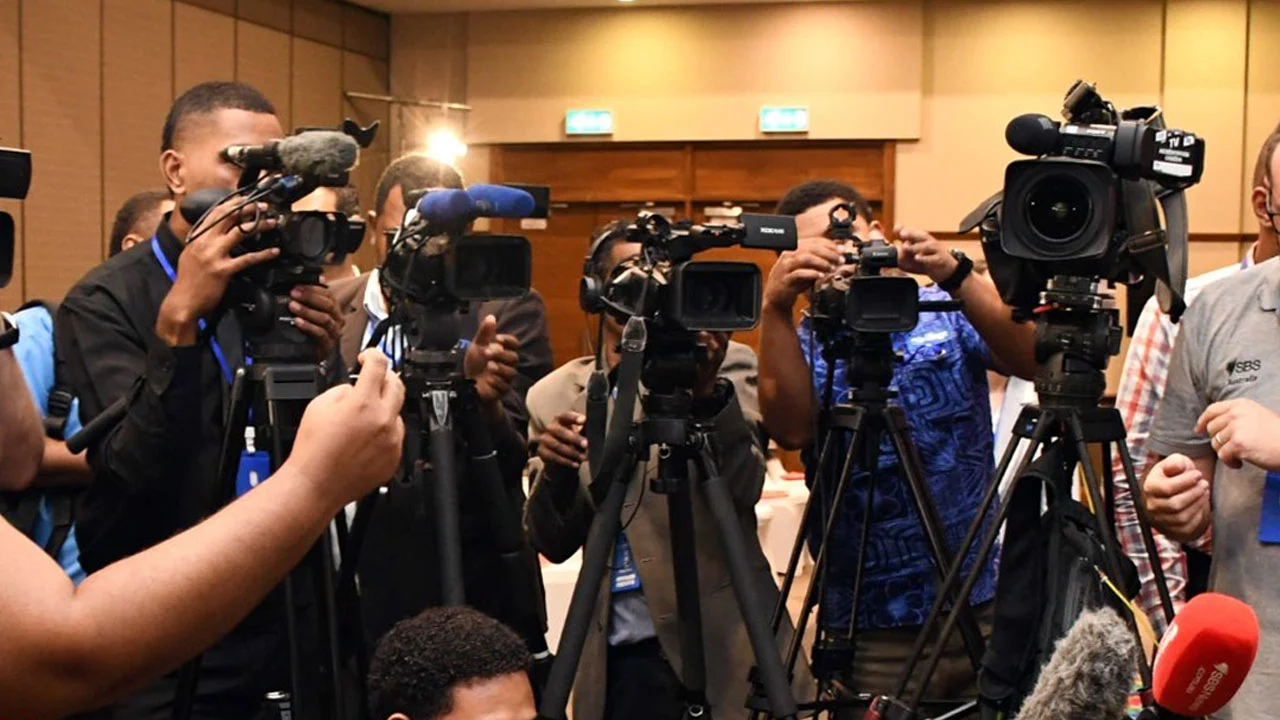
The head of Journalism at the University of the South Pacific (USP) says media aid in the Pacific is shaped more by geopolitics and donor interests than long-term support for local journalism.
Dr Shailendra Bahadur Singh, Associate Professor in Pacific Journalism and head of USP Journalism, made the comments while reacting to concerns raised by Fijian Media Association (FMA) General Secretary, Stanley Simpson over Australian support for Pacific media.
“The political economy of media aid in the Pacific and the boomerang aid effect,” Dr Singh said.
“Stanley’s outburst is a reminder that aid is neither neutral, nor charitable, not for the sake of democracy alone. Even media aid comes with strings attached, regardless of who the donor is or what they claim.”
Dr Singh said donor priorities and regional politics influence where funding goes and what type of journalism is supported.
“Aid is tied to donor agendas, geopolitics, and soft power, which shape what kind of journalism is supported and whose voices are amplified.”
He highlighted regional media development programmes and questioned the lack of support for journalism schools despite high staff turnover in Pacific newsrooms.
“Take PACMAS: The Pacific has amongst the highest journalist attrition rate in the world. Young graduates are often called on to fill vacant roles. Yet there is zero support for journalism schools.”
“Much of this aid is about geopolitics (read China) rather than long-term capacity building, otherwise journalism schools wouldn’t be zero consideration.”
Dr Singh said media development organisations are working within funding and political constraints.
“Media development organisations have to prioritise their scare, funds, and geopolitics is at the top of the priority list. They want the best bang for their dollar and journalism schools do not rank highly.”
He said USP Journalism had also experienced disappointment after applying for regional media funding.
“We thought media capacity building organisations are foresighted. But if we knew geopolitics we would not have wasted our time or their time applying to the much-heralded Indo-Pacific fund.”
Dr Singh acknowledged concerns about Pacific media becoming too dependent on foreign funding but said the region’s small media markets face major financial limitations.
“Australia, quite rightly does not want Pacific media to become overdependent on funding. But that is hard in the small, micro media systems of the Pacific where there are no economies of scale and critical mass simply do not exist.”
“In the bigger scheme of things, student journalism doesn’t even enter the equation.”
Quoting veteran Pacific journalist Kalafi Moala, Dr Singh said Pacific media organisations often have little choice when seeking support.
“To paraphrase the remarks of a doyen of Pacific journalism, Kalafi Moala, at our 2024 Pacific international media conference, when you are drowning, you will grab any hand that is outstretched.”
“You don’t care whether it is China, Australia, or America,” said Dr Singh.