
Australia, New Zealand and Colombia have launched a joint task force aimed at stopping illicit drug shipments before they reach Pacific shores, as police warn the region is facing an escalating drug crisis.
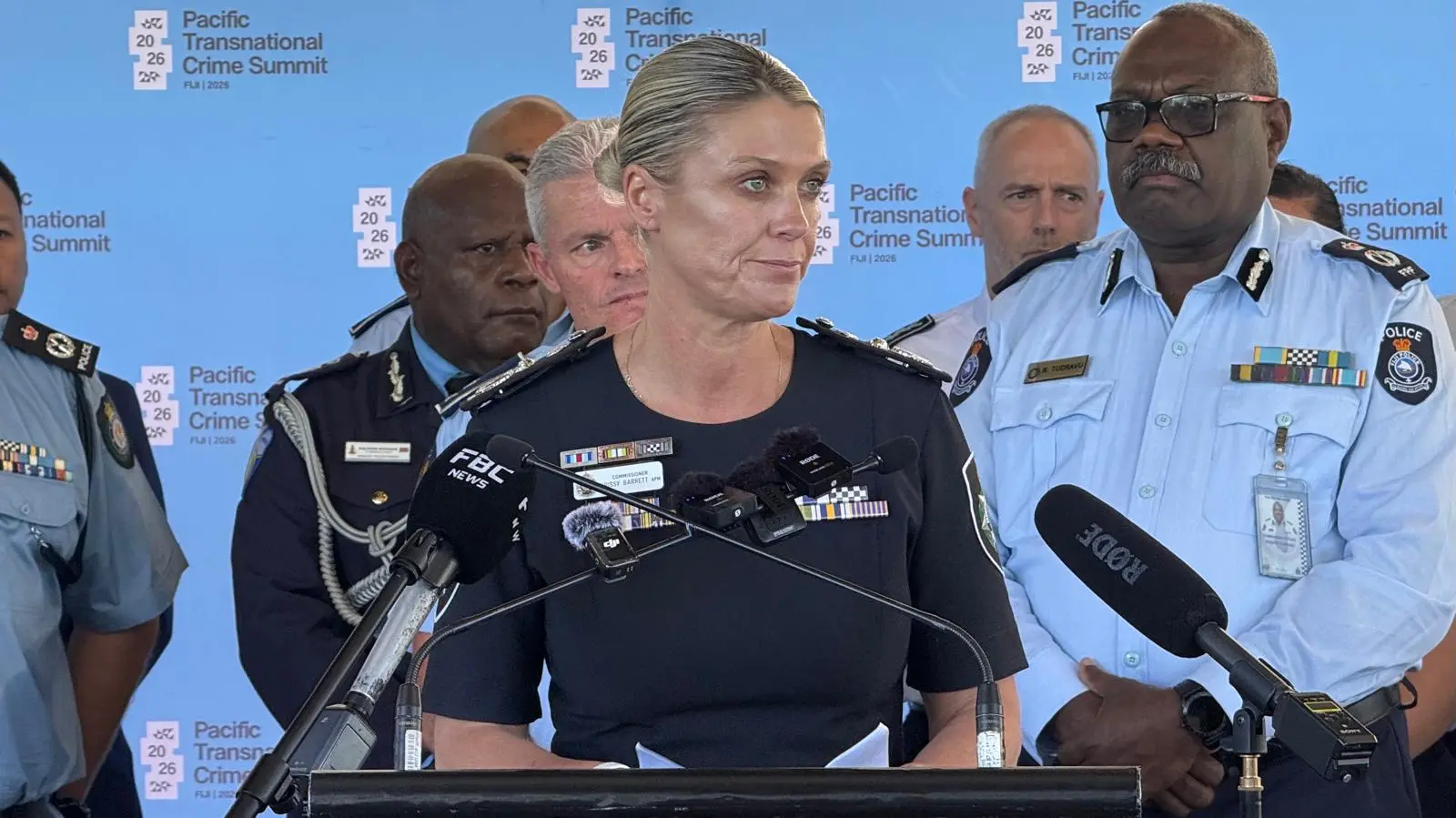
The announcement was made during a press conference at the inaugural Pacific Transnational Crime Summit, co-hosted by the Fiji Police Force and the Australian Federal Police in Momi bay.
Pacific police officers are not part of the joint task force.
Australian Federal Police commissioner Krissy Barrett said the new task force would work directly with the Colombian National Police to disrupt illicit drug supply chains and their source.
“I am also proud to announce funding from the AFP, New Zealand Police, the Australian Border Force and New Zealand Customs to launch an international joint investigation team partnering with the Colombian National Police to help stop illicit drug shipments coming into the region,” Barrett said.
She said 17 tonnes of illicit drugs, mainly cocaine, had already been seized across the Pacific since January, highlighting the growing threat facing island nations.
“The illicit drug threat to the Pacific is exponentially increasing, corroding health systems, family structures and our future generations.
“They create misery in our communities and wreak havoc in our countries.
“As heads of Pacific police, we need to target the cartels and organised criminals trafficking the poison affecting our communities and our children,” she said.
The task force will connect investigations across the Pacific, Australia and South America to target cartels, traffickers and trans-shipment operations.
New Zealand Police commissioner Richard Chambers said the investment in Colombia was being made on behalf of the Pacific region.
“The investment we will be making into Colombia is on behalf of the Pacific region, alongside the Australian Federal Police and the Australian Border Force, and we do that with pride because we care about the Pacific region,” Chambers said.
Fiji Police commissioner Rusiate Tudravu said Pacific police chiefs remained united in combating organised crime and corruption.
“The mobilisation of Pacific police against transnational serious organised crime is not new. Since 2002, Pacific law enforcement agencies have come together through the Pacific Transnational Crime Network in Fiji, beginning more than two decades of collaboration on information and intelligence sharing,” he said.
Tudravu said transnational organised crime respected no borders, making seamless regional co-operation critical in tackling serious criminal networks.
Meanwhile, Pacific Police chiefs have warned that international crime syndicates are stockpiling illicit drugs across the region, turning island nations into strategic storage and transit hubs for the global drug trade.
The warning came during the inaugural Pacific Transnational Crime Summit at the Fiji Marriott Resort Momi Bay yesterday, where Police leaders from Fiji, Australia, New Zealand and across the Pacific pledged stronger regional action against organised crime networks.
Australian Federal Police Commissioner Krissy Barrett said intelligence gathered over several years showed criminal groups were using stockpiling tactics to move illicit commodities through the Pacific.
“There has been intelligence over the years in relation to stockpiling,” Barrett said.
“Organised crime networks use stockpiling as one of the methods by which they transport illicit commodities.”
New Zealand Police Commissioner Richard Chambers said the tactic was widely used by criminal networks globally and warned Pacific nations were increasingly vulnerable.
“It is entirely normal for criminal networks to stockpile and wait for an opportunity to exploit a nation or community with that product,” Chambers said.
He highlighted the Interpol-led Operation Lionfish Hurricane in 2024, where 56 tonnes of cocaine was seized over four weeks across international hubs, much of it linked to the South American region.
Chambers said Pacific law enforcement agencies must strengthen intelligence-sharing and partnerships with international authorities to disrupt organised criminal networks operating in the region.
Police Commissioner Rusiate Tudravu said Pacific communities were already feeling the impact of transnational crime and called for stronger public support for law enforcement efforts.
“Our people deserve better, and we vow to do better. There have been many success stories throughout the region, and there has been a result of close co-ordination and trust built between law enforcement that still exists today,” he said.
Tudravu called on the Pacific people to support this collective call for action in protecting the region.