


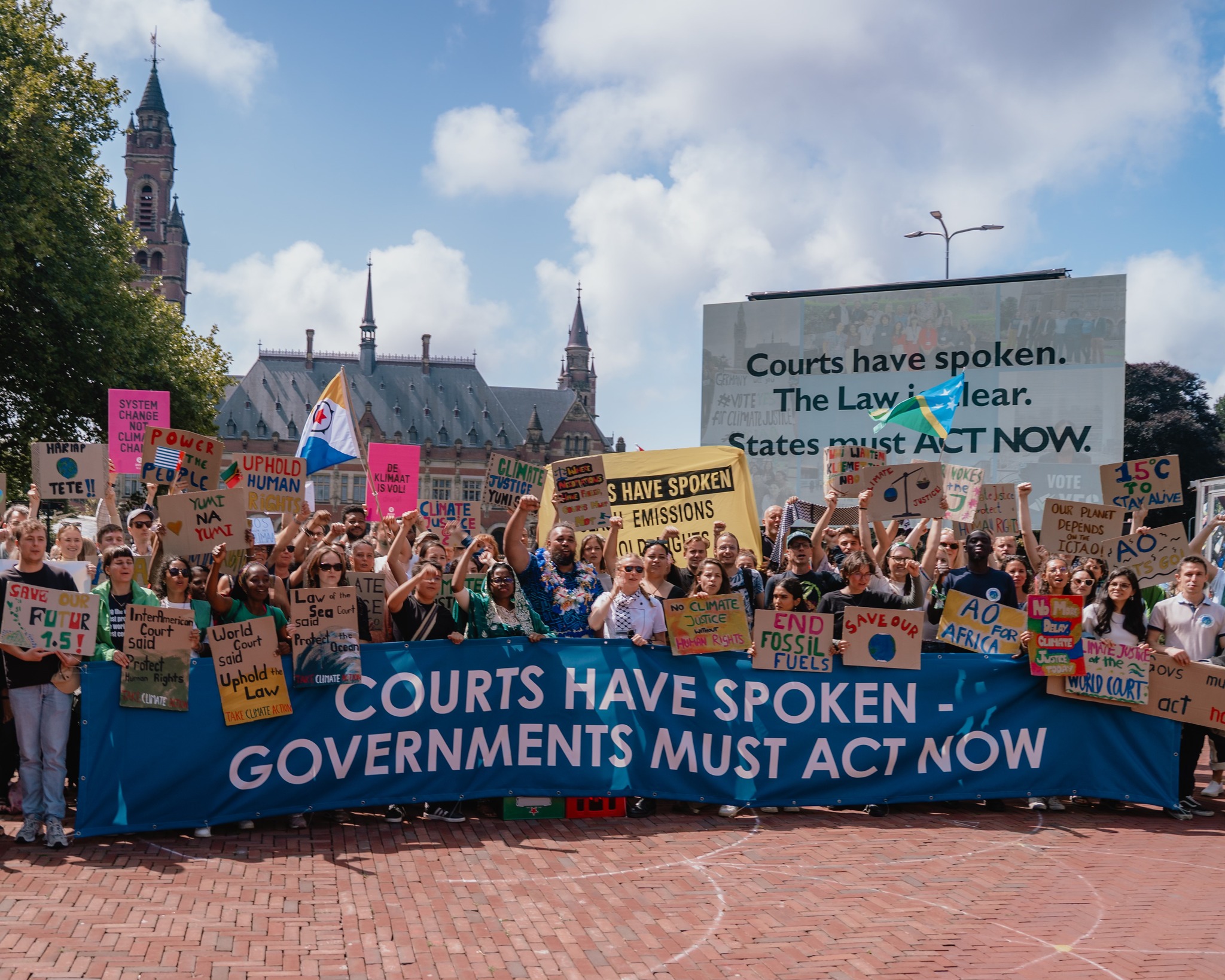
Global civil society groups and Pacific climate advocates have welcomed a landmark United Nations General Assembly resolution reinforcing that climate action is a legal obligation and not a political choice, following the historic advisory opinion issued by the International Court of Justice.
The resolution, adopted Wednesday by a strong majority of UN member states, affirmed the legal responsibilities of countries to limit emissions in line with the 1.5-degree target and prevent further climate harm.
The vote marks a major step in a campaign led by Vanuatu and supported by Pacific nations, youth groups, Indigenous communities and climate justice organisations pushing for stronger international accountability on climate change.
Civil society groups said the resolution sends a clear message that the climate crisis must be addressed through international law and urgent global action.
“At the United Nations General Assembly Wednesday, a strong majority of States affirmed simple but powerful truths: the climate crisis is not beyond the reach of justice, the time to act is now, and the rule of law must guide climate action,” the joint statement said.
The resolution follows the recent advisory opinion from the International Court of Justice, which declared that governments have legal obligations to take urgent and equitable climate action.
Campaigners said the vote showed growing international support for climate accountability despite attempts by some countries to weaken or delay the process.
“As many States stressed throughout the process, business-as-usual obstruction is incompatible with the scale and urgency of the climate emergency,” the statement said.
“Yet once again, those responsible for driving the crisis attempted to delay, dilute, and engage in procedural maneuvering rather than take meaningful action and accept accountability.”
The resolution was welcomed across the Pacific, where leaders and communities have long warned about the impacts of rising seas, stronger cyclones, displacement and environmental destruction.
Vishal Prasad, Director of Pacific Islands Students Fighting Climate Change (PISFCC), said the resolution was a turning point for frontline communities.
“Last year, the International Court of Justice ruled that countries have a legal duty to protect the climate, and today the world has not only reaffirmed that ruling, but committed to making it a reality,” Prasad said.
“This must be a turning point in accountability for damaging the climate. Communities on the frontlines, like in the Pacific, have been waiting far too long and continue to pay too high a price for the actions of others.”
Prasad said the campaign’s journey from Pacific classrooms to the United Nations demonstrated the power of youth-led action.
“The journey of this idea from classrooms in the Pacific to The Hague and the United Nations gives us continued hope that when people organise, the world can be moved to act,” he said.
Rufino Varea, Director of the Pacific Islands Climate Action Network (PICAN), said the resolution recognised that countries least responsible for climate change should not continue carrying the heaviest burden.
“From the Pacific to the world, this vote is a recognition that those who did the least to fuel this crisis should not be left to carry its heaviest burdens,” Varea said.
“Today, the international community has affirmed that climate justice is not charity but is anchored in accountability.”
Shiva Gounden from Greenpeace Australia Pacific said Pacific countries had once again shaped the global climate agenda.
“The world has followed the Pacific’s lead,” Gounden said.
“Governments can no longer ignore their legal responsibilities while backing the expansion of the fossil fuel industry.”
He said Pacific communities would continue pushing for a fast and fair phase-out of fossil fuels.
“Pacific communities have fought for this moment because we are already living with the consequences of the climate crisis, and we will continue fighting until there is a fast, fair, and funded phase-out of fossil fuels.”
Fenton Lutunatabua of 350.org described the vote as a major step toward implementing the ICJ advisory opinion.
“This vote shows the vast majority agreed there is an absolute obligation to stop runaway climate change,” Lutunatabua said.
“Our communities also get closer to receiving justice for the suffering the fossil fuel industry has caused, and the havoc wreaked upon our shorelines as we pay with our lives and our pockets to rebuild after yet another cyclone, yet another flood.”
Youth climate groups also welcomed the vote.
Nicole Ann Ponce from World’s Youth for Climate Justice said the resolution transformed legal recognition into action.
“The ICJ Advisory Opinion provided that much-needed legal clarity to drive action. Today, this UNGA resolution on climate accountability is a crucial vehicle for implementation,” Ponce said.
Environmental law organisations and rights groups also backed the resolution.
Meanwhile, Camile Cortez from Amnesty International said the resolution was an important step toward recognising climate change as a human rights issue.
“By adopting this resolution, states have recognised that they have legal duties to address the profound human rights crisis posed by climate change,” Cortez said.
Campaigners said the next challenge would be turning the resolution into concrete action through stronger emissions cuts, climate finance, renewable energy investment and a just transition away from fossil fuels.
They warned that the credibility of governments would now depend on whether they match promises with action as climate impacts continue to worsen worldwide.