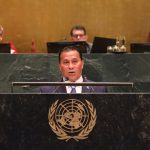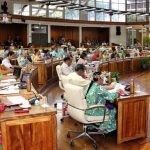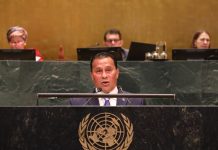

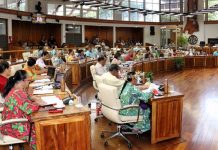
The 142nd Annual Officials Meeting of the Forum Fisheries Committee (FFC) opened in Aotearoa New Zealand, this morning, bringing together senior fisheries officials and delegates from across the Pacific region for a week of high-level regional discussions on the future of Pacific fisheries.
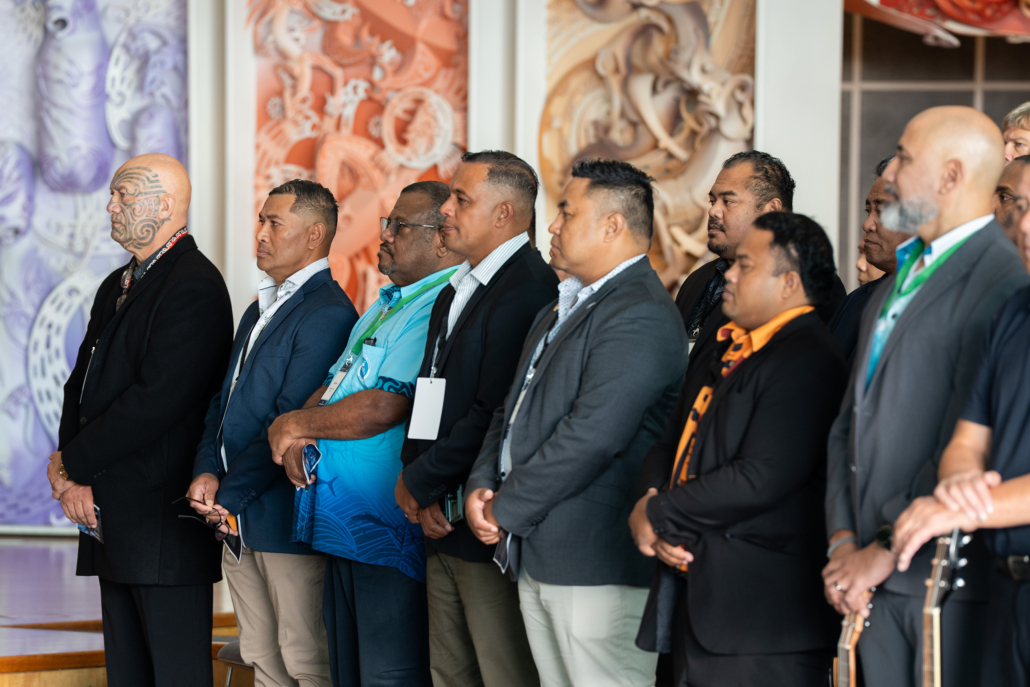
Hosted by the Government of New Zealand, the meeting began with a traditional Māori pōwhiri at Te Papa Tongarewa, New Zealand’s national museum. The formal welcoming ceremony brought together Members, delegates and participants in a powerful expression of partnership, respect and shared purpose.
The pōwhiri ceremony marked the start of the weeklong Annual Forum Fisheries Committee (FFC) Officials 142nd Meeting in Wellington, New Zealand. Photo: New Zealand Ministry for Primary Industries
The pōwhiri, which included traditional speeches and waiata from both hosts and visitors, welcomed delegates onto the marae and into the meeting space. The ceremony reflected the deep cultural connections between Pacific peoples and the ocean, and the shared responsibility of stewarding the region’s fisheries resources for future generations.
Associate Deputy Director-General for Trade and International Relations at the NZ Ministry of Primary Industries (MPI), Diana Reaich, welcomed delegates on behalf of the New Zealand Government and acknowledged the outgoing Chair, Niue’s Poi Okesene, for his leadership over the past year.
“I am sure you will all agree that his leadership has been instrumental in fostering unity, constructive dialogue, and a clear focus on outcomes that serve the long-term interests of Pacific fisheries and Pacific communities,” Reaich said.
She noted that the successful adoption of the South Pacific albacore management procedure and seabird conservation measure at last year’s Western and Central Pacific Fisheries Commission (WCPFC) meeting demonstrated what could be achieved through regional cooperation and collective commitment.
“As you all know, fisheries are central to the economic security, food security and livelihoods of our region,” she said.
“They underpin national revenues, support local communities, and are integral to the broader resilience and sustainable development of Pacific Island countries and communities.”
Pacific Islands Forum Fisheries Agency (FFA) Director-General Noan David Pakop thanked the Government of New Zealand for hosting the meeting and acknowledged the significance of the traditional welcome.
“We are particularly honoured by the traditional pōwhiri welcome this morning, which reflects the spirit of partnership, respect and shared stewardship that underpins our regional fisheries cooperation,” Pakop said.
He said the meeting comes at an important time for the region as Pacific countries continue navigating increasing geopolitical interest, climate change impacts, growing pressure on ocean resources and evolving regional priorities.
“Today, tuna continues to be the common currency of the Blue Pacific,” Pakop said.
“The Pacific region collectively manages one of the largest and most valuable tuna fisheries in the world, and the strength of our cooperation over many decades remains globally recognised as one of the great success stories of regionalism.”
Pakop said Members would spend the week discussing issues central to the future of regional fisheries cooperation, including the FFA Strategic Plan review, implementation of the KPMG Review recommendations, regional fisheries management priorities and preparations for upcoming WCPFC negotiations.
Outgoing Chair Poi Okesene of Niue reflected on the significance of gathering at Te Papa Tongarewa.
“It is especially fitting that we gather here at Te Papa Tongarewa, where the stories of land and ocean are connected and preserved with care,” Okesene said.
“Te Papa honours and celebrates Pacific and Māori heritage and reminds us that the moana is not simply a resource, but a relationship that connects us all.”
Okesene also highlighted key achievements during his term as Chair, including the adoption of the South Pacific albacore management procedure, progress on conservation and management measures, strengthened regional monitoring and surveillance cooperation, and advancements in treaty negotiations.
“These achievements are the result of countless months of hard work, long days, late-night conversations, and the willingness of members to compromise for the greater good,” he said.
Outgoing FFC Officials Chair, Poi Okesene of Niue Fisheries, hands over a paddle to Heather Ward of the New Zealand Ministry for Primary Industries, symbolising the handover of the FFC Chair from Niue to New Zealand for the next 12 months. Photo: New Zealand Ministry for Primary Industries
Incoming FFC Officials Chair, Heather Ward, Manager of International Fisheries at the New Zealand Ministry for Primary Industries, paid tribute to Niue’s leadership and acknowledged the challenges ahead for the region.
“We must also confront the complexities of mixed fisheries management as we continue work on developing a management procedure for bigeye tuna,” Ward said.
“This week, members will also consider other priorities ahead of the annual WCPFC meeting, including strengthening the management of transshipment and progressing toward a practical electronic monitoring programme within the WCPFC framework.”
Ward also acknowledged the wider global environment affecting Pacific fisheries, including rising fuel prices and broader economic pressures impacting fisheries operations across the region.
“At the same time, we continue to grapple with ways to increase the value derived from our tuna fisheries,” she said.
The new Chair officially declared the 142nd Annual Officials Meeting of the Forum Fisheries Committee open.
Over the coming days, Members will deliberate on a broad range of regional priorities, including strategic planning, climate change implementation, monitoring, control and surveillance cooperation, market access, the East New Britain Initiative, and strengthening the collective coastal State position on key fisheries issues.
The Forum Fisheries Committee remains the region’s premier technical and policy forum for fisheries cooperation, bringing together Members of the Pacific Islands Forum Fisheries Agency to collectively manage and protect one of the world’s largest tuna fisheries for the benefit of Pacific peoples.