
By Makereta Komai in Samarkand, Uzbekistan
The Cook Islands is seeking greater inclusion in emerging regional initiatives on critical minerals, with Prime Minister Mark Brown urging the Asian Development Bank to expand its engagement with Pacific small island states.
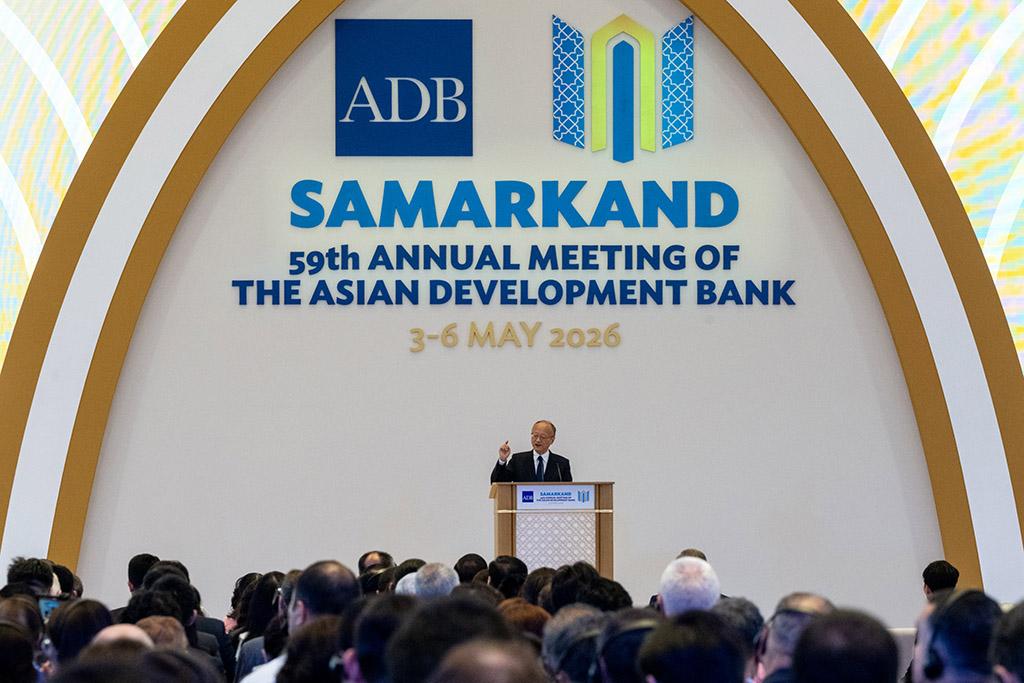
Delivering the country’s statement at the ADB Annual Meeting in Samarkand Monday, Brown described the bank’s growing focus on critical minerals as “timely and forward-looking,” given the increasing global demand for secure and sustainable supply chains to support the clean energy transition.
“As this work progresses, we encourage the bank to consider how small island developing states, including the Cook Islands, can be more actively included,” Brown said.
He called for deeper engagement through knowledge partnerships, capacity building, and exploration of emerging opportunities, noting that such an approach would contribute to a more inclusive and resilient regional framework.
The Cook Islands has been actively positioning itself in discussions around seabed minerals, particularly polymetallic nodules that contain key materials such as cobalt, nickel and manganese—essential components for renewable energy technologies and battery storage.
Brown emphasised that for Pacific nations, participation in the critical minerals sector must be supported by strong institutional frameworks and tailored financing solutions.
His call comes amid broader concerns about the structural challenges facing small island developing states, which he described as “nano-market economies” constrained by geographic isolation, small populations, limited economic diversification and high vulnerability to external shocks.
While the Cook Islands economy has shown resilience, supported by a rebound in tourism, Brown warned that global uncertainties—including supply chain disruptions and the ongoing energy crisis—continue to place pressure on import-dependent economies.
In this context, he urged the ADB to strengthen its differentiated approach to the Pacific, including the expansion of flexible and innovative financing instruments such as blended finance, results-based mechanisms and climate-linked funding.
Brown also highlighted the need for financing solutions that are aligned with country-specific priorities, particularly in advancing renewable energy and improving energy security.
“We are interested in how the bank can support the scaling of these solutions through tailored financing approaches that reduce upfront costs, crowd in private sector participation, and de-risk investments in small and remote markets,” he said.
He further pointed to the potential benefits of local currency financing as a way to reduce exposure to foreign exchange risks and enhance fiscal stability in small, open economies.
On procurement, Brown welcomed recent reforms by multilateral development banks on value-for-money frameworks but stressed that successful implementation must reflect local contexts and strengthen national systems.
He also raised concerns about the implications of Official Development Assistance graduation and categorisation, warning that countries like the Cook Islands should not be excluded from grant-funded regional programmes despite ongoing structural vulnerabilities.
In closing, Brown reaffirmed the Cook Islands’ commitment to working closely with the ADB and development partners, calling for a truly differentiated approach that recognises the realities of small island economies.
“We call upon the Asian Development Bank and our partners to support a resilient, sustainable and prosperous future for our people,” he said.