
Anglican leaders from across Oceania have wrapped up a three-day Fono with a clear plan to tackle climate change, labour mobility and theological education, saying their unity is driving action on regional challenges.
“The Oceania Anglican Fono is more than a gathering of neighbouring provinces. It is a gift of God’s grace in relationships patiently nurtured over time. We are called to love our neighbour, and it is a blessing that these relationships with fellow primates and general secretaries are marked by trust, honesty and genuine warmth.”
“These bonds are the foundation of our common life. They give the Fono its strength, and from them we are able to work together on shared concerns, including theological education, labour mobility and climate change.” the leaders said in a joint statement.
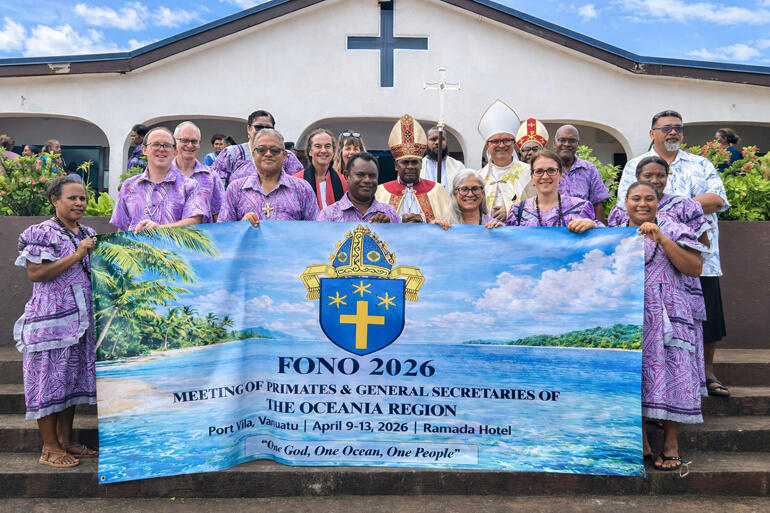
The 7th Oceania Anglican Fono, held from 9–12 April 2026, brought together Primates, General Secretaries and their spouses from Anglican Churches in Australia, Melanesia, Papua New Guinea, and Aotearoa New Zealand and Polynesia.
It was hosted by Archbishop Leonard Dawea of the Anglican Church of Melanesia and led by Bishop James Tama of the Diocese of Central Vanuatu and New Caledonia.
Leaders noted the absence of some archbishops and called for continued prayer, especially for the Anglican Church of Papua New Guinea as it works through leadership decisions.
Over three days, the Fono focused on strengthening relationships and building partnerships to address regional and global challenges. The theme, “One God, One Ocean, One People,” centred on unity, shared identity and regional connection.
Discussions were shaped by listening sessions with people in Vanuatu, internal church priorities and community worship, grounding decisions in both local realities and regional cooperation.
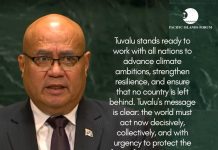
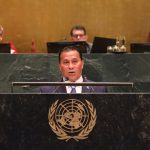
Climate change was a major focus, with leaders briefed by Vanuatu’s Climate Change Minister Ralph Regenvanu on global developments, including the 2025 International Court of Justice advisory opinion.
In response, Fono members agreed to push for wider Anglican Communion support for Vanuatu’s initiative at the United Nations, review church investment policies in line with climate justice, and hold a special meeting later this year focused on disasters and preparedness.
Labour mobility also came under scrutiny. Presentations highlighted both economic benefits and serious social and local economic impacts, challenging the idea that such schemes are always positive.
Leaders said their response must be both “pastoral and prophetic,” committing to speak out where schemes are exploitative or imbalanced and to strengthen support systems for workers and their families both at home and overseas.
The Fono also strengthened ties with traditional leadership, meeting with Vanuatu’s National Council of Chiefs, the Malvatumauri, in what was described as a significant step in linking church leadership with kastom structures.
Theological education remained a priority, with agreement to develop a shared database of providers and explore a regional “Centres of Excellence” framework to improve training and capacity across the churches.
Leaders also discussed wider issues affecting the region, including safeguarding, church structures, inequality and the role of Christian communities in minority contexts.
The gathering included community engagement in Port Vila, where members joined the Seaside Anglican Parish for worship, cultural exchange and fellowship.
Looking ahead, future Fono meetings are scheduled for Australia in 2027, the Anglican Diocese of Polynesia in 2028 and Papua New Guinea in 2029, with a special disaster-focused meeting set for later this year.