
Palau President Surangel Whipps Jr has called for urgent global action on ocean governance and climate change, warning that island nations can no longer afford delays as they face the growing impacts of sea-level rise, coral bleaching, ocean acidification and extreme weather.
Speaking as Co-Chair of the Island States Ocean Summit (ISOS) in Tokyo, Japan, President Whipps told world leaders that small island and low-lying coastal states are bearing the brunt of a climate crisis they did little to create.
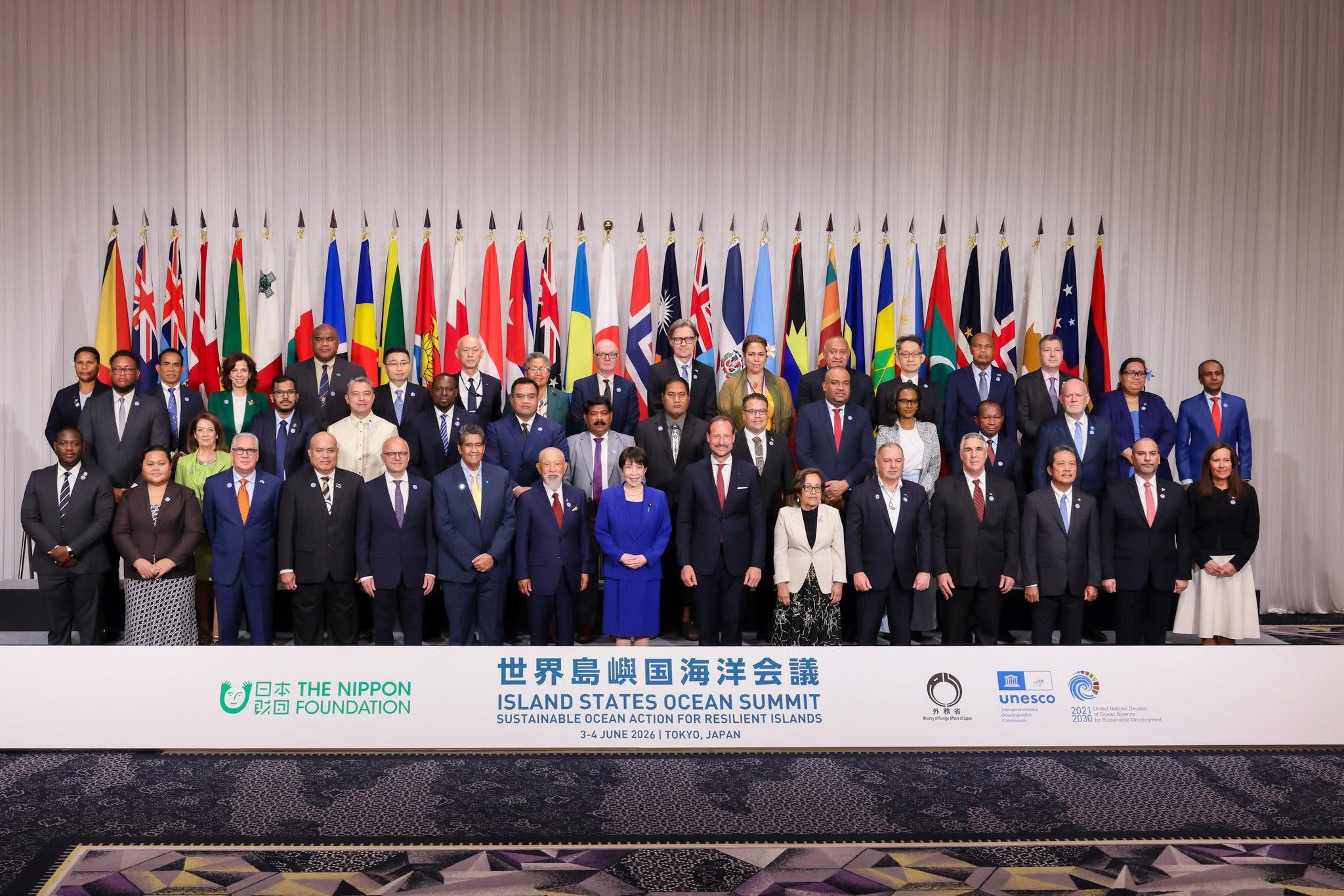
Addressing the summit in the presence of Japan’s Emperor Naruhito and Prime Minister Sanae Takaichi, Whipps spoke on behalf of Palau and the 39 island and low-lying coastal states of the Alliance of Small Island States (AOSIS).
“As AOSIS Chair, I speak for nations that together contribute less than one percent of global emissions, yet we face the most severe impacts of Global Warming. Storms, droughts, coral bleaching, ocean acidification and Sea-level rise are not just projections they are happening now,” Whipps said.
He said the ocean is central to the survival and identity of island nations and that global governance systems are failing the most vulnerable countries.
“We are here because the ocean is not a backdrop to our lives. It is our economy. Our food security. Our culture. Our very sovereignty. And it is changing faster than our communities can adapt.”
“International climate and ocean governance is not delivering for the most vulnerable. We need action that matches the urgency, said President Whipps.
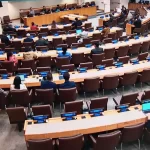
The summit brought together more than 300 participants from around 30 countries, including Crown Prince Haakon of Norway. The event was co-chaired by Whipps and Vidar Helgesen, Executive Secretary of the Intergovernmental Oceanographic Commission of UNESCO, and hosted by Nippon Foundation.
Whipps thanked Japan for its longstanding support to Pacific island nations and highlighted the close relationship between Palau and Japan.
“Your Majesty, Japan has been a steadfast Pacific partner in fisheries, ocean science, education, and infrastructure the development of the Ngatpang fishing port that will give our fishers a modern home base is one example,” he said.
He also acknowledged Norway’s contribution to sustainable ocean management.
“Crown Prince Haakon, we commend Norway for its valuable contributions to ensuring a sustainable ocean economy.”
The Palauan leader said his country is taking concrete action by implementing Marine Spatial Planning across all of its waters.
“At home we are implementing Marine Spatial Planning across 100 percent of our waters.
This exercise is science driven and guided by our traditional wisdom, balancing protection and production. It is the foundation of a sustainable blue economy,” Whipps said.
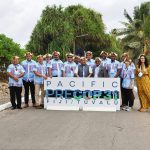
He highlighted the Unlocking Blue Pacific Prosperity initiative, launched by Palau and Pacific countries at COP28, as an example of regional leadership on ocean governance.
“And we are not doing this alone. At COP 28 Palau and our Pacific family launched the Unlocking Blue Pacific Prosperity initiative. UBPP is our collective commitment to sustainably manage our Blue Pacific – 28 million square kilometers of EEZs, accounting for around 20 percent of all global EEZs…. It is the world’s blue food bowl, supplying over half of the annual global tuna catch and nurturing an astonishing wealth of marine ecosystems and biodiversity,” he said.
Whipps said stronger investment and legal frameworks are needed to support sustainable ocean management and highlighted Palau’s role in advancing international ocean governance.
“Integrated ocean governance is achievable. But it requires sustained investment and legal architecture.”
“Palau as CoChair with Norway of the High-level Panel on oceans believes in Sustainable Ocean Planning. That is why we were the first country in the world to ratify the BBNJ Treaty, because we believe the high seas must be governed and effectively managed not exploited,” he said.
He noted that the summit comes at a crucial time, with major international climate and biodiversity negotiations approaching and Palau preparing to host the 55th Pacific Islands Forum Leaders Meeting later this year.
“The Ocean Decade is at its midpoint. Climate COP31 and Biodiversity COP17 are approaching. In three months, Palau hosts the 55th Pacific Islands Forum Leaders Meeting, where ocean governance will be central,” said Whipps.
Whipps urged world leaders to move beyond declarations and deliver practical support for island nations.
“The window for incremental action has closed. What island states need is financing that reaches us, technology that works in our context, and the political will to match commitments.”
Prime Minister Takaichi reaffirmed Japan’s support for island nations, including assistance for countries facing sea-level rise and extreme weather, enhanced cooperation on Maritime Domain Awareness, and support for a Free and Open Indo-Pacific.
Whipps also called on summit participants to leave Tokyo with a concrete plan for action.
“In Palau, we say the ocean does not belong to us — we belong to it. Let us leave Tokyo not with just a communiqué, but a plan of action,” he said.
The President was joined at the summit by Ambassador Peter Adelbai and Minister of Agriculture, Fisheries and the Environment Steven Victor, highlighting Palau’s commitment to strengthening global ocean governance and protecting the future of island nations.