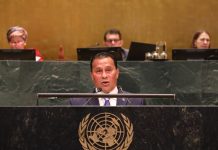


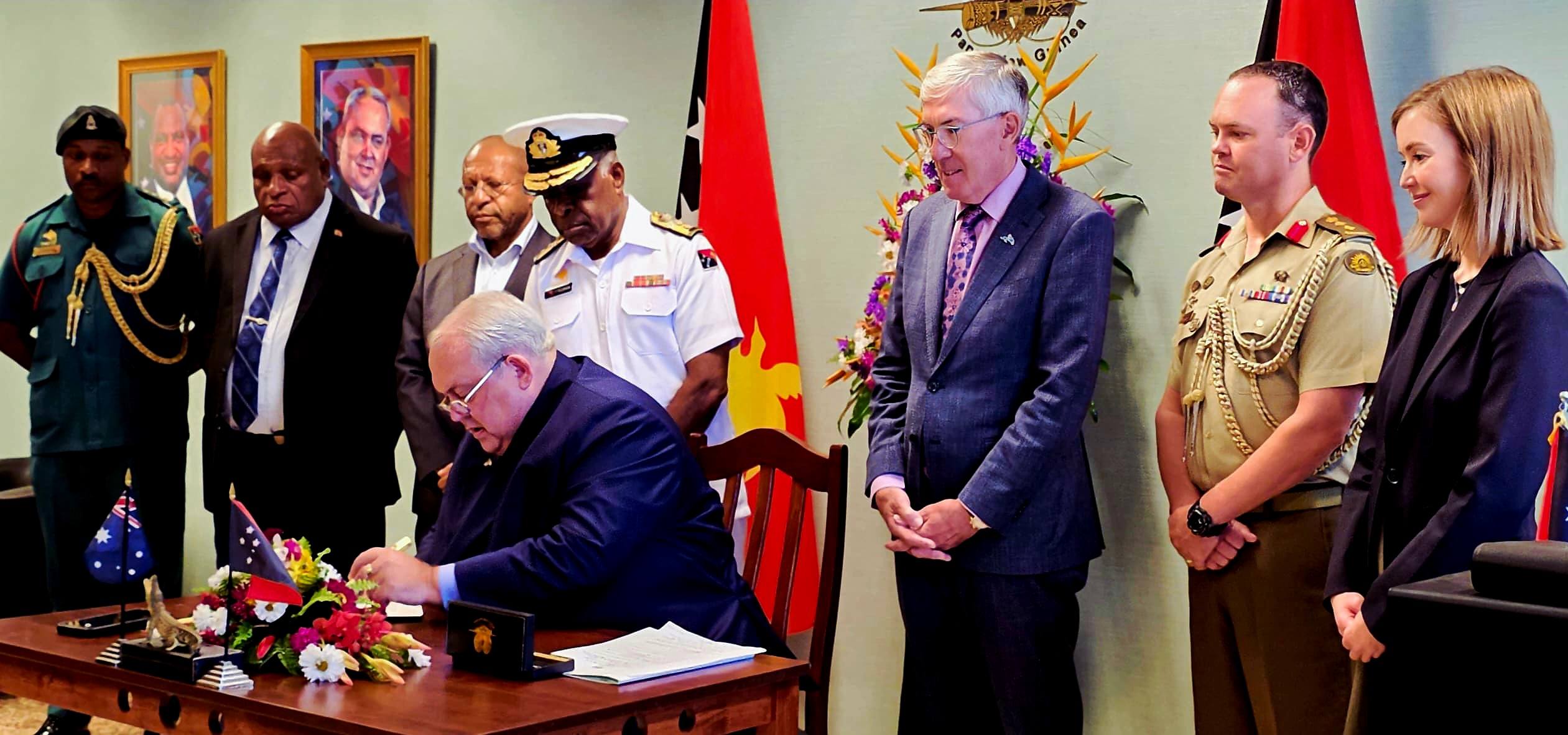
Papua New Guinea Foreign Affairs Minister Justin Tkatchenko, on behalf of the Government, has certified the Papua New Guinea-Australia Defence Treaty, which Parliament ratified last month.
Tkatchenko signed the instrument of ratification on Friday consistent with Section 117 of the Constitution.
“Today (Friday) PNG has led by ratifying and certifying the Pukpuk Treaty and Australia will follow in the next couple of months to formalise and finalise the certification,” he said.
“The Pukpuk Treaty will become operational once the two countries have signed and exchanged the instruments of ratification.”
The treaty was tabled in Parliament in November last year following the announcement in September.
“The Pukpuk Treaty will ensure very high and professional standards in recruitment, training and force preparations,” Tkatchenko said.
“We have high expectations in qualifications across all military spheres air, sea, and land and cyber warfare capabilities.
“Our military duty under the treaty is for the defence and security of PNG, partnership as an allied partner, a commitment to the mutual defence of our allies mandating that PNG military standards and preparedness remain equal to our partner nations.”
Tkatchenko said the treaty was a blueprint for a modernised, professional, and world-class PNG Defence Force.
He clarified that the Pukpuk Treaty would not disrupt current recruitment but would enhance and modernise the process.
He said under the new framework, the PNGDF would adopt stringent, high-level standards across all military spheres.
“Central to the treaty is the unique security partnership between PNG and Australia,” Tkatchenko said.
“As PNG’s first treaty ally, Australia enters a reciprocal defence relationship, under this treaty our security boundaries are now intrinsically linked.
“It’s not only about security, but also about disaster emergencies,” he added.
He said PNG’s security boundary would cover Australia, and vice-versa.
“While we maintain our independent backyards, we stand together within a single, protected perimeter,” he explained.