
The recent sudden passing of a migrant worker in the Cook Islands has sparked discussions, especially among expatriate communities, who are now calling for insurance coverage and clearer systems for medical evacuation during emergencies.
For many foreign workers far from their families, this tragedy is a stark reminder of how quickly circumstances can change and how uncertain access to urgent overseas medical care remains.
Leaders of several expatriate communities say the incident has forced them to confront tough questions about safety, financial protection, and support for migrant workers facing emergencies.
The tragedy involved an expatriate worker who was critically injured in a hit-and-run incident in Rarotonga last month.
The situation triggered criticism and calls for reform from migrant community leaders, with some questioning whether existing systems are adequate for non-New Zealand citizens living and working in the Cook Islands.
The government has since indicated that frameworks surrounding medical evacuations for foreign workers would be reviewed following the incident.
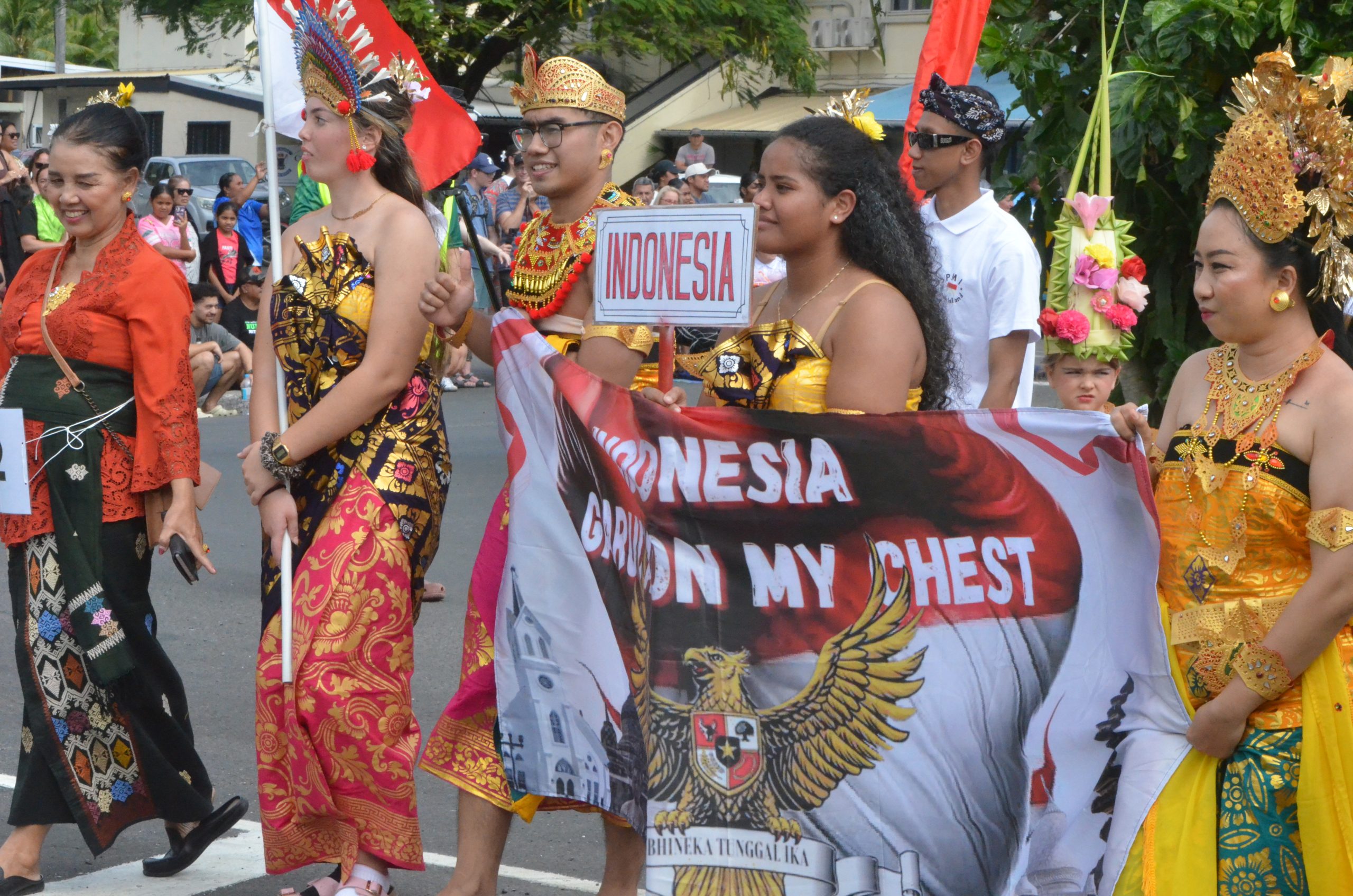
Budi Setiawan, President of the Indonesian community in the Cook Islands said the situation has become a serious wake-up call.
“It really is an eye-opener to us, too,” he said.
“We never know what the future brings.”
Setiawan said the incident has sparked discussions within the Indonesian community on how they might respond collectively if a similar situation ever affected one of their members.
With around 300 Indonesians living in the Cook Islands, including those in the Pa Enua, the community has begun examining possible contingency plans.
“We are trying to solve this issue among ourselves,” he said. “If something happens to us, what should we do as a community?”
Setiawan said the community has started thinking seriously about emergency options, including whether insurance coverage or employer contributions could help ensure injured workers could be referred home or to specialist hospitals overseas.
They have also considered asking the government to issue some kind of regulation.
He said news of the incident has been deeply unsettling for many Indonesians living and working across the country.
Setiawan said friends within the Filipino community, who had been closely following developments surrounding the injured worker, first brought the issue and the difficulties involved in arranging an overseas transfer to his attention.
Setiawan said for matters such as this, when it is urgent it is important to act swiftly, “we may be foreigners, but we pay tax, too.”
Foreign workers contribute significantly to the local workforce and economy, which Setiawan reiterated, and many expatriates simply hope they will receive fair treatment if they ever face a similar situation.
“We contribute to the Cook Islands community as well, and we are hoping to get the same treatment, at least,” he said.
The Cook Islands Fijian Association (CIFA) has raised similar concerns.
President Ravinesh Swamy believes the tragedy highlights the need for stronger financial protection for migrant workers across the country.
Swamy said one possible solution could be mandatory insurance coverage for foreign workers, funded through either employers, employment agencies or small contributions from workers themselves.
“If the government, immigration, and the people involved create an insurance policy for all foreign workers. If the companies can pay it or not, or if people coming from Fiji, for example, could also have their own insurance policies, that would be great.”
Swamy suggested that even a small contribution, such as a dollar deducted from workers’ wages, could help create an emergency fund to support workers facing serious medical situations.
“One dollar per pay goes in there, and if something critical happens, like what has happened recently, then at least the money is there,” he said.
“At the end of the day, money is involved.”
According to Swamy, the absence of a robust workers’ protection system has been a longstanding issue in the Cook Islands for many years.
He also believes the country should consider reviving a workers’ union similar to one that previously existed on the island more than a decade ago.
Without such protections, Swammy said migrant workers could feel vulnerable when serious accidents occur.
He added that foreign workers have no medical/ health security in the Cook Islands.
Meanwhile, a New Zealand-based aeromedical company is willing to help strengthen medical evacuation capabilities for Pacific island nations, including the Cook Islands.
Orion Aeromedical, working in partnership with NZ Jet, provides specialised aeromedical evacuation services across the region.
The company says it offers a fully coordinated system that manages the entire transfer process from the moment a call is received through to the patient’s arrival at a receiving hospital.
When contacted, the company said its mission coordinators manage everything from the initial fitness-to-fly assessment through to deploying the appropriate medical team and aircraft.
The partnership with NZ Jet provides access to specialised aircraft capable of long-distance medical transfers.
In some cases, teams can respond within as little as two hours after receiving a request, depending on the location and circumstances.
One of the key advantages highlighted by the company is the ability to fly directly between New Zealand and the Cook Islands without refuelling stops.
“One of the key advantages we bring is the ability to fly directly between New Zealand and the Cook Islands, whereas other services in the region may require a technical stop in Tonga. By avoiding this refuelling stop and potential layovers, we can reach patients sooner and provide a more direct return to definitive care,” Mathre Griffins, director of operations and development, said.
“For patients, particularly those who are critically unwell, fewer stops mean less handling, a more stable clinical environment, and a safer overall transfer to specialist hospital care.
“We have a large team of experienced clinicians who have completed medical repatriations through the Pacific region in both civilian and military settings, returning patients to NZ, Aus or to their country of origin”.
Using aircraft such as the Gulfstream G100 allows aeromedical teams to reach patients faster and transport them directly to specialist medical facilities.
For critically ill patients, avoiding additional stops can reduce the risks associated with transfers and provide a more stable clinical environment during the journey.
Hospitals, employers, insurers, families or the patients themselves, with Orion Aeromedical coordinating the clinical and operational aspects once the mission begins, can initiate evacuations.
While the cost of such evacuations can vary widely depending on the patient’s condition and destination, the company says its services are available to insurers, employers and private individuals.
For migrant community leaders, however, the key issue remains ensuring that funding and systems are already in place before emergencies happen.
Setiawan believes the tragedy has highlighted the importance of dialogue between government agencies, employers and expatriate communities to ensure better preparedness in the future.
“I mean, it’s complicated, but I think there needs to be some kind of dialogue between stakeholders here in the Cook Islands and also with the employer and the expat communities on how to deal when this kind of thing happens again in the future,” he said.
“This is about people’s lives, and it’s really tragic.”
Most foreign workers living and working far from home, deem the incident as a great lesson and a wake-up call, with Setiawan saying, “this is a lesson” with hopes for a better tomorrow.