

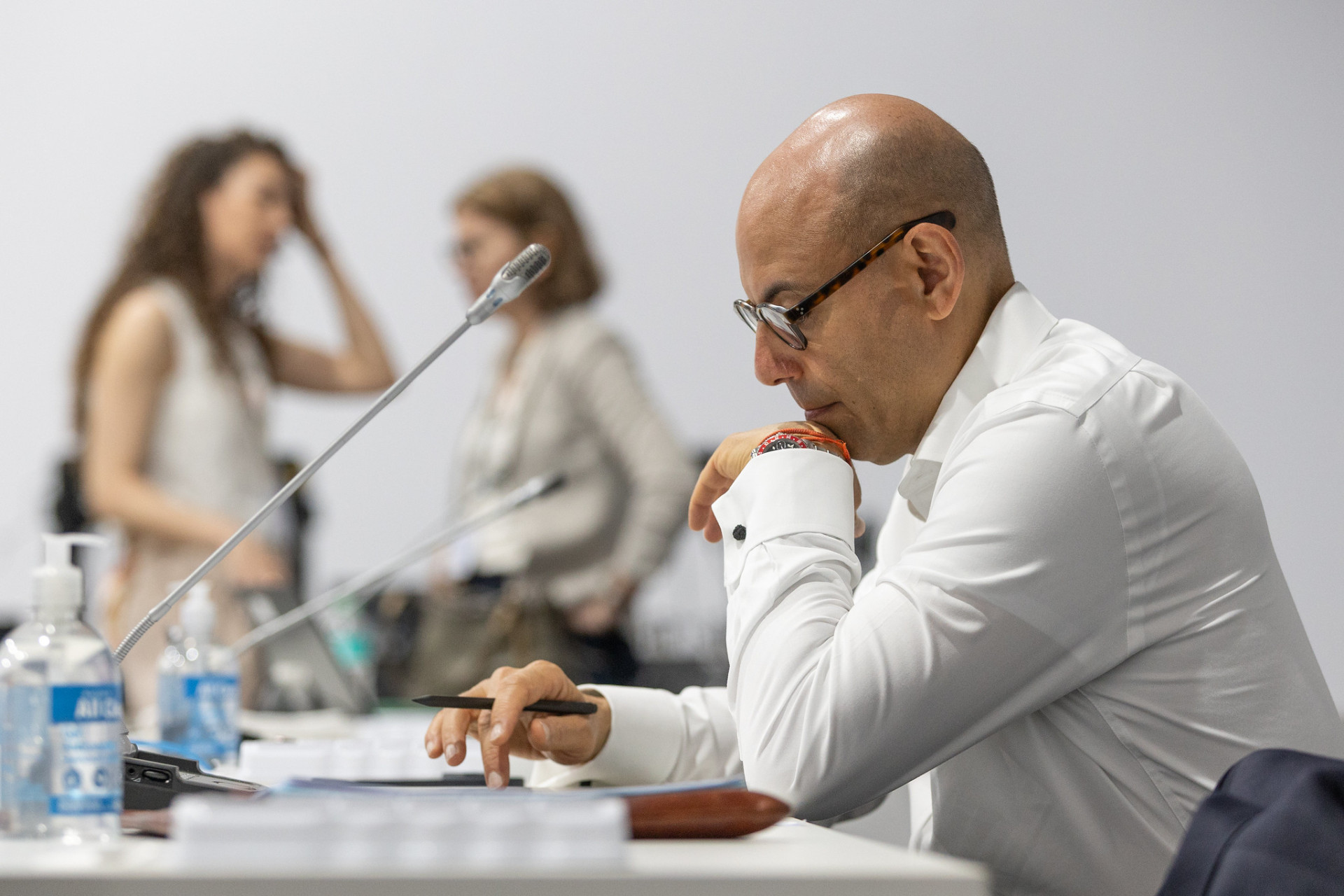
UN Climate Change Executive Secretary Simon Stiell has warned world leaders that while the Paris Agreement has bent the curve on global heating, the pace of action remains too slow to avert danger.
Speaking at the COP30 Leaders’ Summit session on “10 years of the Paris Agreement: NDCs and Financing” in Belém, Brazil, on Friday, Stiell said the world had made progress since 2015 but must now “accelerate on all fronts.”
“Without that act of collective courage, we would still be headed for an impossible future of unchecked heating, of up to 5 degrees,” Stiell said in his address to World leaders.
“Because of it, the curve has bent below 3°C – still perilous, but proof that climate cooperation works.”
He said the clean energy revolution is gaining ground, with “two trillion dollars flowing into renewables last year – twice as much as into fossil fuels,” and noted that “ninety per cent of new power capacity worldwide was renewable.”
However, Stiell cautioned that “Paris is not working fast enough. We have the direction, but we don’t have the speed.”
He urged countries to submit stronger Nationally Determined Contributions (NDCs) and push for greater access to finance.
“Our focus today – climate plans and climate finance – are the spark that can accelerate action, driving green growth and resilience for every nation,” he said.
Stiell described finance as “the great accelerator,” highlighting the Baku to Belém Roadmap, which charts a pathway from US$300 billion a year to US$1.3 trillion by 2035. “It must become a reality,” he said.
“This is shared interest, not charity – an investment in stability and prosperity. Every dollar invested in climate solutions brings multiple dividends: jobs, cleaner air, better health, resilient global supply chains, stronger energy and food security.”
He called for finance to be “scaled up, sped up, and spread out – reaching every nation, fast, fair, and in full.”
Stiell said the Paris Agreement “proved that global cooperation is working to deliver progress, but still not fast enough.”
“Ten years on, we must prove it again – by making this extraordinary framework work faster and fairer, for everyone, everywhere,” he said.
“History will not ask what we intended. It will ask what we achieved,” he said.