

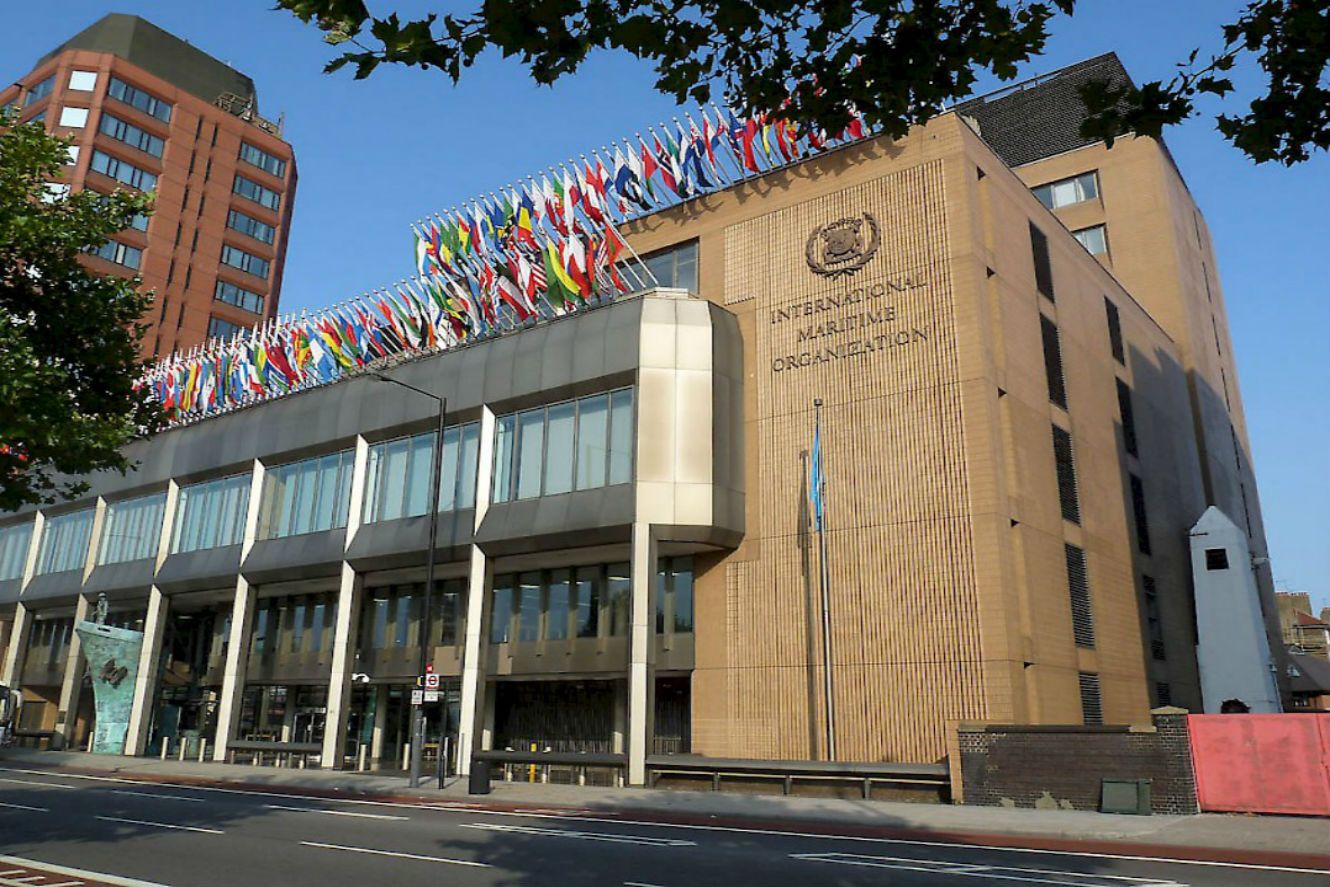
The second Extraordinary Session of the Marine Environment Protection Committee (MEPC) opened Wednesday at the International Maritime Organisation (IMO) Headquarters in London.
The Pacific is represented by the 6PAC+ alliance, which has consistently advocated for ambitious climate action for the shipping industry.
The alliance’s objective has been to ensure a 1.5˚C aligned phase out of fossil fuels in the shipping industry, through a just and equitable transition that both incentivises the uptake of genuine long-term energy solutions and provides adequate support for developing countries, and in particular SIDS and LDCs.
Leading the charge for the Pacific are the Minister for Transportation, Communications & Information Technology, Marshall Islands, Hilton Kendall; the Minister for Climate Change, Energy, Meteorology, Geohazards, Environment and Disaster Management, Vanuatu, Ralph Regenvanu; the Minister of Transport, Energy, Communications and Innovation, Tuvalu, Simon Kofe together with the Presidential Special Envoy on Maritime Decarbonisation, Marshall Islands, Albon Ishoda.
Minister Simon Kofe in his statement at the conference said: “We are here to lead high ambition, as we always have. Our abstention at MEPC 83 was a signal: Tuvalu will not rubber-stamp weak outcomes. At this Extraordinary Session, we call on every delegation to set a course toward a just and equitable transition. This is about more than shipping. It is about survival.”
Indeed, for the Small Island Developing States across the Pacific, this is crucial for survival as islands are disproportionately impacted by the effects of climate change, including rising sea levels and extreme weather events. At the same time, shipping costs are significantly higher than in other parts of the world due to long and thin shipping routes – as great distances and small amounts of cargo limit economies of scale.
This week, the MEPC ES.2 will consider the Net-Zero Framework, with a view to adoption, which was approved by MEPC 83. These agreed-upon amendments to MARPOL Annex VI, set out new regulations aimed at phasing out greenhouse gas (GHG) emissions from ships, in line with IMO’s 2023 GHG Strategy.
It includes two key elements namely a global fuel standard and global GHG emissions pricing mechanism.