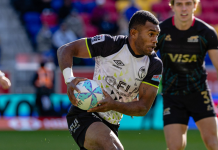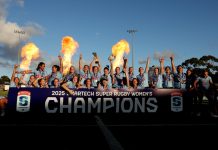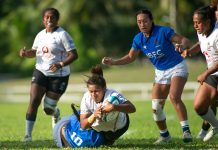


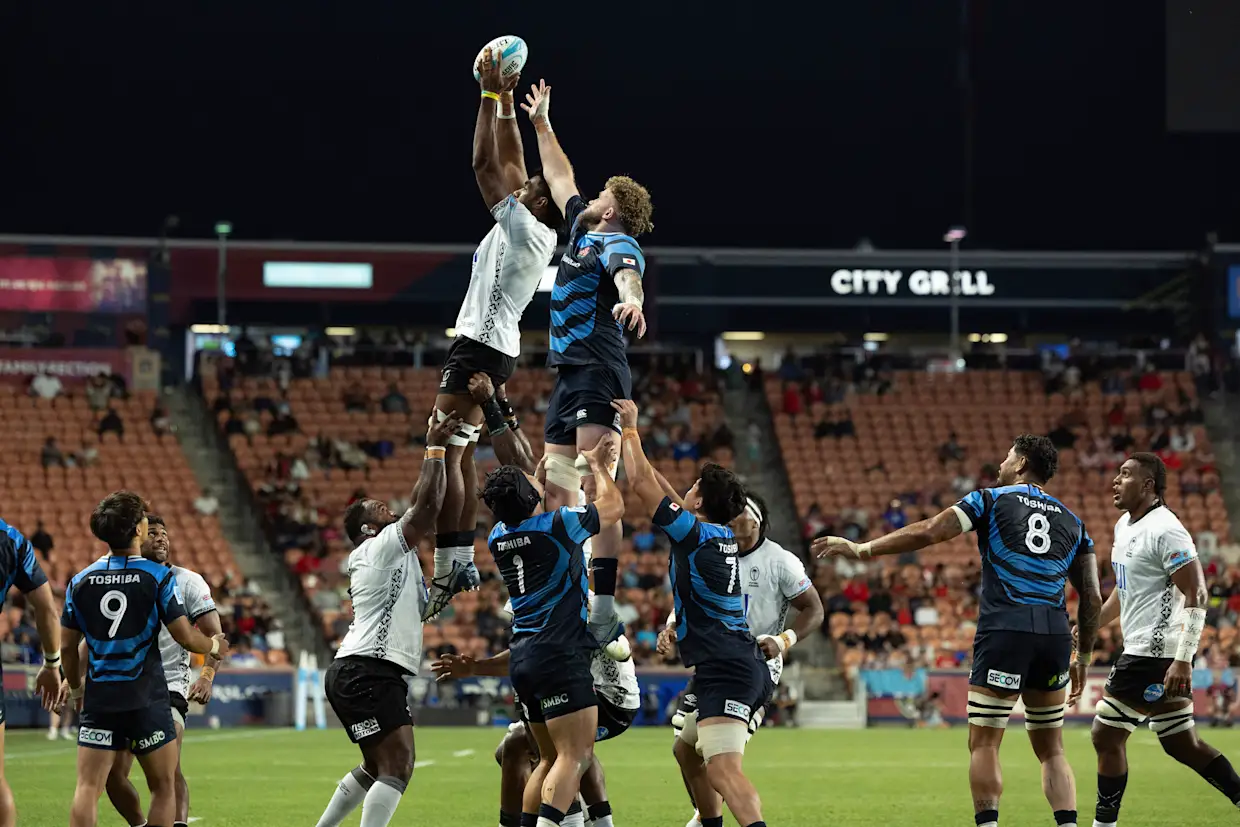
The Albanese government has publicly acknowledged it is open to funding rugby union in the Pacific after a NSW Liberal senator raised concerns about the large discrepancy in money being allocated to rugby league in the region.
Funding of rugby union in the Pacific became heavily politicised earlier this year after a $600 million (US$388 million) government package was announced to support rugby league in the region.
Rugby league is the national sport in Papua New Guinea, where the bulk of a $600 million (US$388 million) funding package will be spent, but rugby union is entrenched in sporting culture across Samoa, Tonga and Fiji. The announcement sent rugby union executives in parts of the Pacific into negotiations with Chinese government officials.
Charlotte Blundell, an official from the Department of Foreign Affairs and Trade’s Pacific economic and infrastructure division, told a Senate estimates hearing last week she was aware of a proposal being developed by Fiji, Tonga and Samoa that could lead to extra investment in rugby union.
“Although it’s self-evident that the NRL investment is larger over the next few years, the investment in things like community sports infrastructure is neutral,” Blundell said. “Ovals are in limited supply in these countries and all sports are able to utilise and benefit from some of the investment.”
Sources familiar with the plan but not authorised to speak publicly said the $150 million (US$97.24 million) proposal had received sign-off from the Tongan and Fijian governments. It is pending a sign-off from the Samoan prime minister, Laaulialemalietoa Polataivao Leuatea Fosi Schmidt, who is currently receiving medical treatment in New Zealand.
Elizabeth Peak, head of DFAT’s Pacific office, said development funding was allocated based on the proposals it received.
“We would welcome Fiji, Samoa and Tonga to put in their proposal to us when they are ready to do so,” she said.
The $600 million (US$388 million), 10-year rugby league deal was used as a way to shore up security as Chinese diplomats sought military and policing agreements across the Pacific region.
It gives Australia a veto on the deal in the event PNG signs a security deal with China, but it has inadvertently driven rugby union officials into negotiations with the Chinese government for more funding. Rugby union officials claim they need funding to prevent losing upcoming players and professionals from moving into rugby league.
Blundell said the department had so far given the Australian Rugby League Commission $66.6 million (US$43.17 million) of its funding package.
She said $250 million (US$162 million) was being used specifically for the new NRL team, the PNG Chiefs, while the rest would be spent on grassroots development. About 50 percent of the remaining $350 million (US$226 million) would be spent on grassroots in Papua New Guinea, and the rest is supposed to be spent across Samoa, Fiji and Tonga.
To put that in context, Mark Tattersall, a DFAT official from the Polynesia, Micronesia and development division, said the government had allocated $32 million (US$20.7 million) to rugby union since 2020.
In the estimates hearing, Foreign Affairs Minister Penny Wong accused senator Jessica Collins of hypocrisy when asked about whether the government was planning to mitigate the unintended consequences of the NRL investment.
“There’s a thing called political consistency,” Wong said. “If the criticism that you are making is of insufficient development assistance … senator, I look forward to your support.
“If [Collins] is saying we should spend more, that’s not consistent with the position which has been your position for two elections, to reduce funding.”
Collins said she was not asking the government to spend more.
“I will suggest that perhaps the money is spent differently and instead of going to just rugby league in these Pacific islands, they could go to rugby union as well,” she said. “Or instead of because rugby union is the national sport of these countries, not rugby league.”
Chinese money flowing into sport across the Pacific is not new. Beijing has invested millions of dollars in stadium infrastructure, transport and development in the region. But China’s diplomatic efforts have ramped up since the NRL announcement by Prime Minister Anthony Albanese and Australian Rugby League Commission chairman Peter V’landys last December.
In March, China handed Tonga a US$25 million National Sports Complex and in Fiji in May the Chinese Rugby Football Association signed a memorandum of understanding with Fiji Rugby Union to explore team frameworks and talent development pathways.
Tonga Rugby Union chief executive Aisea Aholelei also visited China last month to explore partnerships across player pathways, coaching, school programs and commercial ventures.
Blundell said the rugby unions of Fiji, Samoa and Tonga were not consulted about the multimillion-dollar rugby league package before it was announced.