Home Blog Page 9

Solomon Islands prime minister raises Pacific security pact proposal during Australia visit

0

The new prime minister of Solomon Islands has floated the idea of a Pacific-wide security pact during a visit to Canberra, in a move that could have significant strategic implications for the region.

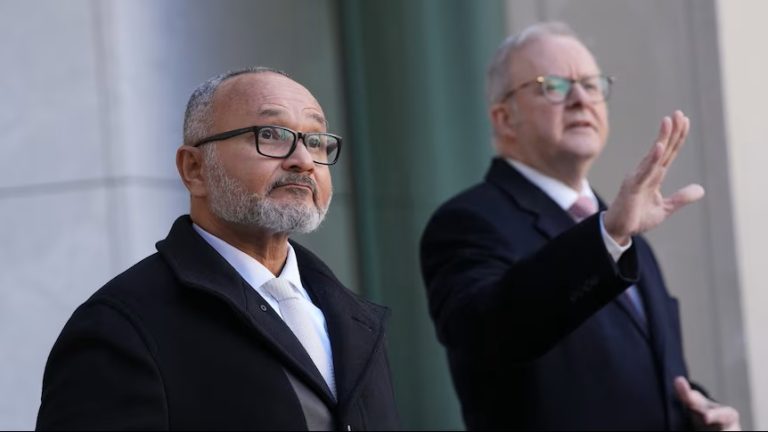
The ABC has been told that Matthew Wale, who is also the chair of the Pacific Islands Forum (PIF), raised the proposal with Prime Minister Anthony Albanese during his visit in early June.

Wale has made a sharp pivot towards Australia since taking office, kickstarting negotiations on a new treaty and promising to “review” the China-Solomon Islands security pact, although he has backtracked on a previous commitment to publish the text of the contentious agreement.

He has been careful not to criticise Beijing, saying it is a valued economic partner for Solomon Islands and insisting he wants to maintain a policy of “friends to all, enemies to none”.

But the ABC has been told that Wale has made it clear that he shares Australia’s conviction that China should not play a major role in Pacific security and that there should be a “Pacific-led” security architecture.

The ABC has been told Wale raised the idea of a Pacific-wide security treaty as a way of cementing regionalism, while adding he was in a strong position to kickstart formal discussions on the proposal as he holds the PIF chair until September this year.

Wale made a veiled reference to the idea during his press conference in Canberra when he spoke about a treaty “at some stage at the regional level”, saying the “first reference point in these matters is within the region”.

But it is not yet clear whether either Australia or New Zealand are willing to throw their weight behind the idea, which analysts say would carry both significant opportunities and risks.

A spokesperson for Wale declined to comment on the discussions, as did a spokesperson for Albanese.

One federal government source did not criticise Wale’s idea, but stressed that Australia’s main focus for now was on negotiating its new treaty with Solomon Islands.

Several senior Australian politicians are expected to visit the Pacific nation in the coming months as the federal government tries to cement the progress it made during Mr Wale’s visit.

Oliver Nobetau from the Lowy Institute said while there might be “real merit” to the idea, it could “easily backfire for Australia and New Zealand if they put their weight behind it before there’s wide buy-in from the Pacific”.

“This seems like a no-brainer, but there’s also an obvious reason why it hasn’t happened yet,” he said.

“Trying to get one cohesive approach when there’s such varied approaches to security across the region is an uphill battle, which has to be fought.”

Nobetau also suggested Australia might prefer to focus on bedding down a host of bilateral agreements it is negotiating or has recently signed with a host of Pacific nations, including Fiji, Solomon Islands, Papua New Guinea, Vanuatu, Tuvalu, Tonga and Nauru.

Pacific security expert Anna Powles from Massey University said Wale seemed to be “acting with considerable urgency in the face of what he may fear is a short political window of opportunity”.

But she said that it would “take time to secure consensus across the region” for any new pact.

“The key political and legal questions Wale’s proposed regional security agreement raises are, for example, would it be a legal or non-binding instrument?” she said.

“How would it reflect Pacific concerns about militarisation? Where in the regional security architecture would it sit, and who would have oversight?

“And ultimately, what would its purpose be in times of regional crises, such as instability in non-sovereign states such as New Caledonia or in the case of renewed instability in Bougainville?”

The ABC understands Wale is expected to discuss this idea, which is in its early stages, with several other Pacific leaders, including Fiji’s Prime Minister Sitiveni Rabuka during a visit in the coming weeks.

The ABC has contacted Rabuka’s office for comment.

It comes as the federal opposition presses the government to resume bipartisan trips to the Pacific, with Shadow Foreign Minister Ted O’Brien travelling to Papua New Guinea and Fiji, his first overseas trip since taking on the portfolio in February.

O’Brien told the ABC he wanted to send a “clear signal that Australia is a trusted partner and will continue to be a trusted partner no matter who is in government”.

Foreign Minister Penny Wong coordinated two bipartisan trips to the Pacific in the Albanese government’s first term, but none so far in its second, and O’Brien said he would like to restart them.

“I’d welcome the opportunity to be showing bipartisan force when it comes to the Pacific in particular,” he told the ABC.

The foreign minister has lashed the Coalition over its record in the Pacific, calling the 2022 China-Solomon Islands security pact a strategic disaster for Australia and pointing to fierce Pacific criticism of the Morrison government’s climate policies.

She has also criticised the Coalition for refusing to give full backing to the Pacific Engagement Visa, which offers permanent residency to 3,000 Pacific Islanders per year, because it opposes the use of a lottery to select applicants.

Senator Wong has warned the opposition’s position could undermine Australia’s reputation in the region, but O’Brien said he was “disappointed” by that criticism.

“We cannot afford to have important relationships, such as those with the Pacific, undermined by our own domestic partisan debate,” he said.

He did not rule out shifting the Coalition’s position on the Pacific Engagement Visa, but said he was not yet “convinced” by the government’s arguments.

“The Coalition supports the principle of the Pacific Engagement Visa, but continues to have concerns about the lottery-style ballot system,” he said.

“I am yet to be convinced the lottery system meets the needs of employers or aligns with the approach of other Pacific Island nation programs like the PALM scheme.”

A spokesperson for Senator Wong said the government would “consider opportunities for bipartisan engagement where appropriate”.

“Pacific leaders have made clear what matters most is support for their highest priorities, particularly meaningful action on climate change,” they said.

“A ballot ensures the Pacific Engagement Visa is allocated through a fair and transparent process.”

The unexploded bombs still threatening a Pacific nation 80 years on

0

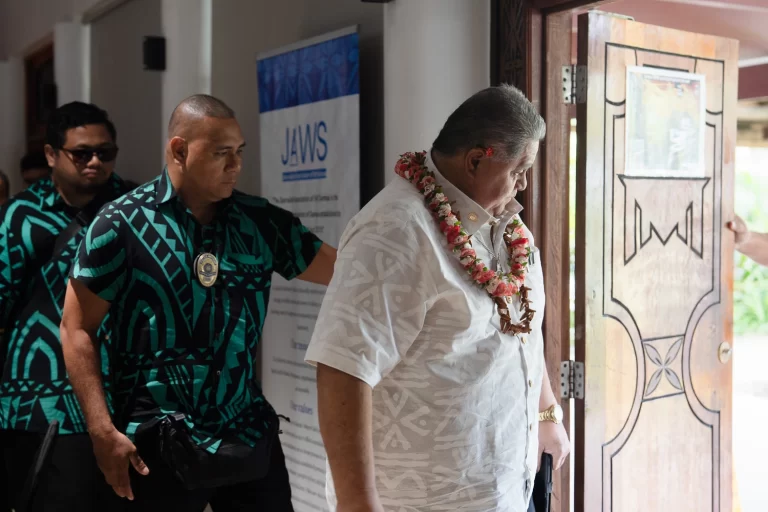
More than 80 years after World War II, unexploded bombs are still being found near homes, schools and gardens in Solomon Islands.

Cleo Fraser, producer of a new documentary on the issue, explains how ordinary daily life in the Pacific nation can turn deadly.

Up to 20 people are killed or injured there each year by unexploded ordnance, or UXO.

The ongoing danger is the focus of our Solomon Islands-New Zealand documentary The War Below: Restoring Hope in the Solomon Islands, a new screening at the Doc Edge Film Festival.

Everyone we’ve spoken to has said: I can’t believe that this is happening, because you’d think, why don’t they just go and clean these up?

Guadalcanal (the most populated region in the Solomon Islands) was the site of a major battle during World War II between the Allies and Japan, including some New Zealand soldiers. And when the war finished, they left everything behind.

The War Below, available on YouTube, follows two everyday women whose lives have been changed forever by UXOs, including Lorettalyn Ale, whose husband and son were killed when a bomb exploded at a family BBQ.

Film director Tuki Laumea hopes New Zealand audiences will connect with our shared histories, as well as the injustice of another country having to live with this danger.

“The Solomon Islands was a key battleground in the Pacific Theatre of War – the sacrifice of people in that country meant New Zealand stayed safe,” Tuki says. “Now they’re asking us to help them.

“These people live with this every single day. Children go to school and the bombs sit right there under their school.”

In August 2024, more than 200 bombs were found at a school in Honiara, the country’s capital.

“We were given access to the police stockpile where bombs found in communities are stored before being decommissioned.

“My heart was just racing, it was absolutely frightening. It also points to: imagine living there with these everyday because kids are finding them, they’re finding them just going for a walk somewhere.

Just days before we held a community screening of the film in Honiara a bomb exploded, seriously injuring one person”.

The documentary was created in close collaboration with Bomb Free Solomon Islands, the country’s only registered charity assisting survivors.

Mother and education specialist Maeverlyn Pitanoe, who founded the charity, says a regional solution is needed as Solomon Islands does not have the resources to clear all the bombs.

She’s hopeful that with a wider understanding of the issue, other countries will realise their responsibility and contribute to a collective response.

She told TVNZ’s Breakfast this week: “I would like to thank you for coming to see this film, a very moving film that I thought everybody should see because of the impact of war on us survivors and victims.”

We as filmmakers and Bomb Free Solomon Islands are working towards creating longterm impact through the film – creating awareness, direct support for survivors and through encouraging the Solomon Islands government to join the Convention on Cluster Munitions.

Samoa PM dismisses ADB airline warning: ‘They don’t know what we are facing’

Samoa Prime Minister Laaulialemalietoa Polataivao Schmidt has defiantly brushed aside warnings from the Asian Development Bank (ADB) that a government-backed airline could prove financially devastating for Samoa, telling Parliament that development partners “don’t know anything we are facing.”

The sharp exchange unfolded on Tuesday after Deputy Leader of the Opposition Fonotoe Pierre Meredith raised concerns over the government’s plan to relaunch international jet services, citing an ADB warning reported by the Samoa Observer on Monday.

The report revealed that fact-finding meeting with a Samoan government delegation raised questions about whether Samoa could sustain two airlines on key international routes and warned that a new airline venture could carry significant financial risks.

Laaulialemalietoa immediately pushed back against the criticism.

“Leave it to me, you worry about things you can’t do,” the Prime Minister told Fonotoe.

“We already prepared for it.”

The Prime Minister accused critics of undermining the government’s ambitions.

“It’s just discouraging. It weakens the heart,” he said.

Laaulialemalietoa also insisted the project would attract investors without requiring support from those questioning its viability.

“Don’t worry. Even you don’t need to invest in the plane. But the country, they’re waiting and will come and invest in the plane,” he said.

In his strongest remarks, the Prime Minister dismissed the concerns raised by development partners.

“Leave our partners and donors. They don’t know anything we are facing.”

Fonotoe responded with what appeared to be a sarcastic remark, saying the Prime Minister remained confident the government would eventually acquire an aircraft.

“The Prime Minister is still courageous and adamant he’ll get a plane,” he said.

Fonotoe then pointed to previous comments by the Minister of Finance, who had indicated the acquisition could take up to five years.

“The Minister of Finance said we’ll get it in five years. So therefore, we will not get it in this political term,” he said.

More political parties reflect healthy democracy, Fiji needs time for constitutional changes, says Ratuva

0

The emergence of more political parties ahead of Fiji’s next General Election should be viewed as a sign of a healthy democracy rather than a cause for concern, says political analyst and academic Professor Steven Ratuva.

As new political groups seek registration ahead of the polls, Ratuva said Fiji had previously experienced a crowded political landscape and voters should not be alarmed by the trend.

“People have a right to set up political parties. We have had more than 10 political parties in the past,” Ratuva said.

His comments come amid public debate over whether an increasing number of parties could fragment the vote and complicate governance.

Ratuva said the impact of multiple parties on the political system would depend largely on the political environment and the electoral framework in place.

“It depends very much on the circumstances. At the moment, we’re not sure,” he said.

He added that electoral laws would also play a significant role in shaping the political landscape ahead of the election.

“What I’m suggesting is that the law will also determine that,” he said.

Ratuva said questions surrounding governance arrangements, including discussions about interim administrations during election periods, would ultimately need to be guided by constitutional provisions and legal advice.

“Constitutionally, we will have to be fully advised,” he said.

According to Ratuva, Fiji may face a race against time to complete constitutional reforms before the next General Election.
He warned that rushing constitutional changes or a referendum could undermine public understanding and confidence in the process.

Ratuva said voters needed adequate time to fully understand any proposed amendments.

With the Constitution Review Commission conducting consultations and the Electoral Commission reviewing electoral arrangements,Ratuva said the country faced a significant challenge in balancing reform efforts with constitutional timelines.

“For a proper election to take place, timeliness is critical. We have only about five to six months,” Ratuva said.

He said any proposed constitutional changes would need to pass through Parliament and could potentially be subjected to a referendum, both of which require extensive public engagement.

“A referendum is not easy. It’s basically a yes or no question. Do you support this constitution, yes or no?” he said.

Ratuva said there was often an assumption that citizens were familiar with constitutional provisions, but this was rarely the case.

“The reality is that not many people read the Constitution, even lawyers and academics. It’s only when they need to refer to a particular part that they read it,” he said.

He stressed that voters needed sufficient time to understand any proposed changes before participating in a referendum.

“We need time to socialise the Constitution and also the referendum process,” he said.

Ratuva warned that attempting to complete multiple reforms simultaneously could create challenges.

“There are so many things happening all at once. Whether we have the time to be able to do it, that’s another question,” he said.

He said policymakers also needed to consider the wider implications of any delay to the election.

“If we delay the election, that’s another constitutional matter, and we don’t want to look bad in the eyes of the world,” he said.

Despite these concerns, Ratuva acknowledged that Fiji remained constitutionally on track for the next election.

“Constitutionally, we should be ready, and I think the Electoral Office has said that,” he said.

The next General Election is constitutionally due in 2026.

The Constitution Review Commission, established by the Coalition Government, is consulting the public on potential changes to the 2013 Constitution.

Significant amendments could require parliamentary approval and, depending on the legal pathway adopted, a referendum involving registered voters.

Palau Justice Minister calls for turning Regional Security aspirations into action

0

By Kambes Kesolei

Palau’s Minister of Justice, Jennifer Olegeriil, has urged Pacific leaders to ensure that the commitments made at high-level summits and dialogues are translated into concrete measures that strengthen frontline law enforcement.

Speaking at the opening day of the Pacific Peace and Security Dialogue in Suva, Olegeriil stressed that regional cooperation against transnational crime must move beyond rhetoric.

She noted that while Pacific nations regularly attend international forums and pledge collective action, the real test lies in whether police commissioners, chiefs, and officers on the ground can operationalise those commitments.

“We have to ask ourselves: how can we turn all of these aspirations at this level… into real-life action items that can really impact at the community level,” Olegeriil said.

She highlighted the growing threats of drug trafficking, human trafficking, online exploitation, and organized crime, warning that these challenges are too large for any single island nation to tackle alone.

Olegeriil called for stronger intelligence-sharing networks, collective border protection, and leveraging partnerships with larger countries such as Australia, New Zealand, the United States, Japan, Taiwan, and even China.

Olegeriil also emphasised that public trust in law enforcement is essential, particularly as criminal syndicates exploit weaknesses and offer temptingalternatives to under-resourced officers.

She urged Pacific governments to strengthen oversight mechanisms, build police leadership capacity, and provide resources that reinforce integrity in law enforcement institutions.

Her remarks came during a panel on “Leaders on Challenges and Opportunity,” alongside Fiji’s Minister of Defence Pio Tikoduadua, Solomon Islands’ Minister of Development Petr Kenilorea Jr, and Niue’s Minister of Home Affairs Richie Matuama.’

Using popular election campaign themes by Palau’s Vice President Raynold Oilouch and President Surangel Whipps Jr, Minister Olegeriil closed by reiterating that regional solidarity is key: “Together we are better. Together we are stronger.”

Governor General warns climate change is Solomon Islands’ most existential threat

0

The Governor-General, Sir David Tiva Kapu, says climate change is Solomon Islands’ “most existential threat” and is already washing away shorelines, adding that it is not a topic for distant debate.

Speaking at the King’s birthday commemoration last Friday, Sir David said the reality is visible in sinking outer atolls, saltwater intrusion killing staple food gardens that fed generations, and unpredictable weather endangering fishermen.

“We are paying the price for a crisis we did not create,” he said.

He urged the government to continue being a “vocal, uncompromising voice on the global stage” while shifting domestically “from survival to adaptation.”

The Head of State called for investment in climate-resilient infrastructure, the protection of mangrove forests as natural storm-surge defences, and the securing of freshwater supplies.

“The ocean is our lifeblood, but it is currently a sleeping giant that must be managed with foresight and scientific rigour,” he said.

He linked climate impacts directly to community stability, saying environmental stress drives displacement and social problems.

His speech tied climate action to youth employment and national security.

Sir David urged all Solomon Islanders to care for the environment as part of nation-building, saying the challenge requires the same spirit that faced past crises.

China, Pacific island countries to forge closer cooperation via platforms

0

A briefing session on China-Pacific Island Countries (PICs) multilateral cooperation platforms was held in Nanjing, east China’s Jiangsu Province, on Tuesday.

Qian Bo, China’s special envoy for PICs affairs, said seven multilateral cooperation platforms have delivered on four global initiatives proposed by China, tapped into local resources, aligned with actual needs of PICs, and facilitated pragmatic cooperation with PICs.

They have played a significant role in helping PICs improve climate change response capacity, respond to natural disasters, accelerate agricultural development, advance poverty alleviation, and strengthen police authorities’ law enforcement capacity, Qian added.

To support the island countries’ development and implement the consensus reached at previous China-Pacific Island Countries Foreign Ministers’ Meetings, the seven platforms were established, covering fields including emergency material reserve, climate change cooperation, poverty reduction and development, disaster prevention and mitigation, agriculture, and police training.

Over 100 participants attended the event, including diplomatic envoys and representatives from Vanuatu, Samoa, Fiji, Solomon Islands, Papua New Guinea, Kiribati, the Federated States of Micronesia and Tonga, heads of the seven multilateral cooperation platforms, as well as representatives from relevant universities, think tanks, enterprises and institutions.

At the briefing, directors of the seven platforms comprehensively reviewed the outcomes of China’s cooperation with PICs in recent years, and held in-depth exchanges and discussions centred on deepening practical cooperation and aligning with the development strategies of the PICs.

Diplomatic envoys from PICs noted that the platforms have delivered tangible benefits to the development of their countries.

They expressed the expectation that, relying on the communication mechanism established through this briefing, the two sides will further deepen project matching, expand cooperation areas, and leverage the strengths of local resources to launch more livelihood cooperation projects that benefit the people at the grassroots level.

Pacific Leaders Agree on Plan for Safer, Cheaper Flights

0

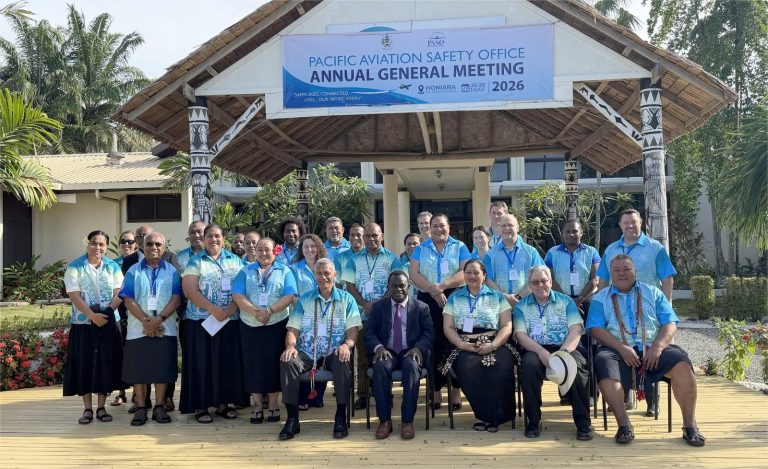
Leaders from 13 Pacific Island nations met online on 12 May 2026, for the Fourth Regional Aviation Ministers meeting (RAMM4) and focused on one big question: how can air travel in the Pacific become safer, more affordable, and better connected? The meeting, chaired by Tuvalu’s Minister for Transport, Energy, Communication and Innovation, Simon Kofe, ended with several agreements that could shape how people fly across the region for years to come.

Why Flying Matters So Much Here

For many Pacific nations, planes aren’t just for vacations. With islands often far apart and surrounded by ocean, flights can be the only fast way to reach a hospital, deliver supplies, or visit family on another island. “It is the connection between our people,” said Secretary General of the Pacific Islands Forum, Baron Waqa in his opening remarks.
With that in mind, leaders agreed on a shared plan to guide future decisions about air travel in the region. Importantly, the plan is more like a shared roadmap than a strict rulebook — each country still gets to make its own choices.

A Push for Safer Skies

The International Civil Aviation Organisation (ICAO) Implementation Support Roadmap (ISR), developed by ICAO’s Asia-Pacific Regional Office and Pacific Liaison Office was presented for consultation to States with the aim to strengthen aviation safety systems across Pacific Small Island Developing States. Ministers agreed that civil aviation authorities and the Pacific Aviation Safety Office (PASO) should work with ICAO to adopt the roadmap — a coordinated regional approach that will improve safety outcomes and build institutional capacity where it is needed most.

ICAO Secretary General, Juan Carlos Salazar said “ICAO cannot deliver the Roadmap alone. Success requires cooperation, coordination, and support from Assistance Partners, along with your continued commitment to strengthen the Pacific Aviation Safety Office, PASO.”

The goal of the Roadmap is to strengthen safety systems across the Pacific’s smaller island nations, many of which face unique challenges due to their size and location.

The Fuel Crisis: Emerging Operational Considerations

The fuel crisis was not formally on the RAMM4 agenda, but it remained an important underlying issue. PASO General Manager, Ueta Solomona Jnr confirmed that PASO has provided its assessment of the safety and security implications associated with rising fuel costs to the Council of Regional Organisations of the Pacific (CROP) Taskforce, led by the Pacific Islands Forum Secretariat.

As cost pressures increase, there is a possibility that some operators may face operational constraints, including sourcing challenges and adjustments to maintenance or procurement practices. At the same time, reduced flight activity could result in fewer flying hours, with implications for maintaining pilot currency and ongoing proficiency.

Air traffic services may also be affected, as lower traffic volumes can limit exposure to complex operational scenarios that are important for sustaining high skill levels.

There are broader security considerations as well. Constrained resources and reduced operational activity may place added pressure on aviation security systems and personnel, potentially affecting the ability to consistently maintain required levels of readiness and compliance.

Solomona noted that “the fuel crisis is an increasingly pressing concern for States, given its widespread impact on operational and economic conditions across the aviation sector.”

A paper from the Taskforce is expected once further consultations are completed, with Ministers to be updated in due course.

New Opportunities

There was good news too for aviation students in the Pacific. Qatar announced that two students from the region will attend an aviation academy in Qatar starting in September 2026, with two more scholarships available the following year. Singapore also pledged continued support for training programs, and the World Bank signaled interest in helping fund future projects.

Looking Ahead

Leaders agreed to focus on making flights more affordable — a goal that directly affects everyday travelers. A new working group – Air Connectivity Working Group, will focus specifically on lowering ticket prices and improving connections between islands.

PASO General Manager, Ueta Solomona welcomed this as it will ensure regional connectivity efforts translate into tangible benefits — including more affordable fares — for Pacific communities.

“RAMM provides a mechanism to elevate regional aspirations — not only to strengthen aviation safety and security standards, but also to improve intra-regional connectivity, which is essential to achieving more affordable air travel for our people,” said Solomona.

Ministers also confirmed progress on the Pacific Regional Aviation Action Plan, endorsing the establishment of a regional regulatory working group to progress legal harmonisation — a key enabler for the connectivity and safety goals that form the foundation of the entire Plan.

Decisions made this year will be discussed at the Pacific Leaders’ Meeting in Palau in September, positioning aviation as a priority on the region’s main political stage. Tuvalu will host the next meeting in person in 2027.

Strengthening the frontline of Pacific fisheries: FFA opens more scholarship opportunities

0

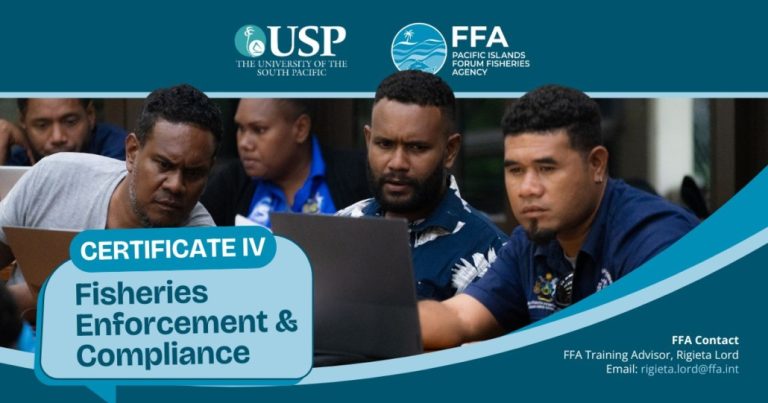
The Pacific Islands Forum Fisheries Agency (FFA) is continuing its investment in the region’s frontline fisheries workforce by opening another scholarship opportunity through its Certificate IV in Fisheries Enforcement and Compliance programme.

Delivered in partnership with the University of the South Pacific (USP), the Certificate IV programme is now accepting nominations for Cohort 12 and is scheduled to commence on 07 September 2026.

The programme is designed to strengthen the technical and operational capabilities of national authorities responsible for the compliance and enforcement of offshore fisheries operations.

FFA is calling for nominations from its 17 Members. The scholarship is not open to direct public applications. Interested candidates must be nominated through their national authority or ministry responsible for fisheries.

The programme targets fisheries officers, compliance officers, fisheries observers, port inspectors, maritime police, navy personnel, customs officers and other authorised officers involved in fisheries compliance and enforcement.

FFA Director-General Noan David Pakop said investing in people remains one of the most effective ways to strengthen fisheries governance and enforcement across the Pacific.

“Our fisheries officers are at the frontline of protecting one of the region’s most valuable natural resources. As compliance challenges continue to evolve, so too must the skills and capabilities of the people responsible for safeguarding them,” Pakop said.

He said the Certificate IV programme forms part of FFA’s broader commitment to building professional pathways for fisheries personnel and strengthening national and regional compliance systems.

“Through our partnership with USP Pacific TAFE and regional partners, we are creating opportunities for officers to gain recognised qualifications while building practical skills that can be applied directly in their day-to-day work,” he said.

FFA scholarships will cover tuition fees, international travel, accommodation and daily subsistence allowances for the face-to-face component of the programme.

Nominations close on Friday 30 July 2026.

FFA Members are Australia, Cook Islands, Federated States of Micronesia, Fiji, Kiribati, Republic of the Marshall Islands, Nauru, New Zealand, Niue, Palau, Papua New Guinea, Samoa, Solomon Islands, Tokelau, Tonga, Tuvalu and Vanuatu.

For further information about the programme, please contact FFA Training Advisor Rigieta Lord at rigieta.lord@ffa.int

Fiji set to compete for global rugby supremacy as Nations Championship Trophy is unveiled

0

Fiji’s place among the world’s rugby elite has been reinforced with the unveiling of the inaugural Nations Championship Trophy, as the Flying Fijians prepare to take on the strongest rugby nations on the planet in a groundbreaking new international competition beginning next month.

The newly revealed Nations Championship Trophy will be contested by 12 of the world’s leading rugby nations, including Fiji, which joins Southern Hemisphere powerhouses Australia, New Zealand, South Africa and Argentina, alongside Japan, in a historic tournament designed to determine the dominant force in world rugby.

Standing 67cm tall and weighing 15kg, the silver and gold-plated trophy represents the pinnacle of international rugby achievement and will be awarded to the inaugural Nations Championship winner at the Finals Weekend in London later this year.

For Fiji, participation in the Nations Championship marks another significant milestone in the nation’s rugby journey, providing the Flying Fijians with a consistent platform to compete against the best teams from the Northern Hemisphere, including England, France, Ireland, Italy, Scotland and Wales.

The innovative competition format will see Fiji and its Southern Hemisphere counterparts face teams from the Six Nations in a series of high stakes matches across the traditional July and November international windows. Every match will contribute to overall standings, with teams battling for qualification to the Nations Championship Finals Weekend.

The trophy’s design reflects the global nature of the competition, featuring a gold-plated globe at its centre and distinctive handles symbolizing the rivalry between the Northern and Southern Hemispheres. The championship aims to bring together the world’s leading rugby nations in pursuit of global supremacy while creating new opportunities for growth and competition across the sport.

SANZAAR Chief Executive Officer Brendan Morris said anticipation continues to build ahead of the inaugural tournament.

“The waiting is almost over and the anticipation for the inaugural Nations Championship continues to build, and the unveiling of the new Trophy signals that kick-off is not far away,” Morris said.

“The twelve best teams in world rugby will battle it out for the overall title of Nations Championship champion, while uniquely all teams will determine, through match results in July and November and the Finals Weekend, which hemisphere is dominant in the world of rugby.”

Fiji’s inclusion alongside rugby’s traditional powerhouses underscores the Flying Fijians’ growing reputation on the international stage and provides local fans with the opportunity to see their national team compete in a tournament expected to become one of the sport’s premier global events.

The Nations Championship has been created through a landmark partnership between Six Nations Rugby and SANZAAR and will be held every two years outside Rugby World Cup and British & Irish Lions Tour years.

The tournament kicks off on 4 July, with the Flying Fijians aiming to make history by becoming the inaugural Nations Championship winners and etching Fiji’s name onto the trophy for the first time.