


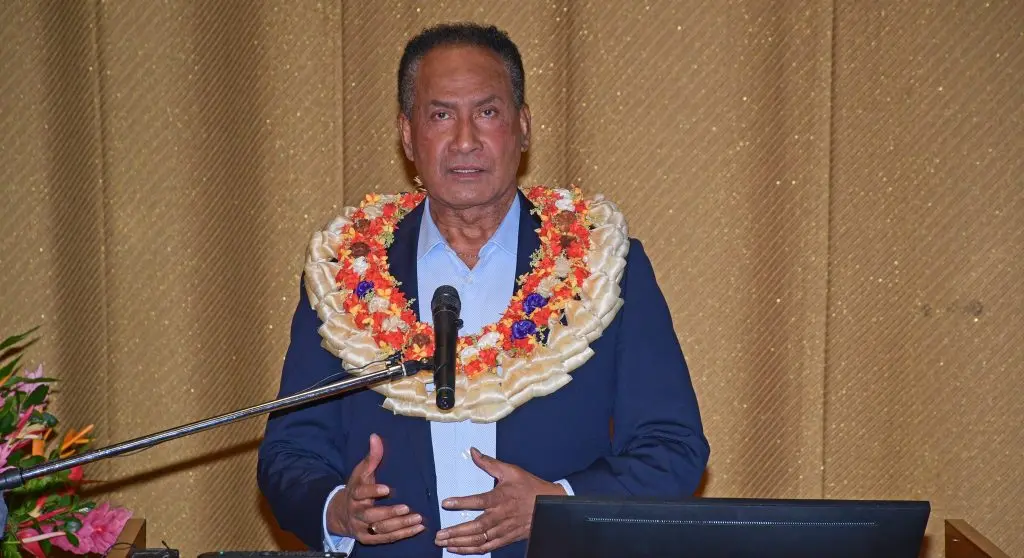
The emergence of more political parties ahead of Fiji’s next General Election should be viewed as a sign of a healthy democracy rather than a cause for concern, says political analyst and academic Professor Steven Ratuva.
As new political groups seek registration ahead of the polls, Ratuva said Fiji had previously experienced a crowded political landscape and voters should not be alarmed by the trend.
“People have a right to set up political parties. We have had more than 10 political parties in the past,” Ratuva said.
His comments come amid public debate over whether an increasing number of parties could fragment the vote and complicate governance.
Ratuva said the impact of multiple parties on the political system would depend largely on the political environment and the electoral framework in place.
“It depends very much on the circumstances. At the moment, we’re not sure,” he said.
He added that electoral laws would also play a significant role in shaping the political landscape ahead of the election.
“What I’m suggesting is that the law will also determine that,” he said.
Ratuva said questions surrounding governance arrangements, including discussions about interim administrations during election periods, would ultimately need to be guided by constitutional provisions and legal advice.
“Constitutionally, we will have to be fully advised,” he said.
According to Ratuva, Fiji may face a race against time to complete constitutional reforms before the next General Election.
He warned that rushing constitutional changes or a referendum could undermine public understanding and confidence in the process.
Ratuva said voters needed adequate time to fully understand any proposed amendments.
With the Constitution Review Commission conducting consultations and the Electoral Commission reviewing electoral arrangements,Ratuva said the country faced a significant challenge in balancing reform efforts with constitutional timelines.
“For a proper election to take place, timeliness is critical. We have only about five to six months,” Ratuva said.
He said any proposed constitutional changes would need to pass through Parliament and could potentially be subjected to a referendum, both of which require extensive public engagement.
“A referendum is not easy. It’s basically a yes or no question. Do you support this constitution, yes or no?” he said.
Ratuva said there was often an assumption that citizens were familiar with constitutional provisions, but this was rarely the case.
“The reality is that not many people read the Constitution, even lawyers and academics. It’s only when they need to refer to a particular part that they read it,” he said.
He stressed that voters needed sufficient time to understand any proposed changes before participating in a referendum.
“We need time to socialise the Constitution and also the referendum process,” he said.
Ratuva warned that attempting to complete multiple reforms simultaneously could create challenges.
“There are so many things happening all at once. Whether we have the time to be able to do it, that’s another question,” he said.
He said policymakers also needed to consider the wider implications of any delay to the election.
“If we delay the election, that’s another constitutional matter, and we don’t want to look bad in the eyes of the world,” he said.
Despite these concerns, Ratuva acknowledged that Fiji remained constitutionally on track for the next election.
“Constitutionally, we should be ready, and I think the Electoral Office has said that,” he said.
The next General Election is constitutionally due in 2026.
The Constitution Review Commission, established by the Coalition Government, is consulting the public on potential changes to the 2013 Constitution.
Significant amendments could require parliamentary approval and, depending on the legal pathway adopted, a referendum involving registered voters.