Home Blog Page 51

UXO disposal operation to be undertaken in Central Bougainville with New Zealand support

0

The Autonomous Bougainville Government (ABG) will lead the safe disposal of unexploded ordnance (UXO) identified in Central Bougainville, with technical support from the Government of New Zealand through the New Zealand Defence Force (NZDF).

Following a formal request by the ABG President, Ishmael Toroama, the Government of New Zealand has confirmed its support and will deploy Explosive Ordnance Disposal (EOD) specialists and supporting assets to Bougainville to carry out the operation.

The operation will focus on two World War II-era bombs located near Kieta Primary School and Aropa Airfield. These items have been assessed as posing a potential safety risk to nearby communities and require specialist handling and disposal.

President Toroama said the operation reflects the strong partnership between Bougainville and New Zealand, particularly in ensuring the safety and wellbeing of communities, particularly as Bougainville continues recovery efforts following Tropical Cyclone Maila.

“This operation is about protecting our people, especially our children, families, and communities living near these dangerous remnants of war,” President Toroama said.

“These unexploded bombs have remained a serious risk for many years, and we are grateful to the New Zealand Defence Force for their timely support and expertise in helping us safely remove this threat.”

The ABG emphasises that this is a Bougainville-led operation, with all activities being coordinated under the direction of the ABG, in close collaboration with national agencies, the Bougainville Police Service, and local authorities.

Deployment of NZDF personnel and equipment is expected to commence immediately, with disposal activities planned within the coming week, subject to operational and safety conditions.

The ABG is assuring communities in Kieta and Aropa that all necessary safety measures will be strictly enforced throughout the operation. Temporary safety cordons will be established around both sites, and members of the public are strongly urged to comply with all instructions issued by authorities on the ground.

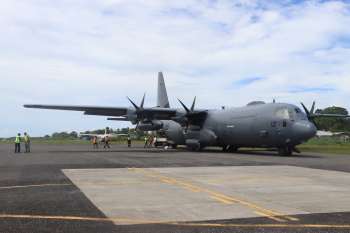
During the disposal process, residents may observe increased activity, including the movement of defence personnel, helicopters, and preparation works such as sandbagging around the sites. A controlled detonation will also produce a loud noise, which is expected and part of the safety procedure.

The ABG, through its relevant agencies and in coordination with NZDF teams, will continue to provide timely updates and community notifications before, during, and after the operation.

Once the UXO has been safely disposed of, communities will be formally advised when the areas are declared safe.
Communities are reminded that any suspected unexploded ordnance should not be touched and must be reported immediately to the appropriate authorities.

The programme will be undertaken by NZDF with coordination from the ABG Office of the Chief Secretary, the ABG Department of Community Government, National Airport Cooperation and New Zealand High Commission in Port Moresby.

Powerful states are trying to sabotage decarbonisation of shipping

0

Pacific Island states cannot and will not allow key climate shipping agreement to be watered down.

By Ralph Regenvanu

The global fallout of the closure of the Strait of Hormuz may create the impression that the world cannot function without fossil fuels. Nothing could be further from the truth. Every single industry can and must decarbonise.

For global shipping, this process would be relatively easy because technological solutions exist and a single United Nations agency can set legally binding rules for all ships. The first steps have already been made.
In 2025, member states of the International Maritime Organisation (IMO) agreed on a policy mechanism to cut shipping emissions: the Net-Zero Framework (NZF). But they opted to postpone a decision on formal adoption of this landmark agreement.

This delay is emblematic of obstructive tactics used by countries opposing climate action.

The IMO Framework – the world’s first global carbon price on any international polluter – took years of compromises and watering-down. As it stands, it is the lowest possible bar Pacific Island states like the one I represent can accept. We cannot give in another inch.

While I join the First Conference on Transitioning Away from Fossil Fuels in Santa Marta, Colombia, delegates will gather again at the IMO in London to decide whether to uphold their unanimous commitment to phase out fossil fuels in a just and equitable way.

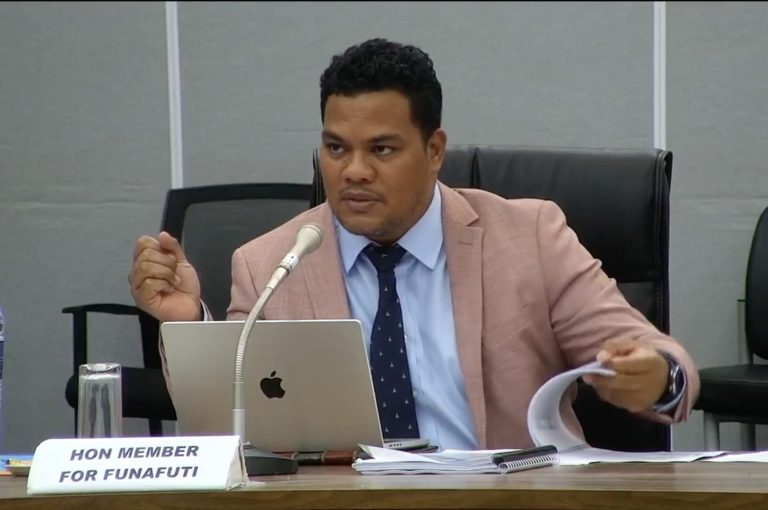
The delegates of Vanuatu who travel to London have a mandate to push for the adoption of the NZF this year.

Should anyone reopen the framework to water it down, our position is clear: We will revert to our original Pacific demand for a universal levy on emissions of US$150 per tonne of carbon dioxide.

Last year my country abstained from the vote on the NZF agreement. We reached that decision because the mechanism is not nearly ambitious enough. Even so, it is a starting point we can work with.

But since then, the tide has shifted dramatically.

After the delay in adoption, a small group of countries is now suggesting further weakening the ambition in the framework to meet the demands of particularly influential states whose current policy positions are not aligned with climate ambition. This strategy is problematic as reducing our collective actions to align with those that want no climate action at all is incompatible with our people’s continued survival.

The world’s poorest countries, and the planet, simply cannot afford anything less than what is already on the table.

The framework, as it is, gives the world and the industry some chance of meeting the climate obligations that IMO countries committed to in 2023, namely reaching net-zero emissions by 2050 in a just and equitable way.

The NZF introduces penalty fees – eg emission pricing for noncompliance with the regulation. This provides the regulation with a “stick” to ensure ships comply or else they must pay.

The penalties also represent revenues, up to US$10bn to US$12bn a year, to both incentivise industry transition and enable a fair transition for all. This fund is a lifeline for developing – and especially least developed – states to be able to afford clean maritime energy upgrades and compensate for the rising trade costs because of this transition.

Some claim that revenues raised by the NZF will blow out transport costs. This is preposterous.

The penalties charged through this framework come down to less than US$1.50 per year for every living human being – although the biggest polluters should pay this cost. If the richest 10 percent of the world’s population foots this bill, it adds up to less than US$15 per person. That’s a few coffees a year, which the world’s richest can easily spare.

Losing both financial penalties for noncompliance and financial support for countries like mine in the name of a political compromise with rich oil-producing states is a bad deal. Not just for all climate-vulnerable states but also for the industry that demands and deserves clarity.

If anything, we need more action and more ambition in the framework.

For years, Pacific states have pushed for the IMO regulation to be in the form of a universal levy on emissions, by pricing all emissions. We managed to get the majority of IMO member states on board, including the European Union, South Korea and Japan, as well as important Global South states, such as Panama and Liberia. However, the US has been very effective in exerting its influence in this area, which is resulting in shifts to some positions to the detriment of us all.

Our position was always backed by the best available scientific evidence.

A levy on all shipping emissions is the best way to send an unambiguous signal to the industry: Invest in the future now! The revenues, up to 10 times more than those from the NZF, serve as both a bigger stick for polluters and a bigger carrot for first movers and cash-poor countries…..PACNEWS

This is not a handout: Hitting net zero by 2050 is not possible if our countries cannot invest in clean ships.

The bridge we have built in the form of the NZF through years of compromise and evidence is still standing. Let us cross it together by adopting it as agreed without any further dilution.

Pacific states stand ready to fight for what science and justice demand, and we call on our partners to stand with us.

Ralph Regenvanu is Vanuatu’s Minister for Climate Change Adaptation, Energy, Environment, Meteorology, Geo-Hazards and Disaster Management.

Fate of Moana Pasifika raises questions about its relevance to the development of Rugby in Pacific Islands

0

The debate over the future of Moana Pasifika is heating up, because while many players past and present are calling for the Super Rugby franchise to be saved, there are others who say it was always doomed to fail.

The club’s critics argue that finance is only part of the problem, and they accuse Moana of failing to deliver on a commitment to nurture and develop players who could go on to play at international level for Tonga and Samoa.

Former Tonga international and Melbourne Rebels player, Eddie Aholelei, says the saddest aspect of Moana Pasifika folding is that it means that 48 players will lose their jobs.

“The players, the staff and their livelihood….I just hope that their able to secure their future,’ said Eddie Aholelei.

“I know as a former player that it’s a tough situation to be in to not know what’s going to happen next year.”

Since its inception the, Moana Pasifika was designed to be a player pipeline which would trickle down into Tonga and Samoa’s national squads. At the 2023 Rugby World Cup, more than a quarter of each country’s players were on the books with Moana.

The Chief Executive of the Tonga Rugby Union, Aisea Aholelei, says Moana Pasifika have been a source of inspiration for many local upcoming players who hope to make it as professionals.

However, former Manu Samoa international, and the founder and CEO of Pacific Rugby Players Welfare, Dan Leo, says there is more to the Moana crisis than money.

“I think it’s time for us to be brutally honest. If we look at the key metrics of what Moana was supposed to achieve…there’s been questionable outcomes in terms of player development and retention of the players was one of them over the last years we’ve seen the top players not play,” said Leo.

The Melbourne Rebels were thrown out in 2024 after they got into financial strife, and four years before that all five South African teams bailed out, not least because of disagreements with NZ Rugby.

In Australia attendance figures are down, and on the international scene Tonga and Samoa are finding it harder and harder to compete with other second tier nations, let alone tier one countries like their Pacific neighbours Fiji.

“My gut feeling is that super rugby won’t be around in the next three or four years,” said Leo.

The Ikale Tahi’s assistant coach and former captain Nili Latu is critical of the way Moana has managed some of its players, notably Fijian born and raised star centre Timoci Tavatavanawai who represented Fiji at under 20 level, but then switched his allegiance to the All Blacks.

“I think there are a few questions we would like to be answered by Moana itself. Once you play for Moana do you make yourself available for Tonga and Samoa? We’re finding out that’s not the case,” he said.

Flying Fijians coach role to be advertised

0

The Flying Fijians head coach position will be advertised around May or June as preparations for the Nations Cup take priority.

“We didn’t want to do that now, because it can become a disruption to the preparation, but also, any recruitment for that particular type of role will take at least, you know, two to three months for a really comprehensive job hunt,” Fiji Rugby Union chief executive officer Koli Sewabu said.

“Hopefully we appoint a new coach after the Rugby Nations Championship games in July.”

Sewabu added that FRU has signed a Memorandum of Understanding (MOU) with Japan Rugby.

“Part of that MOU is we’re going to have home and away games for both the men’s and the women’s national team.

He said the teams would travel to Japan in September to be part of their 100th anniversary.

“We will start to look at talks around how we’re going to move our coaches, managers, across, to be attached in top leagues in Japan and give them the exposure they needed as well.

“So that’s all part of the plan.”

Sewabu said there were long-term plans for local coaches to lead the national team, but more capacity building was needed.

Tuvalu energy stable but risks remain as Minister Kofe outlines backup plan after emergency

Tuvalu’s power system is holding steady but backup measures are being rushed in, with a rental generator due next month and new equipment on order, says Transport and Energy Minister Simon Kofe.

As the 14-day State of Emergency comes to an end Monday, Kofe has provided an update on the current energy situation and ongoing efforts by Government and partners.

Kofe said electricity supply is stable, with recent outages linked to network issues rather than generation failures.

“Generators are operating well. Recent blackouts were due to network issues, not generator faults.”

To strengthen supply, Tuvalu is bringing in temporary backup while working on long-term solutions.

“A rental generator, funded by the Asian Development Bank (ADB), is expected to arrive on 28 May. This will serve as backup for 3–6 months while new generators are procured,” he said.

International partners are also stepping in to address technical challenges.

“The Government of Japan is exploring support to send a Daihatsu specialist to assist with existing generators at TEC.”

Kofe said progress has been made in integrating renewable energy into the system.

“Solar integration has improved. Previous compatibility issues with older generators are being addressed, and communication cable issues with the battery system have now been fixed, allowing solar power to support generation,” he said.

Technical teams are already working on the ground, with procurement for permanent solutions underway.

“Technical advisors are currently in-country. Procurement processes are underway, with bids for permanent backup generators expected in early May.”

Support is also being directed at vulnerable households affected during the emergency period.

“The Department of Energy, together with the Red Cross, is conducting a survey to identify households eligible for hardship assistance,” he said.

Australia is assisting in strengthening the financial and operational systems of the Tuvalu Electricity Corporation (TEC).

“Technical advisors from Australia will support financial systems and accounts at TEC.”

Infrastructure upgrades are also underway to improve system resilience.

“Public Works Department (PWD) and ICT teams are working with TEC to strengthen infrastructure and system security.”

Fuel supply remains stable, with the next shipment already scheduled.

“Fuel supply is stable for now, with the next tanker expected on 13 May,” he said.

Kofe said efforts are being made to boost fuel storage capacity to guard against future disruptions.

“As part of national preparations, fuel storage capacity is being strengthened with support from Australia, including repairs to existing tanks.”

Authorities are also preparing for worst-case scenarios.

“A Fuel Contingency Plan is being developed to prepare for any worst-case fuel shortage scenario,” Kofe said.

The Minister also acknowledged the support of partners and frontline workers during the emergency period.

While the State of Emergency is ending, Kofe made it clear the work is not over.

“While the State of Emergency is expected to conclude, efforts remain ongoing to ensure a stable and reliable energy supply for all,” he said.

How climate change threatens the economic backbone of the Pacific

0

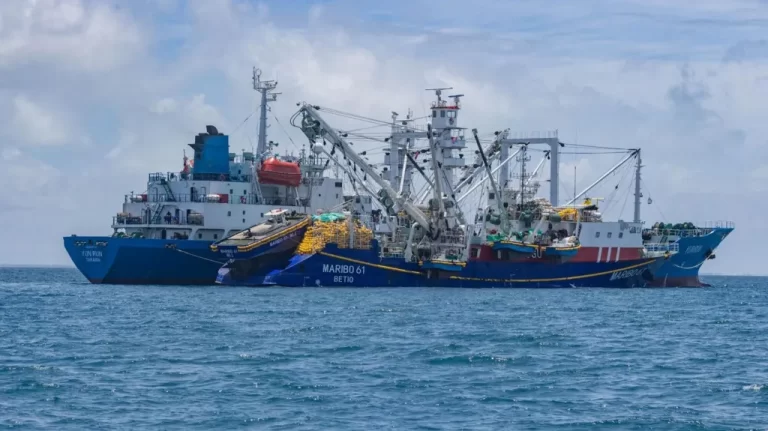
The vast Pacific Ocean and the islands dotted within it produce more than half of the world’s tuna.

Among the islands are 33 scattered across the centre that encompass the country of Kiribati.

Here more than 70 percent of government revenues come from selling tuna fishing licenses to foreign fleets – the highest proportion of any nation.

Kiribati has a tiny land mass. When all the islands are combined it is about the size of New York City. However, it has a huge swathe of territorial waters, otherwise known as its Exclusive Economic Zone (EEZ).

Totalling more than 3.4 million sq km (1.3m sq miles), the EEZ is spread across three separate parts, surrounding the country’s three groups of islands – Gilbert, Phoenix and Line.

Collectively, this area is bigger than India and offers access to an ocean abundant with marine life, including skipjack, yellowfin and bigeye tuna.

Yet, while the ocean is intimately linked to the culture, livelihoods and economy of Kiribati, it is also the country’s biggest threat.

Warming water temperatures caused by climate change pose a substantial risk to local tuna populations, threatening Kiribati’s economic backbone.

Scientists fear warmer waters could lead to tuna moving permanently out of its EEZ to cooler temperatures to the east, reducing the demand from overseas fleets for its fishing licenses, which would badly hit the country’s economy.

The global tuna market is worth more than US$44bn a year, according to one study.

To fish in Kiribati’s waters, foreign fleets must first obtain a licence from the government. Then they have to pay the required fees, and follow strict rules on catch limits and reporting hauls.

The majority of these licences are sold to countries like Japan, China, the US and members of the European Union.

Kiribati generated US$137m (£102m) from selling fishing licenses in 2024, government figures showed. This income is a “critical financial lifeline”, says Riibeta Abeta, permanent secretary for the country’s Ministry of Fisheries.

Abeta adds that such licenses contributed to almost three-quarters of government income between 2018 and 2022.

This equates to roughly two-fifths of the entirety of Kiribati’s GDP, according to the International Monetary Fund.

“Next time you go into the supermarket and you look at the cans of tuna, five-and-a half cans out of 10 stacked up are coming from the Western Central Pacific Ocean [including Kiribati],” says Simon Diffey. He is a fisheries specialist with more than 30 years of experience covering Kiribati.

Diffey says the two biggest players in the region are Kiribati and Papua New Guinea. But while Papua New Guinea has the landmass and physical resources to diversify its economy, Kiribati does not.

“The highest point above sea level in Kiribati – unless you climb a coconut tree – is two metres. No water, no land, no resources other than fish.”

Tuna react to small changes in water temperature to within a tenth of a degree of celsius, adds Diffey. As the surface water temperature rises in the Pacific Ocean, the tuna will migrate to cooler areas.

Numerous studies say that in the Pacific this migration will be eastwards, away from many island nations, including Kiribati.

Abeta says that the risk of international fishing ships not needing to buy the country’s fishing licences “introduces significant volatility to the country’s revenue”.

Kiribati is predicted to be among the worst affected by tuna stock migration, according to a communique issued last November by the regional development organisation, the Pacific Community.
Kiribati’s Ministry of Fisheries says that preliminary modelling showed that it “could lose more than US$10m in fishing access fees per year” by 2050 if global greenhouse gas emissions remained high.

But, under a best-case analysis of much lower emissions, the Ministry says “no decrease in tuna biomass” is predicted in the country’s EEZ.

Yet local fisherman in Kiribati will see a catch decrease under both high and low emission scenarios, according to the Pacific Community.

The Line Islands are set to be the worst affected, with a loss of two-thirds estimated under the low-emission scenario alone. At the same time, Kiribati’s population of around 130,000 is expected to grow, with rapid urbanisation, particularly in the capital Tarawa placing additional strain on already limited land and resources.

There’s also concerns about the reduction in local fish stocks feeding into a growing food security challenge.

With local fish supplies already under pressure, households are becoming more reliant on imported foods. The UN’s Food and Agriculture Organisation (FAO) warns that this shift is increasing costs and reducing nutritional quality, particularly in outer island communities where fish has traditionally been the main source of protein.

According to The Pacific Community (SPC), the average person in Kiribati consumes around 100kg of fish a year. This compares with about 9kg in the U.S, and 22kg in Japan.

In response, new support schemes are being rolled out.

The United Nations’ Green Climate Fund (GCF) launched its US$156.8m (£116m) “adapting tuna-dependent Pacific Island communities and economies to climate change” project last year, covering 14 countries and territories in the region.

This “is helping Pacific Island countries get ahead of climate change by strengthening their food security based on better information”, says Hemant Mandal, GCF director for Asia and the Pacific.

It looks to build a stronger warning system so places like Kiribati can better predict the redistribution of tuna stocks and its economic impact. It also pledges to maintain food security and government revenue despite declining reef fisheries.

“These measures are expected to provide around four million nutritious fish meals each year for communities in Kiribati,” says the Ministry of Fisheries.

The Kiribati government says it is expanding the country’s own tuna processing and canning facilities rather than just selling licences to foreign ships.

Abeta says the administration is also developing ocean farming of species like milkfish, snapper and sea cucumbers to support exports and domestic food security.

It is also seeking to diversify revenues beyond the sea economy through the likes of tourism, renewable energy and the country’s offshore sovereign wealth fund.

“Kiribati retains grounds for optimism and strategic opportunity,” he said.

Yet despite this hope, Kiribati and its territorial waters face an existential threat from climate change.

South Pacific islanders strive to rescue their home from toxic legacy

0

More than 80 years after World War Two, the Solomon Islands remain one of the most heavily mine-contaminated places in the Pacific.

Today, the UN is supporting the process of making the land safe to walk and build on again, but the risk to public health from corroding munitions is growing.

For many years, islanders have suspected that this toxic legacy has been harming them and their children, and now a UN-partnered study has found strong evidence to back this up, by confirming the presence of heavy metals such as lead, arsenic, cadmium and explosive residues.

Leading the study – funded by the Government of Japan and supported by the UN Development Programme (UNDP) – Dr Stacey Pizzino from the University of Queensland explained that the risk for islanders is growing as unexploded ordnance – known as UXO – is part of daily life there.

“You can see UXO in the reefs when you’re travelling, when you look down off a boat,” she told journalists in Geneva. “Unexploded ordnance are used as anchors in the canoes and children are interacting with devices on a regular basis.

“In one area that we were in, we were hearing explosions on a fairly regular basis and the children were playing with the devices and harvesting the explosives out of them to create bangers, to blow up coconuts.”

Dr Pizzino noted reports of sore eyes, rashes and breastfeeding babies developing mouth ulcers, boils and rashes, after their mothers had eaten suspected contaminated seafoods.

In another case, she described how a mother brought a bag of munitions confiscated from children that they had found under water, on a reef.

Testing of the dust in the bag containing the devices showed “incredibly high levels of lead…There’s no safe level of lead for children,” said Dr Pizzino. “It has health impacts in terms of brain development.”

The UN study’s findings are the first of their kind in the Pacific.

At Lever’s Point and other sites, soil samples revealed elevated levels of heavy metals. The highly explosive compounds TNT and PETN were also detected. In some locations, traces were found in marine life, including shellfish.

The episode highlights the long-term consequences of unexploded ordinance and the need to protect public health, urgently.

Making areas safe is a slow and complex operation because the contamination threat is vast.

But it changes everything.

“The Explosive Ordnance Device unit comes and blasts lots of bombs,” said Fred, a farmer from Gavatu island. “When we know the area is clear, we can relax. We can plant crops. We don’t worry for the children.”

For UNDP, making the land and reefs safe is central to development.

“Unexploded ordnance had always been an important issue,” says UNDP Deputy Resident Representative Raluca Eddon.

“Time is running out as more hazardous chemicals leak into the environment, harming reefs, sea life and coastal communities.”

Another islander, Billy, who’s a farmer and fisherman, agrees. “Now we understand there might be an even greater risk,” he says. “We want the bombs to be removed. We want to live in safety.”

While UNDP’s research does not claim to represent the entire country nor establish a definitive causal link, the combined environmental evidence, community reports and observed health patterns point to a “credible and growing risk”, the agency says.

Major disaster declaration granted for CNMI as Sinlaku recovery begins

0

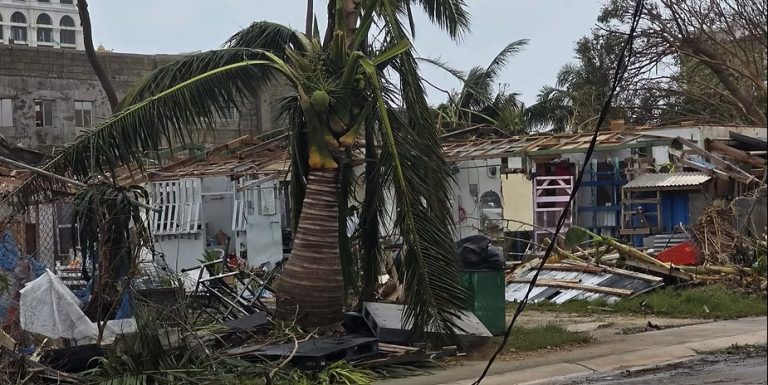
A major disaster declaration for the Commonwealth of the Northern Mariana Islands was approved Friday morning, unlocking expanded federal aid as Saipan, Tinian and Rota begin the long recovery from Super Typhoon Sinlaku’s island‑wide destruction.

CNMI Delegate Kimberlyn King‑Hinds confirmed the approval, saying the declaration followed urgent coordination with federal partners to accelerate the CNMI government’s request.

“President Trump has just signed the major disaster declaration that we have been working to expedite on behalf of the CNMI government,” she said.

CNMI Governor David Apatang specifically requested individual assistance, public assistance, including direct federal assistance for residents who are the hardest hit by typhoons and need it.

“And so this is the first major step to be able to unlock and open up federal support for the people in the CNMI who desperately need it at this very critical time. And we will get out more information to our community through various media outlets as soon as we get them,” King-Hinds said.

Apatang’s formal request to the White House earlier this week sought the full suite of federal disaster programs: Individual Assistance, Public Assistance, and Direct Federal Assistance. He also asked for a 100 percent federal cost share for emergency work and debris removal during the initial recovery period.

Under standard FEMA rules, the federal government typically covers 75 percent of eligible disaster costs, with the state or territory responsible for the remaining 25 percent.

A 100 percent cost share would temporarily shift all eligible costs to the federal government, relieving the CNMI of its local match requirement. For the commonwealth, already facing strained finances, widespread utility damage, and significant recovery expenses, the waiver would allow the government to focus its limited resources on immediate community needs rather than scrambling to meet matching‑fund obligations.

Apatang said the request reflects the scale of Sinlaku’s destruction and the Commonwealth’s limited capacity to absorb recovery costs without federal relief.

Super Typhoon Sinlaku battered the CNMI with destructive winds, torrential rain, and prolonged island‑wide outages. Early assessments show extensive impacts to homes, power systems, water production, ports, and road networks.

The Apatang administration and FEMA officials have yet to provide the full extent of devastation or the estimated dollar amount of damages, noting that assessments are still underway.

On Saipan, widespread damage to power lines and well fields continues to slow restoration. According to the Commonwealth Utilities Corporation’s April 23 situational report, Feeder 1 is partially online and has energised the Commonwealth Healthcare Corp.

A total of 15,624 power customers remain affected, including 11,769 residential homes. Water service has reached about 33 percent of customers, or 2,909 households, while 11,637 customers, including 5,849 homes, still lack running water.

Tinian remains without grid power, with all feeders offline and 1,059 customers affected, including 739 homes. Despite the power outage, Tinian’s water system is operating at 98 percent capacity, though some residents may experience low pressure.

Rota has made the most progress in restoring utilities. Feeder 1 is fully online and Feeder 2 is operating at 98 percent capacity. Water service on the island is fully restored.

Sinlaku also destroyed several emergency communication towers and cell towers across the islands, severely disrupting phone and data service.

The loss of these towers also knocked out land‑mobile radio systems used by police, firefighters and emergency responders, forcing agencies to rely on limited backup radios and in‑person relays during the height of the storm. Officials said the communications failure significantly complicated early rescue efforts and slowed coordination between agencies.

Even before the government issued the all‑clear, the Saipan Mayor’s Office, led by Mayor Ramon Camacho, began clearing major roadways to reopen access for emergency responders. Mayor’s Office staff continued debris removal through the week, focusing on heavily impacted routes and residential areas.

Other agencies, including the Department of Public Works, Parks and Recreation, the Department of Fire and Emergency Services, and the Department of Corrections, also mobilized crews. Corrections officers and inmate work details joined the effort, helping clear fallen trees, metal roofing, and other debris across the islands. Officials said the early clearing work was essential to restoring mobility and allowing utility crews to reach damaged infrastructure.

Alongside local and federal efforts, international relief organisations have begun mobilising to support CNMI residents. Samaritan’s Purse has deployed medical teams, generators, and emergency supplies, while World Central Kitchen is distributing thousands of hot meals daily across Saipan, Tinian and Rota. Both organisations are working closely with local volunteers and municipal governments to reach isolated communities and vulnerable residents.
Officials say additional NGOs are expected to arrive as assessments continue and needs become clearer.

Across the CNMI, businesses large and small are struggling to reopen as the islands operate on a patchwork of generator power.

Many grocery stores, fuel stations, restaurants, and hardware suppliers are operating on limited hours due to fuel shortages and the high cost of keeping generators running. Some establishments have reopened only partially, offering reduced services or cash‑only transactions due to unstable connectivity.

Tourism, the Commonwealth’s primary economic driver, has also been severely disrupted. Hotels are relying on generators to maintain basic operations, and many have suspended new bookings while they assess structural damage and wait for stable power and water.

With Saipan International Airport open only for emergency and humanitarian flights, visitor arrivals have effectively halted, and tour operators, transportation companies and small vendors are reporting significant losses.

Other essential services, including clinics, dialysis centres, and elder‑care facilities, are also dependent on generator power. Operators say fuel consumption is high and supply remains uncertain, raising concerns about continuity of care if outages persist.

Government offices remain closed or partially staffed, and many agencies are operating from temporary locations while their buildings undergo safety inspections.

With the major disaster declaration now approved, FEMA is expected to expand its presence in the CNMI, begin intake for Individual Assistance programmes, and coordinate with local agencies on long‑term recovery planning.

The White House has not yet announced whether the governor’s request for a 100 percent federal cost share will be granted.
Women seek brighter way forward for equality at summit

0

Thousands of feminists – among them former political leaders, current policymakers, advocates and grassroots organisers – will gather for a major gender-equality conference to discuss priorities, plans and challenges for the future of the movement.

Women Deliver, a global organisation advocating for gender equality, will host its 2026 conference in Melbourne this week, the first time the event is being held in the Oceanic Pacific region.

More than 5000 delegates from 185 countries are signed up to attend conference, which was last held in Rwanda in 2023.

The organisation was founded in 2007, but Women Deliver president Maliha Khan told AAP there has never been a more timely convening than in 2026.

“If there’s ever a time for people who believe in equality, in justice, in peace, security and resolving conflict, in democracy and who believe that the climate crisis is the biggest crisis that’s facing humanity, it is now,” she said.

“This is the time for everybody to get together to say that we are not going to be pessimistic … we actually believe there is an optimistic future.

“The only way we’re going to achieve that is for like-minded people who agree on these issues to come together and chart a new way forward.”

The conference comes at a time when the rights of women and girls are under threat around the globe, while gender-equality organisations have had their funding rolled back.

In 2025, the United Nations reported that nearly half of all organisations aiding women in crises faced closure within six months, and 90 per cent of those surveyed had reached “breaking point”.

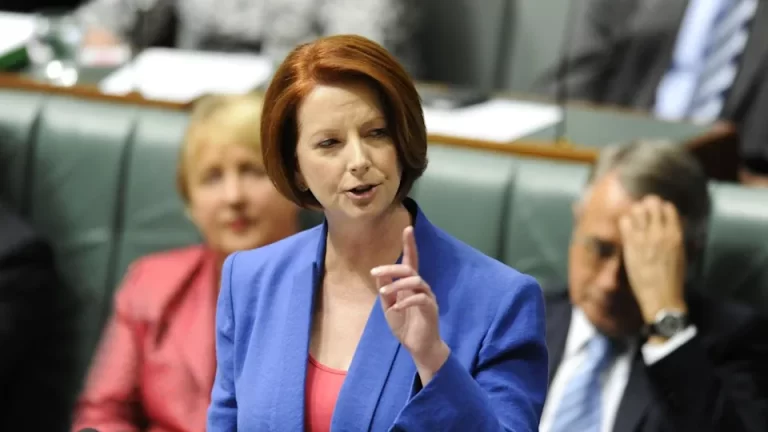
The five-day Women Deliver schedule is packed with notable speakers from the political sphere including three former prime ministers – Australia’s Julia Gillard, New Zealand’s Jacinda Ardern, and Canada’s Justin Trudeau.

Attendees will also have the chance to hear from other global leaders and advocates for gender equality including eSafety Commissioner Julie Inman Grant, United Nations deputy secretary-general Amina J. Mohammed, and Olympic gold medallist Emma McKeon.

Topics like climate justice, gender-based violence, increasing representation in leadership and advancing women’s health will be tackled across hundreds of pre-conference, plenary and side sessions.

Coinciding with the conference, an open letter calling for immediate action to end gender-based violence has been released, signed by global leaders across politics, civil society, philanthropy, culture and sport.

Signatories include Me Too founder Tarana Burke, United Kingdom Special Envoy for Women and Girls Harriet Harman, and former New Zealand cricket captain Ross Taylor.

The letter was facilitated by All In, an organisation that unites leaders to accelerate progress on ending gender-based violence.

“At Women Deliver, where global leaders gather to shape the future of gender equality, we face a defining test: whether we will match decades of evidence and advocacy with the scale of action required to forge a future free of gender-based violence,” the letter said.

“With sustained leadership and investment, we know that violence can be prevented.

“And yet, the global response continues to fall dramatically short … accountability is weak, efforts are fragmented, and survivors are too often left out of decision-making processes that impact their daily lives.”

The letter calls for Women Deliver to set concrete actions for policymakers around the world to change the trajectory of gender-based violence.

“There is no neutral position, we either contribute to systems that enable violence, or we help build those that prevent it,” the letter said.

The conference will also focus on the next generation of gender-equality advocates, spotlighting young people working in the sector to improve the lives of young women and girls.

While there are strong and positive commitments globally to protect the rights of adolescent girls, too many of those had not been delivered, Women Deliver Collective Action director Julia Fan said.

“We’ve seen progress on issues like girls’ education in the last 10 or 15 years, but in other areas like adolescent pregnancy, it still remains a really critical issue,” she said.

The conference would help launch a manifesto calling for a new narrative for adolescent girls globally, Ms Fan said.

“Girls are leaders, they’re rights holders, they are a diverse constituency and they need to be in positions of power to really set the direction and to advocate for themselves,” Fan said.

“When we have these strategic moments to convene, it allows us to accelerate the pace and progress of our work and to be more effective.
“The scale and scope of the challenges we face are not something that any one organisation can address on their own, we have to work collectively.”

According to Dr Khan, each speaker and attendee would bring their own perspectives and solutions to gender-equality challenges faced around the world.

“It’s more important than ever that all of us come together, have solidarity, have disagreements, talk through those disagreements and then forge a new way forward,” she said.

The final day of the conference will launch the Women Deliver declaration, which will aim to provide a unifying road map towards gender equality that is rooted in care, solidarity and intersectional justice.

The declaration will be the result of more than 650 consultations with people from every continent in the lead up to Women Deliver, along with hundreds of additional conversations during the conference itself.

“One of the outcomes I would like to emerge from Women Deliver and I would consider it a success is if we no longer allow people to have the same conversations they had five years ago,” Dr Khan said.

“This (declaration) will be one of the deep, contentious discussions that we should be having as a movement before we can decide where we move forward to,” she said.

Rewa high chief warns Fiji ‘undermining our own diplomats’ in foreign policy failure

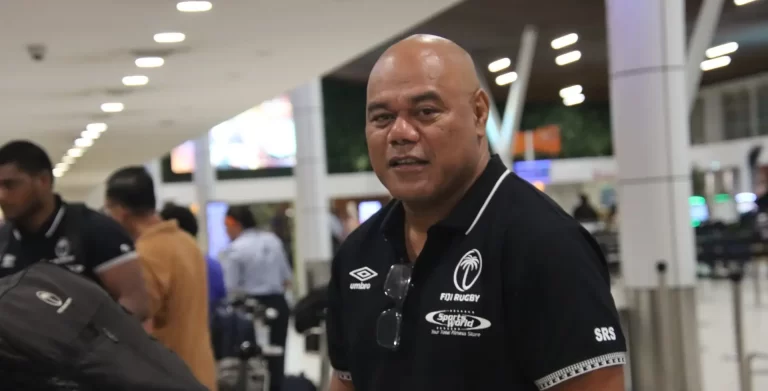
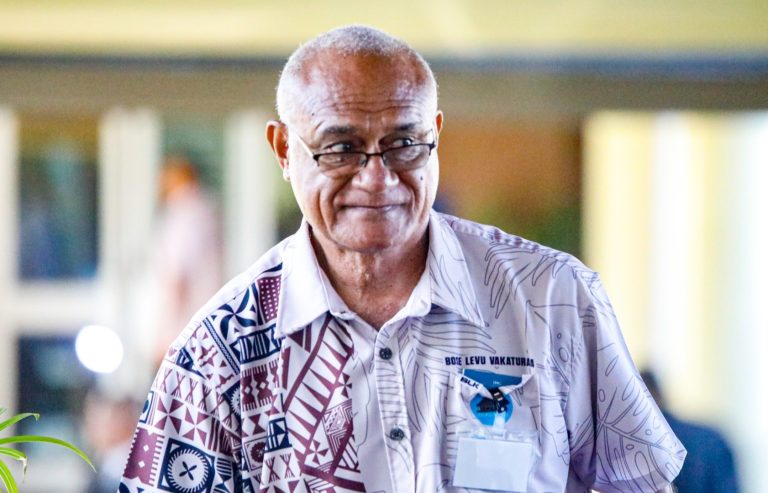
A former United Nations security executive and Rewa High Chief Ro Naulu Mataitini has issued a blunt warning that Fiji is weakening its own foreign policy by sidelining its diplomats and allowing foreign influence to dominate decision-making.

In a strongly worded social media statement, Mataitinji said political behaviour and poor strategic focus are eroding Fiji’s ability to defend its national interests.

“There is something about politicians. To get elected, they will promise anything. But once inside Parliament, too many follow their worst instincts. They convince themselves they are better than everyone else.”

“Why? They succumb to ceremonial glorification from within—learning highfalutin words, seeing themselves as the enlightened, new ‘chiefly’ establishment. And from without, they are courted by flattery and glamour. They come to believe they know more than anyone else. It is a delusion embraced without self-awareness—until the damage to their reputation, their party, and the government becomes impossible to ignore. If they were honest, they would realise that we, the voters, see straight through them,” he wrote.

Mataitini said Fiji’s foreign policy has suffered for years as global powers increase their presence in the region.

“For many years Fiji’s foreign policy suffered.”

“Other countries are establishing a presence in Fiji at an accelerating pace. Not consular offices. Not protocol posts. Their presence is strategic – designed to advance their national interests in a region that is becoming increasingly important to global geopolitics.”

“New embassies are opening. Non-resident ambassadors are flocking to Suva. They see Fiji as a platform for influence in the Pasifika. They send their best people. They resource them properly,” he said.

Mataitini questioned whether Fiji is matching that effort abroad.

“Now ask yourself: how are we responding? Do we place the same priority on our ambassadors in Canberra, Beijing, Wellington or Washington? The honest answer is no.”

“Are we resourcing our embassies to advance and defend Fiji’s interests? Or are we reducing them to protocol and consular offices? Are we leveraging the insights of our Heads of Missions (HOMs)? Or are we allowing foreign envoys in Suva – with unfettered access to our ministers – to shape our policy to their advantage?”

“These questions go to the heart of why our foreign policy engagement is ready for a strategic reset, especially now!”

The Rewa chief singled out Australia as a key example of imbalance.

“Take the case of Australia. We have now had three Australian High Commissioners who exerted and continue to exert enormous influence over our government. The current HC is selling Australia’s interests brilliantly. His success is built on our political gullibility.”

“Now ask: how are we advancing Fiji’s interests in Canberra? Are we shaping Australian policy, or just following it? The answer is uncomfortable. We are reactive, not proactive. We respond to Australian initiatives rather than shaping them. Our HC in Canberra has the insights and relationships to advance our interests – but does anyone in Suva listen? Or do our full line of ministers prefer the Australian envoy in their office?,” he asked.

Mataitini said the situation with China is even more concerning.

“The pattern with China is even worse. For years, our relationship was shaped not by our Ambassador in Beijing, but by Chinese ambassadors in Suva and their proximity to our politicians and fixers. They identified who was receptive. They cultivated those relationships. They bypassed the foreign ministry channels, it was easier and more effective for them,” he said.

He also criticised past structural arrangements that split Fiji’s overseas representation.

“We also created the fertile ground for this by splitting our overseas representation into two ministries—Foreign Affairs managing ambassadors, a separate ministry managing trade commissions and consulates. Two missions in China. Two agendas. Chinese officials and fixers played one against the other.”

Mataitini acknowledged recent reforms but said more needs to be done.

“The Prime Minister has taken a necessary step by bringing all under the Ministry of Foreign Affairs. One mission. One leader. One line of accountability.”

“Nowhere is this more needed than in China, Australia, Aotearoa and North America where split functions undermined our HOMs for years.”

The Rewa chief said current global tensions make reform urgent.

“The new Minister of Foreign Affairs and External Trade has an opportunity to make his mark, especially in these challenging times of oil and shipping embargoes, trade frictions, and new geopolitical alliances.”

He criticised how diplomatic performance is measured.

“For too long, we have measured our diplomats by handshakes, smiling photo-ops, and event attendance. These are empty metrics. They measure activity, not achievement. Being present is not the objective of diplomacy. Advancing and defending our national interest is.”

“KPIs must measure real outcomes: market access secured, investment attracted, policy influenced, resources obtained. Handshakes do not count.”

Mataitini said diplomats must focus on tangible national gains.

“Our diplomats must work to make Fiji prosper. They must secure investment, technology, climate finance, supply chain certainty, and people-to-people exchange. No amount of receptions attended changes that.”

He also questioned the trust placed in foreign diplomats over Fiji’s own representatives.

“Why do our politicians trust Suva-based foreign diplomats more than our own ambassadors abroad? Is it incompetence? Arrogance? Whatever the reason, the consequence is clear: our missions are treated as protocol offices. Their strategic counsel is ignored. Our foreign policy suffers.”

Mataitini called for immediate changes in how government engages with foreign missions.

“This must change.”

“The Ministry of Foreign Affairs and External Trade must be in the loop whenever foreign missions engage with our ministers. Cabinet must agree and the PM must issue a directive, instructing ministers accordingly. The Foreign Minister must stand behind our HOMs.”

He said Fiji must match the strategic investment other countries are making in the region.

“Other countries invest in their presence in Fiji because they understand the strategic importance of the Pasifika. We must invest in our presence abroad with the same understanding.”

“Our diplomats need empowerment and resourcing. They need the authority to act. They need the support of Suva to establish Fiji’s place in a competitive world. They must work to secure resources for Fiji. They must work to make Fiji prosper.”

The Rewa chief has also issued a direct challenge to government leadership.

“Minister of Foreign Affairs Sakeasi Ditoka has a chance to make his mark. He must resource our missions. He must empower our diplomats. He must hold them accountable for real outcomes—not just photo-op handshakes. And he must ensure that foreign envoys in Suva no longer have unfettered access to shape our policy. Our diplomats must work for Fiji,” said Mataitini.

Stay connected

529FansLike
172FollowersFollow
156SubscribersSubscribe
- Advertisement -