


Home Blog Page 43

Fiji and Australia ratify Pacific Resilience Facility

Fiji and Australia have formally ratified the Pacific Resilience Facility (PRF) Treaty, marking a major step toward putting climate financing directly in the hands of Pacific communities.

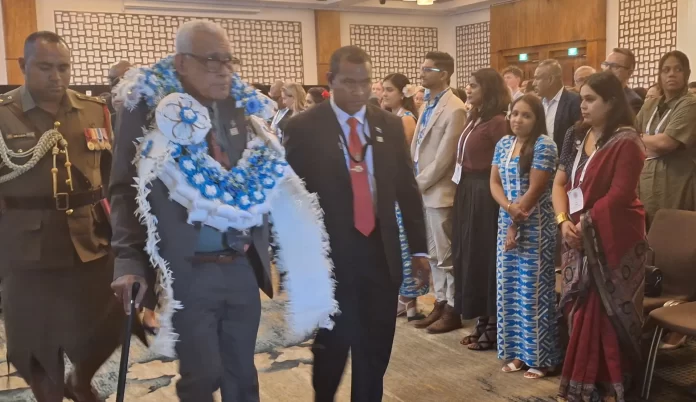
The joint move was confirmed Wednesday by Fiji’s Minister for Foreign Affairs and External Trade Sakiasi Ditoka and Australian ministers, with both countries lodging their ratification documents at the Pacific Islands Forum Secretariat in Suva in the presence of Secretary General Baron Waqa.

“Australia and Fiji are pleased to announce the formal ratification of the Pacific Resilience Facility (PRF) Treaty, a landmark agreement that places Pacific communities in control of their own resilience financing,” a joint statement said.

The treaty establishes the first Pacific-led, owned and managed financing facility focused on climate adaptation, disaster preparedness and responding to loss and damage.

“This is an important step toward ensuring Pacific Island Countries have greater resources and control in addressing the growing impacts of climate change.”

Under the agreement, the PRF will provide grant-based funding to support community-driven resilience projects, including efforts linked to clean energy and climate adaptation.

“The PRF is the first Pacific-led, owned and managed community resilience financing facility. It will provide grants for climate adaptation, disaster preparedness, and projects that respond to loss and damage. It will seize the economic opportunities of clean energy through resilient, community led projects.”

The ratification comes ahead of key regional and global climate events, with Fiji and Tuvalu set to host Pre-COP meetings in October, providing a platform to mobilise further support.

“The Pre-COP, to be hosted by Fiji and Tuvalu in October, will bring leaders to the Pacific to see climate impacts and solutions first-hand, with a special session at COP31 to provide a platform for pledges to the PRF.”

Donor countries are being urged to step up contributions as momentum builds toward a major funding target.

“Donors are encouraged to use this opportunity to announce new pledges to maintain momentum towards the ‘USD$1.5 billion for a 1.5-degree world’ fundraising goal.”

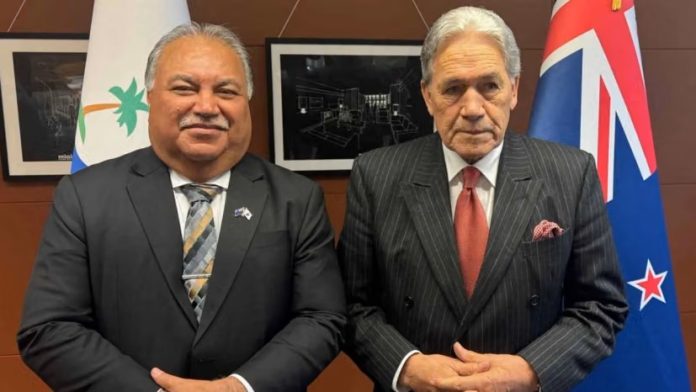
Several Pacific countries have already ratified the treaty, including Tonga, Nauru, the Republic of the Marshall Islands, Solomon Islands, Tuvalu, Cook Islands, New Zealand and Niue, signalling strong regional backing for the initiative.

“This is a clear reflection of Pacific Islands Forum Leaders’ shared resolve to create a Pacific-led institution that puts communities at the centre of resilience financing.”

The ratification clears the way for the PRF’s first round of funding proposals, expected to be launched at the 55th Pacific Islands Forum Leaders Meeting in Palau in August 2026.

“This step paves the way for the initial call for proposals, set for launch at the 55th Pacific Islands Forum Leaders Meeting in Palau in late August 2026.”

Australia seeks Fiji security deal despite China fears

Australian Foreign Minister Penny Wong has downplayed concerns of pushback from China over a proposed security pact between Australia and Fiji.

Senator Wong held talks with Fiji Prime Minister Sitiveni Rabuka in the Pacific island nation’s capital, Suva, as they spruiked the yet-to-be-signed Vuvale agreement between the two countries.

It comes as Australia’s efforts to secure a similar agreement with Vanuatu were dealt a blow following interventions from Beijing.

Australia’s bid for a $500 million (US$361 million) deal with Vanuatu was shelved after the Pacific nation raised concerns it could limit its ability to seek funding from other countries.

Vanuatu is in ongoing discussions over a similar deal with Beijing and has received millions of dollars for infrastructure works from China.

Senator Wong did not directly respond when asked if she knew of or expected any pushback from Beijing over the Vuvale pact with Fiji.

“We are a sovereign nation, as Fiji is, and we will make our decisions in our sovereign interests,” she said.

Appearing alongside Pacific Minister Pat Conroy, the foreign minister said the Vuvale agreement would benefit both Australians and Fijians.

“This goes to our objective of a peaceful, stable and prosperous region,” she said.

“Australians know we live in contested times, Australia knows and Australians will understand and see the challenges that our external environment places upon us.

‘What the government has been very focused on is ensuring that we work to assure Australia’s interests and security in these times.”

There were few details as to the specifics of the agreement, with Senator Wong confirming negotiations were ongoing.

However, she said the agreement would have three pillars: security, the economy and people.

Conroy told the Fijian media the agreement would help both countries tackle transnational crime, which he described as a shared threat.

He also announced Australia would give the Fijian government $30 million (US$21.71 million) to assist in the ongoing fuel crisis.

Pacific’s $6 billion fuel problem takes centre stage in Moresby

The Pacific’s dependence on imported fuel is costing the region more than money.

It is driving up food prices, straining health systems, disrupting transport, and leaving island nations dangerously exposed when disaster strikes.

That was one of the clear messages from day two of senior officials’ discussions ahead of the Sixth Pacific Regional Energy and Transport Ministers’ Meeting in Port Moresby.
Senior energy officials, development partners and energy experts confronted what many described as an unavoidable reality: the Pacific’s transition away from fossil fuels can no longer wait.

Pacific Island countries collectively spend around USD$6 billion every year on fossil fuel imports, counting to around five to 25 per cent of the GDP in many island economies.

But with global fuel prices surging by as much as 70 to 100 per cent in recent months, the pressure is intensifying.

Irina Lazzerini, Senior Energy Policy Specialist with the United Nations Development Programme’s Multi-Country Office in Samoa, warned that the Pacific fuel crisis is no longer just an energy issue.

“It affects development, food delivery, transport, healthcare, and the economy. It pushes inflation and affects everyday life.”

UNDP used the meeting to showcase its Pacific Green Transformation Project, a USD$37.5 million initiative funded by Japan and focused on accelerating renewable energy and low-carbon transport across Papua New Guinea, Samoa, Vanuatu and Timor-Leste.

In Papua New Guinea, that includes a one-megawatt solar farm in Bougainville expected to benefit 30,000 people and cut household electricity costs by half.

In Samoa, the shift is already visible.

Electric vehicles are being introduced into the transport sector, including emergency vehicles for police, fire and ambulance services, while electric boats are beginning inter-island routes.

In Vanuatu, renewable mini-grids and pico-hydro systems are reaching remote communities, while in Timor-Leste, solarisation of health facilities and schools is strengthening critical public services.

But speakers stressed technology alone is not enough.

Without strong regulatory frameworks, investor confidence remains fragile.

That issue is now a major focus in Papua New Guinea, where UNDP is working with the government to finalise off-grid power regulations designed to give private investors greater certainty around tariffs, land access and licensing.

The overlapping crises have sharpened the focus on investment.

At the Pacific Energy Investment Forum, regional partners pushed for a new Pacific Renewable Energy Investment Prospectus, a Pacific-led package of renewable energy priorities designed to attract investors ahead of key regional meetings and global climate talks, including COP31.

Energy experts also floated a pooled procurement system, allowing Pacific nations to combine their renewable energy purchases to lower costs and improve supply chain access.

For small island economies, where market size often limits bargaining power, the proposal could be transformative.

Across the day, one message remained constant: Pacific countries know where they want to go.

The challenge now is how to pay for it, build it, and protect it.

ADB at 60: Kanda puts people first, pledges stronger support amid global turmoil

By Makereta Komai, PACNEWS Editor in Samarkand, Uzbekistan

The Asian Development Bank (ADB) must remain a “reliable partner” for countries navigating an increasingly uncertain global environment, President Masato Kanda said, as the institution marked 60 years of development across Asia and the Pacific.

Closing his address to Governors at the 59th Annual Meeting in Samarkand, Kanda anchored the bank’s future in the lived experiences of people across the region — from coastal communities rebuilding livelihoods to students gaining access to modern education and small businesses slowly expanding.

“The fisher families I met in Cambodia, working to restore marine ecosystems while building more secure livelihoods. The students I saw at a university in the Pacific that ADB helped equip, with modern lecture halls, science labs, and a real path forward. And the small business owners in Southeast Asia who spoke of gradual but genuine progress.

ADB’s responsibility is to be a reliable partner — one that listens carefully, acts decisively, and remains committed through difficulty.

Reflecting on ADB’s six decades since its establishment in 1966, he said the bank’s impact is best measured not only in financing figures, but in the resilience and determination of the people it serves.

“The people of this region do not wait for perfect conditions. They adapt, they build, and they press forward.”

The challenges before us are real. But so is the progress we have made together. And so is my confidence in what this institution and this region can achieve.

Region under pressure

Kanda’s remarks come against a backdrop of growing global instability, with conflict in the Middle East driving up fuel, freight and food prices across Asia and the Pacific.

He warned that the region — the world’s largest energy-importing bloc — is already feeling the strain, with rising costs threatening food security and placing pressure on government budgets.

“The economic consequences could be severe — on growth, on prices, and on livelihoods,” he said.

Pacific Governors and Ministers at the meeting with ADB President. Photo: ADB

ADB stepping in

In response, ADB has expanded its crisis support, provided fast-disbursing budget financing and ensuring the continued flow of essential imports such as food, energy and medicines.

The bank is also reactivating exceptional support for fuel imports to cushion the impact of rising oil prices on vulnerable economies.

Kanda said protecting countries with the least capacity to absorb shocks remains a central priority.

Delivering impact at scale

ADB’s latest figures show a significant scale-up in operations, with US$29.3 billion in commitments in 2025 and an additional US$14.7 billion mobilised from partners.

These efforts are expected to generate more than 3.3 million jobs and benefit over 180 million people.
Examples of impact highlighted in the address include:

•Disaster response efforts following earthquakes and floods across Asia
•Investments in education and infrastructure in Pacific countries
•Support for small businesses and community livelihoods
•Environmental initiatives such as marine ecosystem restoration

Preparing for the future

Looking ahead, Kanda outlined major regional initiatives, including support for the ASEAN Power Grid and a broader Pan-Asia energy network, alongside a US$20 billion push to expand digital connectivity.

He also pointed to reforms within ADB — including increased financing capacity, stronger procurement standards, and deeper collaboration with the World Bank — aimed at improving delivery and impact.

Uzbek traditional dancers at the opening of the 59th ADB Annual Meeting in Samarkand, Uzbekistan. Photo: ADB

A milestone moment

As ADB marks its 60th anniversary, Kanda said the institution must match ambition with execution, particularly as challenges grow more complex.

“The challenges before us are real. But so is the progress we have made together,” he said.

For the region’s developing economies — especially small island states and fragile countries — that partnership, he stressed, will remain critical in the years ahead.

Rugby union’s Pacific heartlands threatened by NRL spree after Moana Pasifika’s collapse

0

There’s a new war in the Pacific brewing, with the Super Rugby side Moana Pasifika collapsing and rugby league on a new signing spree in union’s traditional heartlands.

The conflict spells trouble for Rugby Australia (RA), whose federal government is funding a $600m (US$434 million) NRL franchise in Papua New Guinea, $240m (US$173 million) of which will go into poaching talent and creating pathways throughout Fiji, Tonga, Samoa and the Cook Islands.

For more than a century, since British soldiers introduced it to further the Empire, rugby union has been the national sport of all four Pacific countries. Fiji have led the way with two Olympic gold medals in sevens (2016 and 2020) and a 15s side are now neck-and-neck with Australia in the world rankings. Players with Pacific and Polynesian blood are now an invaluable part of almost every international side.

“Rugby sits at the heart of village life, tradition, and national pride in the Pacific,” RA’s CEO, Phil Waugh, told the Guardian. “It also has clear political links. Rugby networks intersect with leadership structures, communities and diaspora influence, shaping relationships well beyond the field. That combination of cultural depth and political connectivity enables engagement in ways formal diplomacy alone cannot achieve.”

But, according to RA insiders, the NRL has been given a war-chest which it will use to “kill rugby in the Pacific” by siphoning off the best rugby players to league.

The plan has provoked fierce debate in Australia’s corridors of power, with one political leader saying it has “colonial intonations” and the former Wallaby captain David Pocock, now a senator, saying it “seems designed … to set up a talent pathway for league”.

Australia’s prime minister, Anthony Albanese, is a South Sydney Rabbitohs diehard and the NRL is a passion he shares with PNG’s PM James Marape. However, Albanese’s gift to the code’s 19th club, the PNG Chiefs – who will woo players with tax-free dollars and a $66m (US$47 million) luxury living compound and access to a private island – is really soft-power politics to combat China’s fast-growing influence in the Pacific.

“Australia is no longer operating alone,” Dan Millis, RA’s head of Pacific partnerships, said. “China has become more active in rugby diplomacy. We’re seeing it through Beijing’s investment in sporting infrastructure and their partnerships with national rugby bodies. These aren’t symbolic gestures, they’re long-term, visible investments that reflect a broader strategic effort to build influence in the region.”

Unable to compete with the flood of Australian funding for NRL into their countries, the governments of Fiji, Samoa and Tonga are now signing sponsorship deals with China.

The Fiji team are getting around Suva in a new team bus emblazoned with two Pandas and the strapline “Love from the People of Guangzhou”, and two China women’s sides recently played in the 2025 Coral Island Sevens tournament.

Samoa, Tonga and the Cook Islands merged as Moana in 2022 to help fill the void when South Africa withdrew its four franchises – the Bulls, Lions, Sharks, and Stormers – to play in the northern hemisphere. World Rugby initially funded Moana to the tune of $7m-$10m (US$5million- US$7 million) a year until 2024, when Pasifika Medical Association became its majority owners.

But the PMA has now declared the franchise “unviable” and is winding it up. “Stand by your team today,” urged the club chair, Kiki Maoate, in his announcement last month. “Our story has been one of resilience – not just as a franchise, but as Pacific people. While this will be devastating news to process, we continue to look ahead and navigate these next steps together, just as our people always have.”

Those next steps may include fresh investment to save Moana, or finding a new Pacific side. Tana Umaga and the 55-Test All Black, Sir Michael Jones, are exploring interest from Kanaloa Rugby, a pro-rugby franchise from Hawaii. Meanwhile Rugby Australia has proposed the Veimoana Partnership in collaboration with the governments of Fiji, Samoa, and Tonga to develop a Super side via domestic competitions, and is currently seeking funding from Australia’s government.

Licence holders New Zealand Rugby will “remain supportive of Moana Pasifika’s vision to create pathways from the Pacific. There may be parties exploring financially viable and sustainable plans for the future of the team. NZR is open to engaging with those parties to discuss the club’s continued participation in Super Rugby Pacific.”

It won’t be easy. In their first three Super Rugby Pacific seasons, Moana Pasifika finished 12th, 12th and 11th. In 2025, with the All Blacks star Ardie Savea as captain and Umaga as coach, they improved to seventh. But this year, with Savea on a sabbatical in Japan and Umaga last month taking an assistant coach role with Dave Rennie’s new-look All Blacks, results have nosedived, with one win from 11 games.

Why has Moana failed and Fiji succeeded? “Because they play at home where every second person wears a Drua jersey and they’re crying out for more rugby,” says SRP’s CEO, Jack Mesley. Aside from one game each in Tonga, Samoa and Fiji across five years, Moana have played as wanderers in empty arenas across New Zealand, and their base city of Auckland is dominated by SRP rivals the Blues, and NRL’s NZ Warriors.

Compare that with Fiji. Since entering the competition alongside Moana in 2022, the Drua’s men’s and women’s teams have played home games in Suva and Lautoka before huge crowds at fortress arenas in an electric atmosphere. All games are broadcast live on more than 360,000 local devices and viewed by more than half the population. Drua tourism – advertising, merchandise, hospitality – last year injected FJD$108m ($68.5m AUD) into the Fiji economy.

Fiji has almost a million citizens and Papua New Guinea between 11 million and 17 million. Without global support, how can tiny rugby-loving nations such as Samoa (220,000) and Tonga (104,000) retain homegrown talent to empower their people (and the game) at future World Cups?

“The gap between where we are, internationally, to where we need to get to, is very big,” Umaga says. “Without Moana to bridge that gap, it’s going to be tough,” he said.

ADB procurement reform lifts competition and quality in Pacific infrastructure projects

By Makereta Komai, PACNEWS Editor in Samarkand, Uzbekistan

A new procurement approach introduced by the Asian Development Bank (ADB) is increasing competition, widening bidder participation, and improving the quality of infrastructure projects across the Pacific, according to the bank.

ADB Director General for the Pacific Department, Emma Veve said the “Merit Point Criteria” procurement system—piloted in the Pacific since 2021—is shifting project selection away from a sole focus on lowest-cost bids towards broader quality-based assessments.

“Traditionally, choosing the lowest price bid doesn’t necessarily give you the best outcome,” Veve told PACNEWS.

She said the Pacific has been used as a testing ground for the reform, with around 75 percent of internationally advertised contracts in Pacific developing member countries—excluding Papua New Guinea—now applying merit-based evaluation criteria.

Veve said early results show increased competition in procurement processes, with more firms participating in tenders and a wider range of international bidders entering the Pacific market.

“We’re seeing more firms per bid on average, and firms from countries that weren’t previously active in the Pacific are now participating,” she said.

Under the system, bids are assessed not only on price but also on factors such as skills transfer, use of local labour, and domestic sourcing of materials, depending on project priorities.

Veve said this approach allows governments and ADB to better align procurement outcomes with national development goals, including building local capacity.

“We can give additional weighting to companies that build the skills of the local labour force or use more domestic inputs,” she said.

She said early indications suggest stronger engagement from Pacific-based contractors, particularly firms from Fiji expanding their work regionally, as well as increased joint ventures between international and local companies to improve competitiveness under the merit system.

While she said it is still early to assess long-term project outcomes, ADB is closely monitoring performance of projects already awarded under the system.

Veve cited the recently completed Queen Salote Wharf project in Tonga as an example of successful delivery under ADB-supported procurement processes, noting that it was completed within budget and on time.

She said the project also contributed to broader development outcomes, including skills development for local workers and increased participation of women in non-traditional construction roles.

ADB says it will continue to refine the Merit Point system based on country needs and project experience, with the aim of improving infrastructure quality while ensuring stronger participation from Pacific contractors and communities.

Fiji and Australia deepen Pacific partnership with Vuvale Union, tackle fuel crisis and security threats

Fiji and Australia have reaffirmed their deepening partnership, announcing progress toward a landmark “Vuvale Union” while pledging closer cooperation on security, climate action and the ongoing global fuel crisis during a joint press conference in Suva.

Prime Minister Sitiveni Rabuka said the visit by Australia’s Foreign Minister Penny Wong and Minister for Pacific Affairs Pat Conroy reflected “the strength, maturity and depth of the Fiji-Australia partnership.”

“This visit… reflects the strength, the maturity and the depth of the Fiji-Australia partnership and our shared commitment to advancing a stable, secure and prosperous Blue Pacific,” he said.

Rabuka reaffirmed Fiji’s alignment with regional processes under the Pacific Islands Forum and highlighted progress toward the bilateral agreement.

“This represents a huge step up in our relationship,” he said, describing the Vuvale Union as being “anchored in shared values… designed to deliver enduring outcomes across security, economic cooperation and people-to-people connections.”

He added that the agreement would give practical effect to Fiji’s “Ocean of Peace” vision, embedding “sovereignty, respect and Pacific-led solutions into a practical, cooperative framework.”

Security cooperation remains central, particularly in tackling transnational crime. Rabuka noted that collaboration with Australia is strengthening intelligence sharing and law enforcement.

“This collaboration reflects our shared commitment to protecting our communities and upholding peace and stability,” he said.

On the global fuel crisis, Rabuka acknowledged mounting pressure on Pacific economies and welcomed Australia’s support.

“We appreciate very much Australia for taking a regional approach… to ensure fuel supplies into our region is sustained,” he said.

Looking ahead, he confirmed Fiji will host a pre-event ahead of COP31, describing it as “a critical platform to shape the global climate agenda.”

Wong echoed the strong ties between the two nations, describing Australia as “a committed partner” that has “stood with the Pacific family through challenging times.”

“We stand with you today,” she said, referencing the global energy shock driven by conflict in the Middle East.

She announced AU$30 million (US$21.7 million) in targeted budget support to assist Fiji’s fuel response, acknowledging the strain of rising costs.

“We understand the extent to which this is being felt as a price shock in Fiji and we want to provide our assistance,” Wong said.

She confirmed both countries had agreed to establish the Vuvale Union, describing it as “family under one roof.”

“It is a union that will rest on our shared trust, respect and responsibility,” she said, adding that it would focus on “security, economic and people” pillars and be guided by “durability, sovereignty and regionalism.”

“In a world that is more contested, we are stronger together,” Wong said.

Conroy reinforced Australia’s commitment to security cooperation, particularly in combating drug trafficking.

“The Australian Government stands shoulder to shoulder with the people of Fiji… in combating transnational crime and eliminating drug smuggling in our region,” he said.

He highlighted existing collaboration, including joint operations that have seized significant quantities of illicit drugs, and investments in maritime and border security.

“We are already working together to disrupt the drug trade,” Conroy said, noting a joint operation that seized “over four tonnes of methamphetamine.”

He also announced new support for Fiji to acquire an integrated border management system to track persons of interest.

“The Vuvale Union will further strengthen Fiji’s capabilities across interdiction, policing, legislation, prosecution and importantly health,” he said.

Both sides stressed that the partnership is grounded in mutual respect and sovereignty, with Wong underscoring that cooperation aims to strengthen Fiji’s institutions and resilience.

As discussions continue, leaders from both countries expressed confidence that the agreement will serve as a long-term foundation for regional stability.

“Together we are stronger,” Rabuka said. “We remain committed to advancing a peaceful, resilient and united Pacific region.”

ADB outlines new Pacific resilience push to counter rising external shocks

By Makereta Komai, PACNEWS Editor in Samarkand, Uzbekistan

The Asian Development Bank (ADB) says its new Pacific Approach of 2026-2030 will focus heavily on building long-term resilience in small island economies as they face increasing exposure to global shocks, from pandemics to geopolitical crises and climate-related disasters.

ADB Director General for the Pacific Department, Emma Veve said lessons from COVID-19 and the current instability linked to the Middle East crisis have reinforced the need for stronger regional systems capable of absorbing and responding to external disruptions.

“The Pacific economies are volatile. As very small, open, narrowly based economies, they are more susceptible to every single shock—economic, natural disasters, or health crises like COVID,” Veve told PACNEWS in Samarkand, Uzbekistan where the ADB Annual meeting is underway.

She said the new Pacific Approach will guide ADB engagement over the next five years across its 12 smallest Pacific developing member countries as well as Fiji, with resilience at its core.

Veve said resilience-building will extend beyond financial systems to include government institutions, private sector capacity, and community preparedness.

At the national level, she said countries are increasingly adopting fiscal tools such as sovereign wealth funds—described as long-term savings mechanisms—to help cushion economies during periods of external stress.

ADB is also expanding support for disaster risk financing mechanisms, including contingent financing instruments that allow governments to quickly access emergency funds following natural disasters such as cyclones and earthquakes.

“These facilities provide governments with funding they can draw down quickly in the event of emergencies,” Veve said.

She said such instruments are already in use across several Pacific countries, helping governments respond more rapidly when disasters strike.

Beyond financial tools, ADB is also supporting preparedness initiatives at community level, including evacuation training and resilience planning in schools and local communities to improve readiness before disasters occur.

Veve also confirmed the launch of a new Pacific-focused financing facility, known as PREPARE, which will expand disaster preparedness and risk financing support in the region.

She said the facility, backed by contributions including from the Government of Japan, will enhance the region’s ability to prepare for and manage disaster risks more effectively.

Under the initiative, ADB will also work with regional partners including the Pacific Catastrophe Risk Insurance facility to strengthen disaster insurance and risk transfer mechanisms.

Veve said the combined approach—linking financial resilience, institutional strengthening, and community preparedness—is designed to ensure Pacific countries are better able to withstand increasingly frequent and complex external shocks.

Tonga’s Queen Sālote Wharf upgrade showcases ADB merit-based procurement success

By Makereta Komai, PACNEWS Editor in Samarkand, Uzbekistan

The redevelopment of Tonga’s Queen Sālote International Wharf is being highlighted as a major success story of the Asian Development Bank’s (ADB) merit-based procurement reforms, with the project delivered on time, on budget, and with strong local and climate outcomes.

The USD$70 million project demonstrates how shifting procurement away from a lowest-cost approach towards a merit-point system is improving infrastructure delivery quality across the Pacific, according to ADB’s Director General Pacific Department, Emma Veve.

The upgrade of Tonga’s only international port—handling around 95 percent of the country’s imports and exports—was co-financed by ADB and the Australia Infrastructure Financing Facility for the Pacific (AIFFP) and implemented by New Zealand contractor McConnell Dowell, working with the Tonga Ministry of Infrastructure and the Tonga Port Authority.

Veve said the project reflects the importance of value-based procurement in delivering critical infrastructure for small island economies.

“This is a very important lifeline for Tonga, and it shows what can be achieved when quality, capability and development outcomes are built into procurement,” she said.

Construction took place between 2023 and 2025 while the port remained fully operational, requiring the works to be staged to avoid disruption to shipping services.

The first phase (September 2023–July 2024) included construction of a new dolphin between Wharf 1 and 2, two additional dolphins on the eastern side of Wharf 1, and reconstruction of Wharf 1. The second phase (July 2024–October 2025) delivered an extension to Wharf 2 to accommodate larger vessels, a new western dolphin, and installation of upgraded paving, drainage, smart lighting, waste management, and fire-fighting systems.

According to project information from McConnell Dowell, the works were completed on schedule and within budget, with more than one million work hours recorded and no lost-time injuries.
The contractor reported that around 80 percent of the workforce was locally recruited, with women making up about 11 percent of the team across engineering, quality control, and technical roles. More than 3,000 hours of structured training were delivered, alongside mentoring and on-the-job skills development, including for eight local graduates.

ADB said the project also reflects broader procurement reform goals under its merit-point system, which allows weighting for local employment, skills transfer, and use of domestic inputs alongside technical and financial criteria.

McConnell Dowell data shows around 14 percent of contract value was invested back into Tonga, with approximately 20 percent of total project spend supporting local businesses and supply chains.

A key legacy outcome of the project was the establishment of a concrete batching and testing facility in Tonga, reducing reliance on overseas testing and lowering transport-related emissions.

The project also delivered environmental gains, with an estimated 13,395 tonnes of carbon dioxide equivalent emissions saved and around 85 percent of construction waste diverted from landfill.
Veve said the Queen Sālote Wharf upgrade demonstrates how procurement reform can improve not only cost and delivery performance, but also local participation and climate resilience outcomes in critical infrastructure.

“It shows that when we focus on value and outcomes rather than just lowest price, we get better infrastructure for the Pacific,” she said.

Pacific faces brutal energy truth

If we’re not at the table, we’re not on the menu.

It is a sharp line that captures the urgency Pacific leaders are feeling as energy pressures mount across the region.

Speaking at the Senior Energy Officials Meeting ahead of the Sixth Pacific Regional Energy and Transport Ministers’ Meeting (PRETMM), Guam Energy Office Director Rebecca Jean Respicio said Pacific collaboration is no longer optional. It is essential.

For Guam, a US territory often seen as better resourced than many Pacific Island nations, the lesson is clear: energy vulnerability does not discriminate.

“While we have unique differences, we also have very similar needs,” Respicio told Islands Business.

And despite Guam’s stronger federal systems, she says there is much to learn from Pacific Island neighbours who have long navigated crisis with limited resources.

“We think we’re westernised and ahead, but we really do learn from the islands. It brings us back to what is important,” she said.

That shared reality is fuel.

Across the Pacific, imported fuel remains the backbone of power, transport and emergency response leaving island nations exposed to global conflicts far beyond their shores.

For Guam, tensions in the Middle East and instability around Iran have already pushed fuel prices upward.

But when storms hit, the stakes change, fuel stops being just an economic issue.

It becomes a survival issue.

“Without power, people rely on generators, and fuel and diesel become a huge need,” Respicio said.

“The supply becomes tighter, and the cost is so high. That’s when you realise fuel is not just energy; it’s survival.”

That reality is playing out in real-time in the Northern Marianas.

Still recovering from a Category Five super typhoon, parts of the islands remain without electricity, with full restoration expected to take up to 90 days.

Northern Marianas Special Envoy Aschumar Kodep Ogumoro-Uludong says the crisis has exposed just how fragile island energy systems remain.

“We still don’t have power,” he said.

“Our brothers and sisters from Guam sent a whole crew of linemen to help us repair and restore.”

The timing could not be worse.

Just as global fuel markets began reacting to conflict in Iran, the Northern Marianas were hit by disaster.

“A week after war broke out in Iran, we had already recorded fuel price increases,” Ogumoro-Uludong said.

“Within that context of price increases, we then get hit by a Category Five disaster.

“The full impacts of what’s taken place halfway around the world have yet to be fully realised in our region, and that’s worrying.”

It is this double vulnerability—global price shocks and climate disasters—which underscores the importance of meetings like PRETMM.

In Port Moresby this week, Pacific leaders are grappling with the region’s biggest energy questions: how do we accelerate renewable energy, strengthen maritime transport, secure fuel supplies, and build resilience in a way that leaves no Pacific Island nation behind?

Pacific energy leaders are not only talking about resilience anymore; transition has become the hot topic of discussion.

Discussions in meeting rooms and outside of meeting rooms have focused on how to keep power running when shipping routes are disrupted, how to secure fuel, what alternatives are available, and how to rebuild energy systems, maritime transport, and security.

For Guam and the Northern Marianas, these are not policy questions. They are lived realities.

One of the key conversations at the meeting is financing, and Guam asks whether Pacific regional funding mechanisms can be accessed by US territories to strengthen energy resilience alongside federal support.

Respicio says those conversations matter because solutions cannot be built in isolation.

For Ogumoro-Uludong, being in the room matters just as much.

“We are very thankful for this opportunity provided by SPC to gather with our brothers and sisters from the Pacific region, to learn best practices in the energy space, to network and to highlight our own challenges,” he said.

For many here, the Pacific’s energy transition is no longer simply about moving away from fossil fuels. It is about making sure the next cyclone, the next supply chain disruption, or the next global conflict does not leave islands in the dark.