


Home Blog Page 27

Korea–Pacific Islands Senior Officials Meet to advance regional priorities

0

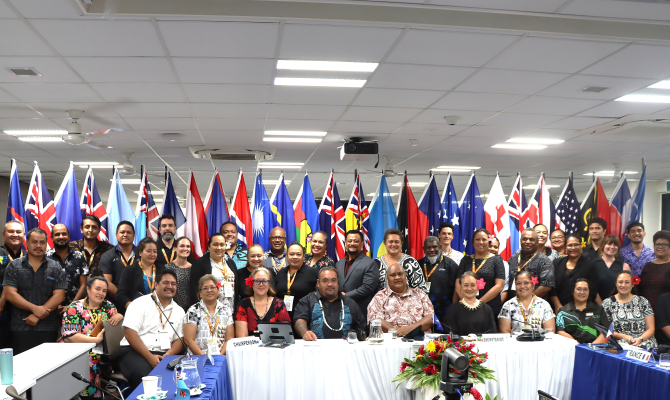
The 8th Korea–Pacific Islands Senior Officials’ Meeting (SOM) was held in Nadi, Fiji, on 21 May 2026, bringing together senior officials from the Republic of Korea (ROK) and the Pacific Islands Forum (PIF) Members to advance regional cooperation and shared priorities.

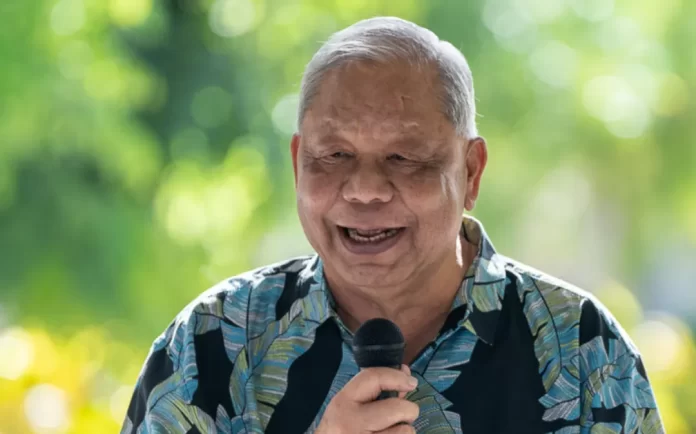
The SOM was co-chaired by the Deputy Minister for Political Affairs of the Republic of Korea, Eui-hae Chung and the Solomon Islands High Commissioner to Fiji, Joseph Ma’ahanua representing the PIF Chair.

Discussions focused on strengthening strategic dialogue and development cooperation aligned with the 2050 Strategy for the Blue Pacific Continent, particularly across climate action, maritime affairs and fisheries, and economic resilience, while advancing the ROK – Pacific Partnership.

In his opening remarks, Ma’ahanua highlighted the timeliness of the meeting as the region looks ahead to the 2027 Korea – Pacific Islands Foreign Ministers’ Meeting, noting the importance of sustaining momentum built since the 2023 Leaders’ Summit and the 2025 Korea – Pacific Islands Foreign Ministers Meeting discussions.

“It is essential that our cooperation remains aligned with Pacific priorities, including those articulated in the 2050 Strategy for the Blue Pacific Continent. Equally important is ensuring Pacific ownership and visibility; our region is not only a Leader in shaping and implementing initiatives that affect our future,” said Ma’ahanua.

Deputy Minister Chung emphasised in her opening statement that, as a globally responsible country, the Republic of Korea will continue to support the sustainable development of the Pacific Island countries in accordance with the priorities set out in the 2050 Strategy for the Blue Pacific Continent, an initiative led by the Pacific Island countries to promote peace, security, and prosperity in the Pacific region.

She further noted that, in light of the recent energy crisis and future cooperation in related sectors, she hopes that cooperation between the Republic of Korea and the Pacific Island countries will continue in a mutually beneficial and sustainable manner.

The meeting also acknowledged the Republic of Korea’s continued support through the ROK–PIF Cooperation Fund and reaffirmed collaboration on ongoing initiatives aligned with the regional priorities of PIF Leaders.

Senior Officials received briefings from agencies of the Council of Regional Organisations in the Pacific (CROP) and Korean agencies on the 2025 ROK–Pacific Islands Forum Cooperation Fund.

Presentations were also delivered on emerging business opportunities in the Pacific, including contributions from Nabou Green Energy and the Korea Overseas Fisheries Association. The presentations highlighted the growing role of sustainable investment and private sector engagement in advancing regional development priorities.

These discussions between the senior officials will inform the agenda for the next ROK –Pacific Islands Foreign Ministers’ Meeting which will be held in 2027.

The Republic of Korea has been a Dialogue Partner of the Pacific Islands Forum since 1995.

Pacific leaders push Climate justice and sea-level rise action

Pacific Islands Forum Secretary General, Baron Waqa has called for stronger regional and global action on climate justice and sea-level rise, warning that climate change remains “the single greatest threat” to the Pacific region.

Opening the Pacific Climate Justice and Sea-Level Rise Week at the Pacific Islands Forum Secretariat on Monday, Waqa said the recent United Nations General Assembly (UNGA) vote responding to the International Court of Justice’s Advisory (ICJ) Opinion on climate change was a major step forward for the region.

“It is timely that just last week, by an overwhelming majority, the United Nations General Assembly adopted a resolution responding to the International Court of Justice’s Advisory Opinion on the Obligations of States in respect of Climate Change,” Waqa said.

He praised Vanuatu for leading the international push on climate accountability.

“I extend the Forum’s sincere appreciation to the Government of Vanuatu for its leadership in convening this important week and in advancing this issue internationally, and to Minister Ralph Regevanu for his leadership in helping to secure this outcome,” he said.

Waqa also acknowledged Pacific solidarity at the United Nations and thanked regional partners, including Fiji Government, SPC, SPREP and UN agencies, for supporting the week-long discussions.

The Forum SG said climate change and the current fossil fuel-driven energy crisis were placing growing pressure on Pacific economies and energy security.

“Climate Change remains the single greatest threat to the livelihoods, security, and wellbeing of peoples of the Blue Pacific.

“At the same time, the current fossil fuel-driven energy crisis presents significant challenges for our region, including rising costs of living and increasing pressure on energy security,” he said.

He said the crisis also reinforced the need for the Pacific to reduce dependence on imported fossil fuels and accelerate renewable energy development.

Waqa said Pacific priorities ahead of Pre-COP and COP31 would focus on climate finance, adaptation and resilience support for smaller island states.

“Pre-COP and COP31 provide a critical and unprecedented opportunity for the Pacific to strategically advance this agenda.

“Through the Pacific’s role in hosting Pre-COP and helping shape the COP31 process, we have a unique platform to ensure that our priorities are not only present but clearly heard and reflected in global outcomes,” he said.

Waqa also highlighted the recent entry into force of the Pacific Resilience Facility Agreement (PRF) on 06 May, describing it as a key regional response to gaps in global climate finance.

“The PRF represents the Blue Pacific region’s response to a global climate finance system that too often fails to reach those most in need.

“It is designed to complement and scale existing sources of climate finance, ensuring that support reaches the last mile: our communities, villages, islands, and households, where it can make the greatest impact,” he said.

Photo: PIFS

On sea-level rise, Waqa reaffirmed Pacific Leaders’ position that maritime zones, sovereignty and statehood must continue despite climate impacts.

“Through the 2021 Declaration on Preserving Maritime Zones in the Face of Climate Change-Related Sea-Level Rise, Leaders affirmed that maritime zones, once established, will be maintained without reduction, notwithstanding any physical changes connected to climate change-related sea-level rise,” he said.

He added that the 2023 Declaration on the Continuity of Statehood and the Protection of Persons confirmed that “statehood and sovereignty will continue, and that rights and entitlements that flow from them will be maintained.”

Waqa said the meeting would help strengthen regional understanding of climate justice, environmental rights and sea-level rise responses.

“This week provides an important opportunity to advance coordinated and coherent regional action,” he said.

“It will support our shared efforts to strengthen approaches to, and unpack concepts like climate justice, environmental rights, and responses to sea-level rise, in a manner that is practical and firmly grounded in the needs of our people.”

He also recognised the role of Pacific youth in pushing for climate justice internationally.

“I also wish to recognise and highlight the leadership of Pacific young people, including students, whose voices continue to strengthen the call for climate justice for present and future generations,” said SG Waqa.

Meanwhile, families losing ancestral land, farmers struggling with changing weather patterns and fishers returning home with empty nets are among the growing human costs of climate change across the Pacific, says Fiji Minister for Information, Environment and Climate Change Lynda Tabuya.

Opening the Pacific Climate Justice and Sea Level Rise Week at the Pacific Islands Forum Secretariat in Suva, Tabuya stressed that while the region is on the frontlines of climate impacts, Pacific nations are “not only victims,” but are leaders in global efforts to confront the crisis.

“Fiji is not standing still. We have made national, regional and international commitments and are working to implement these for the benefit of vulnerable communities and future generations,” she said.

Drawing from her recent visits to the relocation sites of Nabavatu and Cogea in Vanualevu, the Minister said the experiences of these communities reflect the scale of disruption Pacific people face from a crisis they did not create.

She warned that resilience alone will not be enough as climate impacts intensify, noting that Fiji could face annual economic losses of up to 2.6 per cent of GDP from sea level rise if major interventions are not made.

“We know we cannot do this alone. Partnerships remain critical to the mobilisation of resources and delivery of our climate objectives.”

Tabuya said Fiji is developing an NDC Costed Implementation Plan and Investment Plan to translate the high-level commitments it has set out into actionable, costed and investment-ready projects.

She reaffirmed Fiji’s commitment to ocean protection, including the target of sustainably managing all ocean spaces and designating 30 per cent as Marine Protected Areas by 2030.

The Minister also welcomed the recent adoption of the United Nations General Assembly Resolution A/80/L.65, describing it as a landmark victory for the Pacific.

Close to 90 representatives from Pacific Island countries, regional organisations, civil society, academia and development partners are attending the four-day meeting to discuss climate justice, sea level rise and regional climate solutions.

NZ defence spend meets Pacific reality of rising drug threat

0

New Zealand is boosting its maritime defence capabilities as Pacific leaders warn the region is facing a growing drug trafficking crisis that no single country can tackle on its own.

Defence and Veterans Minister Chris Penk announced the $1.58 billion (US$1.13 billion) budget 2026 package last week, which focuses heavily on maritime security.

It includes funding for two new drone systems, major maintenance on the Anzac-class frigates and HMNZS Canterbury, and ongoing work on the Maritime Fleet Renewal programme.

“New Zealand’s prosperity and security depend on the sea,” Penk said in a statement. ‘The oceans are not a barrier to danger but a vital national interest that must be actively secured.”

The announcement came just days after Pacific police chiefs and ministers met in Fiji for the inaugural Pacific Transnational Crime Summit, where rising organised crime and drug trafficking were front and centre.

Dr John Battersby, Massey University security analyst, welcomes the investment but warns the biggest threat facing the region is not traditional conflict but transnational crime.

‘It’s a step in the right direction,” he told Pacific Mornings. “I like the fact that we’re picking up on the developments in technology that the Ukrainian conflict has clearly produced.”

But Battersby says the impact of drugs on Pacific communities is devastating.

“For me, in looking at the impact and risk and implications for Pacific communities in the islands and also for us here, it’s transnational organised crime,” he said.

“The impact that drugs have – it’s just misery. It can have a completely destructive effect on societies, especially small remote island ones where they don’t have a great deal of state resources to deal with it.”

He says trafficking routes are now stretching deep into the region.

“We now have narco-submarines coming right across the Pacific into Pacific islands, and then from there, drugs are transferred into Australia, New Zealand, and into East Asia.”

That warning was echoed at the Pacific Transnational Crime Summit held in Momi Bay, Fiji, from 18 to 22 May.

The meeting, co-convened by the Fiji Police Force (FPF) and the Australian Federal Police (AFP), brought together 20 police chiefs, ministers, and international partners from across the Pacific under the theme: Connected by Ocean, United in the Fight.

Fiji Police Commissioner Rusiate Tudravu says stronger cooperation is urgently needed. “We cannot afford to allow the summit to be just another meeting,” Tudravu said in a statement.

“Our people demand action, and we vow to reflect this through enhanced collaboration, sending a strong collective warning that the Pacific is fighting back.”

AFP Commissioner Krissy Barrett says the region is facing a growing flow of illicit drugs, largely driven by demand in Australia.

“Together, as heads of Pacific Police, we need to target the cartels and organised criminals who are trafficking the poison affecting our communities and our kids,” she said in a statement.

Summit outcomes included the launch of Pacific Watch, a public crime-reporting tool, a new joint investigations team involving Australian, New Zealand, and Colombian police, and closer coordination on maritime drug interdictions.

More than 17 tonnes of illicit drugs have been seized across the Pacific since January, according to the AFP.

Lanieta Navitilevu of the Fiji Police Force says criminal groups are becoming harder to track. “Criminal syndicates nowadays, they have become quite sophisticated. It’s on us as law enforcement to be a step above that,” she said in an AFP social media video.

The security challenge comes alongside growing geopolitical competition in the Pacific with China and the United States expanding maritime engagement with island nations.

Battersby says the shifting global dynamics make regional cooperation even more important.

“We need to rebuild relationships between these countries. We’ve got to work a lot more closely together.”

New Zealand’s new maritime investment signals a stronger focus on the Pacific. But as leaders made clear in Fiji, the scale and speed of the drug trade means no one country or tool will be enough on its own.

Pacific digital growth fuels cybercrime risk, warns expert

0

Fiji and the Pacific’s expanding digital infrastructure creates both enormous and significant vulnerabilities that could be exploited by transnational organised crime groups.

Pacific Programme at Global Initiative against Transnational Organised Crime head Virginia Comolli highlighted this during the Pacific Transnational Crime Summit at the Fiji Marriott Resort Momi Bay last week.

“Cyber-enabled and cyber dependent crimes are another area of rapidly growing concern across the Pacific,” Comolli said.

“This includes, for instance, online fraud, phishing, ransomware, crypto scams, identity theft, and cyber-enabled financial crime. Unlike traditional trafficking routes, cybercrime does not require physical proximity, it only requires connectivity and that is why the Pacific’s expanded digital infrastructure creates both enormous opportunities and significant vulnerabilities.”

She said criminal actors were adapting to these new digital environments.

“The expansion of undersea cable, mobile connectivity, digital payment systems, and satellite internet services bring major economic and social benefits, but criminal actors adapt rapidly to these environments.”

She said State-led activities and organisations were not spared from cyber crimes.

“There is also another dimension that we should not overlook which is State-sponsored or State adjacent cyber activity.

“Recent incidents affecting regional institutions and Pacific governments, including the reported breach of the Pacific Islands Forum Secretariat here in Fiji and the large-scale cyber-attacks against Palau’s government systems illustrate that cyber threats in the Pacific are not limited to financially motivated criminals.

“They can also involve cyber espionage, strategic instructors, and attempts to access sensitive government and regional information,” she said.

She said these incidences demonstrated that cyber security was not only a technical issue but also increasingly intertwined with national security, regional stability, diplomacy and strategic competition.

Meanwhile, Fiji’s recent cases of child sexual exploitation raise serious concerns about the Pacific region’s vulnerability to organised criminal groups involved in online child sexual exploitation and abuse.

Comolli said while the region did not have enough data on these crimes it did not mean that it was not happening within each member country.

“This is an area we are particularly and specifically very passionate about and really wish to support any effort to combat this terrible, terrible crime,” she said.

“Historically, the Pacific is often being underrepresented in global data sets and online exploitation, but under reporting does not mean absence.

“Children are increasingly vulnerable to grooming, sex torture, coercion, financially motivated online exploitation and the production of child sexual abuse material.

“In Fiji, for instance, referral figures linked to child sexual exploitation material have raised some serious concerns about the region’s vulnerability.”

She said several increasing trends such as greater internet penetration, smartphone access, digital payment systems and the spread of artificial intelligence tools were used in the production of AI-generated exploitation material.

“Importantly, the distinction between online and in-person exploitation often becomes blurred, and an offense that starts online might lead to inperson abuse.

“And I will strongly argue that this issue should not be viewed solely as a child protection issue.

“If we look at the experience once again of neighbouring regions, online child sexual exploitation can also become a transnational organised crime issue involving transnational networks of criminals involving generating and selling child abuse material around the world, relying on digital payment systems and
encrypted communications, channelling funds to the financial system, and literally treating this heinous crime as any other revenue-generating illicit activity.”

In another development, the seizure of more than 57,000 illicit cigarette sticks by the Fiji Revenue and Customs Service (FRCS) last year has highlighted growing concerns that organised criminal groups are expanding their activities across the Pacific.

Comolli said the smuggling of counterfeit goods and highly taxed products such as tobacco and alcohol was increasingly linked to wider transnational criminal networks.

“Counterfeit goods and illicit excisable products, particularly tobacco and alcohol, are often overlooked in discussions on transnational organised crime in the Pacific,” Comolli said.

“The same networks involved in trafficking illicit drugs are also being used to move illicit tobacco, counterfeit goods and other excisable products whenever profits are high and oversight is weak.”

Comolli said the 2025 Global Organised Crime Index identified counterfeit trade and illicit excisable goods markets as established criminal activities in several Pacific Island countries.

She warned that counterfeit pharmaceuticals posed serious public health risks, while illicit tobacco and alcohol markets undermined government revenue and increased corruption risks at ports and borders.

Comolli said financial crime is one of the most underestimated organised crime threats in the Pacific region.

She said this included misappropriation of funds and trade-based money laundering.

“These activities are not victimless; they directly undermine governance, public trust, economic resilience, and development outcomes,” said Comolli.

“Importantly, financial crime enables almost every other criminal market. “Drug trafficking is profit driven, and organised crime groups increasingly rely on legitimate business environments to conceal and move
illicit funds.

“These include shell companies, hospitality businesses, casinos, logistics firms, import export companies and online platforms.”

Linking global trends to organised criminal groups taking advantage of weak regulatory financial systems, Comolli said effective disruption strategies often began with preventing the movement of money.

“If we think about it, if criminal proceeds cannot be laundered, invested or enjoyed, then the incentives for criminals all decided are significantly produced.”

She added financial crimes today were mainly enabled by digital environments.

“I would argue that technology is transforming organised crime globally.

“Criminal actors are increasingly using encrypted communication, cryptocurrencies, AI tools, digital coordination platforms, and online financial systems.

“Meanwhile, many institutions globally, not only in the Pacific, but everywhere, continue to struggle to adapt and this creates a symmetry with criminal innovation moving faster than institutional adaptation.”

The summit, hosted by the Fiji Police Force and Australian Federal Police, brought together 18 regional police commissioners to strengthen cooperation against transnational organised crime.

‘We always stay hopeful’: Umaga on Moana Pasifika’s future

0

Moana Pasifika’s head coach Fa’alogo Tana Umaga says they are still hopeful the team continue on in Super Rugby Pacific in 2027.

Speaking at the post-match press conference following Saturday’s clash against the Reds in North Harbour, Umaga said there have been discussions last week between the Moana Pasifika management and team.

“Even this week there was meeting around what the future looks like. There’s some certainty but not a lot.

“We always stay hopeful. Who would have thought I would get a job after this but I got one. I had actually given up hope on that.

“So, if it can happen to me it can happen to anyone.”

RNZ Pacific has been told that there are at least two organisations which had shown interest in securing the licence from Pasifika Medical Association (PMA), after it announced last month the club would be disbanded.

One of the bidders is Kanaloa Consortium, which are based in Hawaii and Auckland.

The consortium is backed by a number of Pasifika heritage former All Blacks players that includes Joe Rokocoko, Ben Atiga, John Afoa, Anthony Tuitavake and Jerome Kaino.

Kanaloa’s CEO Tracy Atiga confirmed last week they have sent in their proposal, as per requirements of New Zealand Rugby, and are awaiting an update.

New Zealand Rugby has remained tight-lipped on who the bidders are but said they had opened to process to all bidders.

RNZ Pacific has requeseted NZ Rugby for an update on what the process now includes and when an announcement is expected on Moana Pasifika’s future.

World Rugby launches new six-year strategy to power rugby, unite the game and enrich lives

0

World Rugby has launched a bold new six-year strategy to unite rugby and grow investment into the sport.

A plan by the game, for the game, it sets out a clear, ambitious, and realistic plan to ensure rugby continues to thrive within a rapidly changing global sports and entertainment environment.

World Rugby’s vision for investing in rugby is built around three pillars:

*Iconic events
*Impactful investment
*Leadership and support of our members

Each pillar includes measurable targets and long-term aspirations aimed at setting the sport up for success beyond the lifecycle of the strategy.

The new strategic approach was led by World Rugby’s Executive Board following wide-ranging consultation with member unions, regions and other key stakeholders, and was unanimously approved by the World Rugby Council in September 2025.

It is expressly designed to address the biggest challenges and opportunities facing rugby in an evolving landscape – financial sustainability and growing rugby’s relevance and impact.

The strategy encapsulates men’s and women’s Rugby World Cups in Australia in 2027 and 2029 respectively, and culminates with Men’s Rugby World Cup 2031 hosted in the USA, with World Rugby targeting a surplus of more than US$1 billion from that RWC to power rugby worldwide.

The USA is a powerful beacon for an ambitious growth markets development plan that will see World Rugby partner with unions and invest £200 million in the US in the lead up to 2031 aimed at unlocking rugby’s potential within the world’s biggest sports market.

With World Rugby investing more in the game than ever before, the strategy will be supported by a more agile, efficient and resilient governing body.

The strategy will also guide how World Rugby invests in the game and pivot its investment approach to generate impact where the game needs it most, supporting new strategic competitions such as the World Rugby Nations Cup and WXV Global Series, aimed at growing impact, value and competitiveness, and recognition of the women’s game as a growth, impact and value accelerant. It will also ensure a fan-focused approach to developing the game, while maintaining an unwavering commitment to player welfare advancement.

The international federation is moving away from a differentiated high-performance funding model which supports preparation for its iconic Rugby World Cups and towards one which rewards qualification for and performance in those competitions.

Alongside this, the overall participation fee for Men’s Rugby World Cup will more than double from 2031 onwards, while also rewarding the teams that progress furthest into the tournament.

Welcoming the launch, World Rugby Chair Brett Robinson said: “The next few years will be really exciting for the game of rugby. We have a fantastic sport, incredible players and fans and real impact opportunities ahead, particularly with landmark Rugby World Cups in the USA on the horizon.

“Driven by a clear and purposeful new strategy, we can work with our members to set the sport up for success like never before, unlocking the full potential of Rugby World Cups by focusing on a game that is fan and player centric, exciting to play and watch, investing impactfully where the sport needs it most, harnessing the power of the women’s game and providing strong expertise and values-focused leadership and support for our members.

“There will be changes in the way that we operate, invest and approach the sport, and whilst rugby isn’t famous for embracing change, I’m certain that come 2031 the whole sport will reap the benefits of what we’re putting in place today.”

World Rugby Chief Executive Alan Gilpin added: “We are grateful to the Executive Board, unions, regions, competitions and World Rugby staff who have helped design and shape a clear strategy which tells the game exactly what to expect from their international federation over the next few years.

“With a new vision of powering rugby, uniting the game and enriching lives, World Rugby stands ready to take our sport to new levels over the coming six years in partnership with our members and key stakeholders.”

Fiji general election campaign officially commences today

Fiji’s Electoral Commission has declared the campaign period for the country’s general election open effective from today, 25 May 2026.

The campaign period will end 48 hours before Election Day, in accordance with Section 109A (1) of the Electoral Act 2014.

Under the Electoral Act 2014, the campaign period cannot begin earlier than 30 days before the completion of three years and six months from the date Parliament first sat after the last General Election.

The declaration of the campaign period comes as Fiji prepares for the upcoming General Election, which must be held between 07 August 2026 and 06 February 2027.

The earliest possible Writ of Election may be issued from 24 June 2026.

The Fiji Electoral Commission urges all political parties, candidates, supporters, organisations, and members of the public to campaign peacefully, truthfully, and in accordance with the law.

Pacific Police chiefs back Joint fight against Transnational Crime

Pacific Police Chiefs have pledged stronger regional cooperation to combat organised crime, illicit drugs and corruption following the first Pacific Transnational Crime Summit held in Fiji last week.

The summit, co-hosted by the Fiji Police Force and the Australian Federal Police from 18-22 May, brought together law enforcement agencies from across the Pacific and international partners under the theme “Connected by Ocean, United in the Fight”.

A joint communique released by Fiji Police Commissioner Rusiate Tudravu and AFP Commissioner Krissy Barrett outlined a series of commitments aimed at strengthening Pacific-led policing cooperation against transnational organised crime.

Police Chiefs acknowledged “the unique challenges the Pacific region faces in targeting the enablers of transnational organised crime, including corruption, technology and violence.”

They also recommitted to the Pacific Transnational Crime Network framework and commissioned a review of its terms of reference, including maritime domain awareness.

The summit welcomed a recommendation from Pacific Police Ministers for the development of “an intelligence-led mechanism for coordinated maritime interdictions of illicit drugs” to improve information sharing between the Pacific Transnational Crime Coordination Centre and the Maritime Essential Services Centre.

The proposal will be considered by Pacific Islands Forum Leaders in Palau during the 55th Pacific Islands Forum Leaders Meeting starting 30 August.

Police Chiefs also backed the establishment of the International Joint Investigations Team involving Australian and New Zealand law enforcement agencies and the Colombian National Police to help disrupt illicit drug shipments into the Pacific.

The communique also welcomed the launch of the Pacific Fintel Alliance Public-Private Partnership to strengthen the financial sector against criminal exploitation and support investigations into organised crime and national security threats.

An online reporting platform called Pacific Watch was also endorsed to allow members of the public to report transnational crime safely and anonymously.

Commissioner Tudravu said the summit highlighted the need for stronger collaboration across the region.

“The commonalities faced in the fight against transnational crime, while varying in scale, require collaboration across regional and international law enforcement, and this was evident throughout the summit,” Commissioner Tudravu said.

“With the backing of our Police Ministers, the onus is on us as Police Chiefs to ensure tangible outcomes that can be felt throughout our Pacific communities. We cannot afford to allow the summit to be just another meeting. Our people demand action, and we vow to reflect this through enhanced collaboration, sending a strong collective warning that the Pacific is fighting back.”

Commissioner Barrett said Pacific leaders recognised the growing threat illicit drugs posed to the region.

“Pacific Island Police Chiefs have watched from afar the impacts of illicit drugs on Australia and now they fear the diabolical reality facing their communities,” Commissioner Barrett said.

“Together, as heads of Pacific Police, we need to target the cartels and organised criminals who are trafficking the poison affecting our communities and our kids.

“Our communities are relying on our collective action to keep them safe. It takes our connected network of Pacific Chiefs and Commissioners to break the organised crime networks targeting our communities,” she said.

WCPFC launches independent review on support for developing states

The Western and Central Pacific Fisheries Commission (WCPFC) has launched a call for independent experts to review how the Commission is implementing Article 30 of the WCPF Convention, which focuses on the special needs of developing States, particularly Pacific Small Island Developing States (PSIDS).

The review follows a decision made during the Commission’s 22nd Regular Session to carry out an independent assessment of how Article 30 has been implemented through WCPFC instruments, activities and processes.

Article 30 of the Convention requires the Commission to recognise “the special requirements of developing States in Commission processes,” especially Small Island Developing States and Territories involved in the conservation and management of highly migratory fish stocks.

According to the WCPFC circular issued last week, the Review Panel “will assess how the Commission implements Article 30, including through current and past WCPFC instruments, activities and processes, with a particular focus on the special requirements of developing States, in particular Small Island Developing States and Territories.”

The Commission said the panel would consist of three independent experts, including a chairperson, with experience in fisheries conservation, WCPFC processes, conservation and management measures, and international cooperation and development aid.

“At least one panel member should have significant knowledge and experience working on developing States, in particular Small Island Developing States and Territories requirements, and an understanding of the unique operational dynamics and governance structures within the Territories,” the circular stated.

The review is expected to begin in mid-2026 and conclude in July 2027, with findings to be presented at the Commission’s 23rd Regular Annual Session in 2027.

The WCPFC said the process would involve active consultations with members throughout the development of the report.

Independent experts interested in joining the Review Panel have been invited to submit expressions of interest and resumes to the WCPFC Secretariat by 19 June 2026.

The Commission said candidates must self-nominate and “submit an expression of interest and a current resume to the WCPFC Secretariat.”

The final report is scheduled to be submitted before the 2027 Technical and Compliance Committee meeting and the Commission’s annual session for consideration and recommendations.

Kiribati demands nuclear justice as Pacific nations recall devastating legacy of nuclear tests

0

Pacific nations have renewed calls for nuclear justice at the United Nations, with Kiribati and the Marshall Islands detailing the human cost of nuclear testing in the Pacific and urging the international community to address historic wrongs.

Speaking during discussions on nuclear issues, the representative of Kiribati said the country continues to live with the consequences of nuclear testing carried out decades ago.

“Between 1957 and 1962, 33 nuclear tests were conducted in the South Pacific nation, yet the 500 citizens living on Kiritimati Island received ‘little protection and inadequate warning’.”

The representative said the impact of the tests continues to affect communities today.

“The legacy of these tests has been devastating.”

“Many of these people suffered untreatable illnesses and health complications, most of which resulted in death,” including “cases of cancer and severe abnormalities among newborn babies”.

Kiribati said the suffering experienced by affected communities highlights the need for justice and accountability.

“This profound human suffering underscores why her country calls on all States parties to address the importance of nuclear justice and recognise the role of affected communities.”

The representative said Kiribati has continued to promote awareness through remembrance initiatives and youth engagement.

“Kiribati’s commitment to nuclear justice is also expressed through remembrance and youth engagement, reflected in its support for artworks by young people from Kiritimati envisioning a world free from nuclear weapons.”

Kiribati said it has been working closely with Kazakhstan to advance the issue internationally.

“Together with Kazakhstan, ‘we have been spearheading efforts on nuclear justice’ within this review cycle, the General Assembly and the Treaty on the Prohibition of nuclear weapons, including organising ‘the first-ever international meeting on victim assistance and environmental remediation’.”

Meanwhile, the representative of the Marshall Islands warned that global nuclear risks are increasing.

“The world is slipping into a dangerous and growing level of nuclear risk.”

He called for “building better bridges” and said Pacific countries remain committed to regional nuclear-free efforts under the Rarotonga Treaty.

The Marshall Islands endured 67 nuclear tests conducted by the United States between 1946 and 1958.

“The Marshall Islands experienced 67 large-scale nuclear tests by the United States between 1946 and 1958, many of which were conducted after his country had petitioned the UN to halt them.”

“Despite assurances of our well-being, the tests continued under the auspices of Trusteeship resolutions 1082 and 1493,” he recalled.

The representative, speaking emotionally during the session, backed Kiribati’s proposal on addressing the impacts of nuclear testing.

“Holding back tears and to a burst of applause, he supported the joint submission led by Kiribati to working group III – on the impacts of nuclear testing – and underscored the importance of progress on an outcome that recognises the responsibility and obligation to address the historic wrongs and contemporary impacts of testing.”

He also described the suffering experienced by Marshallese families following the nuclear tests.

“Describing the experiences of Marshallese mothers who gave birth to stillborn babies who ‘looked like jellyfish’, and recalling the voices of Marshallese leaders who came to the UN in 1954 and 1956, he implored:”

“‘As you walk these halls, if you take a few moments, you might hear their call to bring an end to nuclear weapons,’” the Marshall Islands representative said.

Stay connected

529FansLike
172FollowersFollow
156SubscribersSubscribe
- Advertisement -