Home Blog Page 148

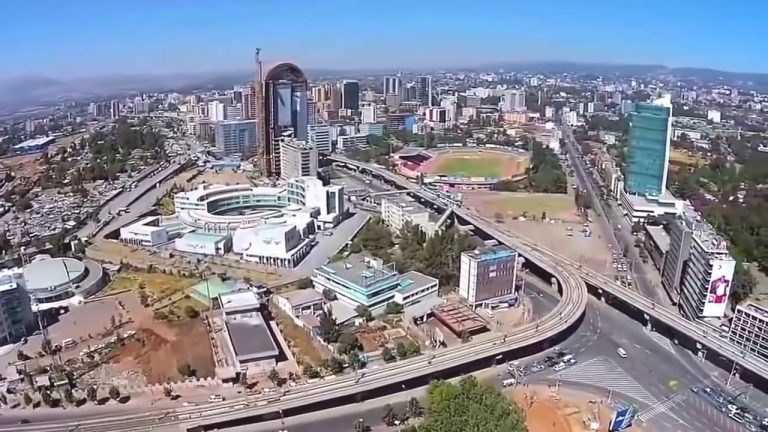
Ethiopia to host COP32 climate summit in 2027

0

Ethiopia said on Tuesday it would host the United Nations’ COP32 climate summit in 2027, fending off a rival bid from Nigeria to land an influential role that will allow it to shape the agenda and outcomes of the event.

The more immediate choice of host for next year’s COP31 remains unresolved, however, with both Australia and Turkey vying for it.

COP host countries adopt a presidency role which allows them to set goals for the summit and showcase their own climate issues, as well as an important position in resolving any conflicts that arise during negotiations.

At a plenary session of this year’s event in Brazil, Ethiopia confirmed it had been endorsed by fellow African nations to hold the 2027 conference in its capital Addis Ababa, as first reported by Reuters on Monday.

“We are deeply grateful for the trust and confidence bestowed on the Ethiopian people and government,” Ethiopia’s ambassador to Brazil, Leulseged Tadese Abebe, told a plenary session of the COP30 summit.

“COP32 will play a major role in guiding climate action in this critical decade.”

COP summits rotate around the world’s regions, and the decision must be unanimous among all countries in the region.

The decision still needs to be officially adopted, but this is now considered a formality.

This year’s conference is being held in the Amazonian city of Belem. Next year’s hosting choice within the “Western Europe and Others”” group has been up for months, with neither Turkey nor Australia backing down.

Australia made its COP31 bid in partnership with the Pacific Islands, which are among the world’s most vulnerable places to climate change.

Correa do Lago urged countries in the Western European group on Monday to resolve their impasse as soon as possible. If it cannot be resolved, the conference would be held in Bonn, Germany, where the UN climate agency is based.

“We would have to, but we do not want to,” German State Secretary in the Environment Ministry Jochen Flasbarth told reporters.

Pacific Journalists sharpen disaster reporting skills through AI-driven Masterclass in Palau

0

“Communications and media play a significant role in ensuring our region reaches its goals,” said Gen Ilolahia, co-founder of Moanan in Auckland, New Zealand, describing a recent regional media training as “a great initiative to build media capacity across the Pacific.”

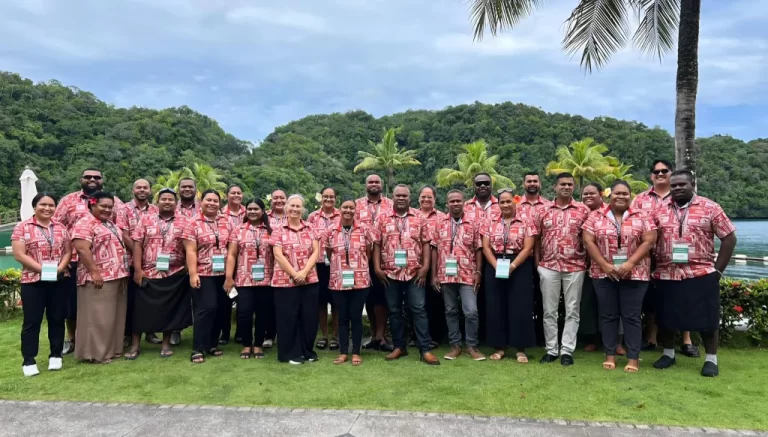
From November 3 to 7 November, journalists and communication professionals from across the region gathered in Palau for a masterclass focused on disaster preparedness and response reporting.

The training integrated advanced tools such as artificial intelligence to enhance early warning systems and risk reduction efforts, aiming to strengthen how media informs and protects communities before and during disasters.

Ilolahia said the initiative marked an important step toward building stronger regional networks and urged deeper engagement with local communities. “Perhaps more time with local Palauans to hear their story,” he added.

Palau Wave Radio journalist Moiwai Andreas described the masterclass as “really informative and meaningful,” noting it helped her cover the concurrent Disaster Risk Management Meeting more effectively despite scheduling conflicts.

“I learned that reporting should always be clear and easy to understand. It’s important to avoid technical terms and write in a way that even an elementary student can follow,” Andreas said.

She also expressed hope for greater participation from Palauan journalists in future sessions.

From Kiribati, communications officer Sibete Ietaake said the programme had a transformative effect on her career.

“It was a different experience but very crucial to both my professional and personal development,” she said. Ietaake said she gained valuable insight into simplifying complex information and building professional networks.

“I will definitely utilise the networking I made with everyone at the Masterclass!” she said, adding that she hoped for more feedback on her disaster risk management stories to improve future reporting.

Merana Kitione, representing the Pacific Community (SPC), said the masterclass was designed to strengthen collaboration among three essential national-level sectors: journalists, National Disaster Management Offices (NDMOs), and National Meteorological Services.

“These are the three sectors that work closely together when disaster strikes, particularly in communicating critical messages,” Kitione said.

She praised the comprehensive coverage of a recent ministerial disaster risk management meeting and highlighted the benefits of collaboration between SPC’s Climate and Ocean Support Program and national meteorological offices.

“It has been very beneficial to sit in the same room with the media and the MDMO and discuss how we can work better together,” she said.

Nelson Anaia from the Solomon Islands’ NDMO echoed those views, emphasizing the importance of linking disaster management professionals and journalists.

“Workshops like this should be held regularly to enable disaster risk management personnel to share knowledge with journalists,” Anaia said.

“They play a critical role in delivering disaster messages, including early warnings and awareness, and educating the public.”

Anaia, who manages disaster response in the Solomon Islands, said the masterclass helped him better understand how journalists report on emergencies. “Linking DRM with the media is essential. We have done this back home, but the workshop will help us improve further,” he said.

By fostering stronger networks among disaster management agencies, meteorological services, and the media, participants agreed the training underscored one central lesson: clear, timely communication saves lives when disaster strikes.

‘Our team is building each year’: RTS sees bright future for Samoa

0

After making their second major rugby league final, Samoa may have missed out once more on claiming some silverware, but Toa fullback Roger Tuivasa-Sheck is confident the best is yet to come.

Samoa looked on track to securing an upset as they surged to a 12-0 lead in the first half of the Pacific Championships Cup final against New Zealand, but fell away in the second as the Kiwis claimed their second title.

“Josh Papalii said it well, we can’t let that moment define what we’re starting, what we’re building here for Toa Samoa,” Tuivasa-Sheck told NRL.com.

“The support, the fans, the family, the prayers that we receive from everyone, it’s been unreal and full credit to them, they made this competition.

“Our Kiwis, Tonga and Samoa fans turning up. I really enjoyed the campaign too but really gutted with our results.

“(But) our team is building each year, it’s got quality players coming up, quality staff as well.

“The fans are right behind us, so there’s no reason for us not to go out and do something special for Samoa in the World Cup.”

Next year’s Rugby League World Cup will be staged across Australia and Papua New Guinea and if the crowds over the four weeks of 158,041 in Auckland, Brisbane, Port Moresby and Sydney are anything to go by, it will be one of the best-supported yet.

“This Pacific Championship campaign alone has shown me what we’ve done, the people that turned up; we sold out stadiums, if that’s not saying something, then I don’t know what else we can do,” Tuivasa-Sheck said.

“The Cookies they played earlier (in a World Cup qualifier against South Africa), they’re awesome.

“Tonga’s fans, the Red Sea, they always turn up, and Kiwis, they’ve got a good backing.

“Hopefully there’s more next year.
“Big credit to the crowds, we can’t fault them, they made this competition.

“They made us turn up and put on a show and we just can’t credit them enough.

“Hopefully they come back next year and we do even bigger.”

This season saw superstar prop Payne Haas pledge his allegiance to Toa Samoa, with the premiership-winning prop putting in monumental performances in the blue jersey that see him a contender for the Golden Boot.

Next year, Origin fullback Hamiso Tabuia-Fidow has pledged to represent Samoa once again for the World Cup, with the prospect of more stars putting their hands up for Samoa to come.

“We have quality players coming into the side and I sit here and think ‘do I even make the side’, you know? But that’s what you want for Samoa,” Tuivasa-Sheck said.

“You want the best putting their hand up, so we’ll see what happens.

“(For this Pacific Championships campaign) the young boys coming in, they would have been around some players who have won finals, have been players of the year – they’ve gained a lot of experience about the way they operate.

“Being part of this, it makes them hungrier and that’s what we want heading into next year.”

Global emissions projected to fall by 12 percent by 2035, says UN Climate Chief

0

UN Climate Change Executive Secretary Simon Stiell says the latest update to the Nationally Determined Contributions (NDC) Synthesis Report shows the world is finally bending the emissions curve downward.

“Our update to our NDC Synthesis Report shows: The emissions curve is being bent downwards,” Stiell said in a letter to Parties ahead of COP30.

“Global emissions are projected to fall by 12 percent in 2035 (compared to 2019 levels) based on new NDCs.”

The UN report, released on 10 November 2025, compiles data from 113 countries that have submitted their 2035 NDCs.

The analysis projects total global greenhouse gas emissions including land use and forestry will be 12 percent below 2019 levels by 2035.

Before the adoption of the Paris Agreement in 2015, global emissions were projected to rise between 20 and 48 percent by 2035.

The current data marks a major turning point, though experts caution that deeper cuts are still needed to meet the 1.5°C target.

Stiell said the results show progress, but the pace of change remains too slow.

“Every fraction of a degree matters,” he said, urging countries to turn commitments into concrete action.

The updated findings come as world leaders gather in Belém for COP30, where accelerating finance, technology transfer, and implementation of national climate plans will dominate the agenda.

“History will not ask what we intended,” Stiell said earlier at the COP30 Leaders’ Summit. “It will ask what we achieved,” he said.

Pacific voices unite at COP30 science for justice, action for survival

0

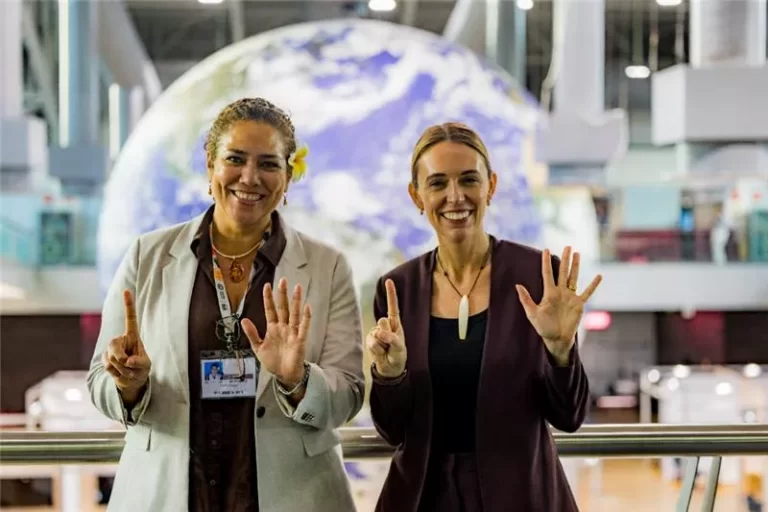
As COP30 opens in Belém, Brazil, the Pacific stands united in solidarity as Pacific Small Island Developing States supported by OneCROP and amplified by friends of the region including the Special Envoy for Oceania, Dame Jacinda Ardern, as appointed by the COP Presidency.

In the heart of the Amazon, far from their island homes, Pacific leaders, officials, negotiators, experts and scientists, carry a clear message: the fight for 1.5°C is both a legal obligation and a fight for survival.

Within the Alliance of Small Island States (AOSIS), Small Island Developing States (SIDS) are calling for urgent and equitable climate action rooted in evidence, obligation and grounded in lived experience. And together with many other states, Pacific SIDS are strongly calling for Australia to be supported as host of COP31 to be held in the Pacific region in 2026.

Pacific Leaders, Ministers and Heads of Delegation meet in the Leaders’ Summit 6-7th November drawing attending to the critical issues of the region.

Special Envoy for Oceania,Dame Ardern also meet with Pacific Leaders and delegations to help amplify their voices, commending the Pacific’s moral and informed leadership on the global stage.

“Pacific priorities should be global priorities. The Pacific is not only on the frontline of climate impacts but also at the frontline of solutions from the Pacific Resilience Facility to leadership on the 1.5°C goal”

“Loss and damage is critical, but it’s also time to think not just about the lungs of the world our forests but the heart, our oceans. The Pacific has led on ocean protection and restoration. Now is the time for a COP 31 dedicated to oceans.”

In the days leading up to COP30, SIDS representatives from across the Pacific, Caribbean, African and Indian Ocean regions met for intensive strategy sessions to align positions on key priorities: protecting the 1.5°C temperature limit, ensuring fair and accessible climate finance, and advancing support for loss and damage amongst other priorities.

Together as the block of AOSIS they expressed growing concern that global efforts are falling short of what is needed to keep 1.5°C within reach. AOSIS has called on countries to close the ambition gap by treating the 1.5°C limit as a legal and scientific obligation, not an aspiration as was articulated clearly by the International Court of Justice (ICJ) legal opinion issued this year

AOSIS Chair, Ambassador Ilana Seid of Palau, said this was a critical issue as the world’s current trajectory toward climate catastrophe is unacceptable morally, scientifically, economically and legally.

“COP30 must respond to the reality that our collective commitments are far off course. Small islands are paying the highest price for inaction.”

These are not abstract policy debates they are matters of daily life for communities where rising seas, drought, increasingly intense cyclones, and coral loss are reshaping economies, communities, cultures and ecosystems. And pose existential threats to the lowest lying atolls and communities.

Regional coordination has been central to this effort. Under OneCROP a coordination arrangement of the Council of Regional Organisations of the Pacific agencies, lead by the Secretariat of the Pacific Regional Environment Programme (SPREP), and supported by The Pacific Community (SPC), Pacific Islands Forum Secretariat (PIFS),Forum Fisheries Agency , the University of the South Pacific (USP) and the Office of the Pacific Ocean Commissioner are combining scientific, policy, and technical expertise to ensure Pacific advocacy at COP30 is underpinned by evidence and regional priorities from the various sectoral convenings of the region..

Dame Jacinda Ardern, Special Envoy for Oceania for COP30 and former Prime Minister of Aotearoa New Zealand (2017–2023), attended the COP30 Heads of State Summit discussions in Belém,

Coral Pasisi, Director of Climate Change and Sustainability at the Pacific Community (SPC), said the Pacific’s collective presence at COP30 reflects both the urgency of the science and the strength of regional unity.

“Climate change is the greatest security threat to the well-being and security of Pacific people, and this is something that Pacific leaders have been reiterating for the last 17 years every single year in their annual communiqué. And that’s because we are already facing the impacts of climate change as small island nations on the front line of climate impacts,”

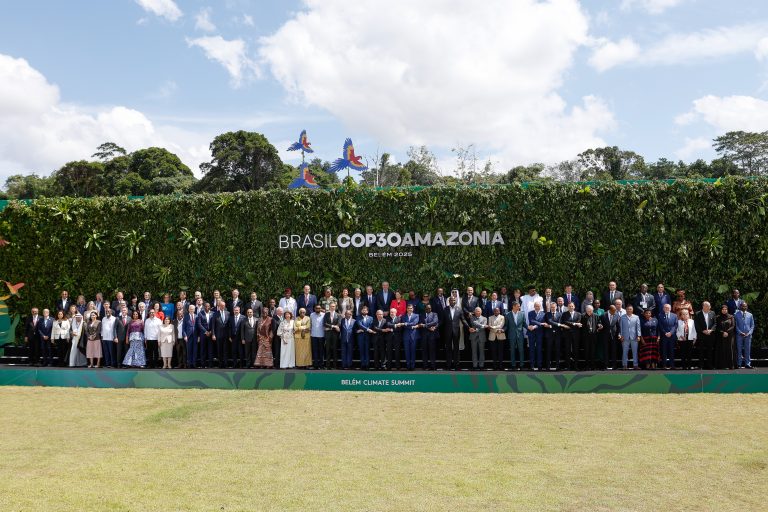
The COP30 Heads of State Summit, held on 6–7 November, set the tone for negotiations ahead, as world leaders acknowledging in their ‘Call of Belem for the Climate’ they have made progress but not enough.

They highlighted the need to accelerate the fight against global warming and strengthen multilateralism in combatting climate change

In their call, they cited the urgent need to address the shortcomings: in climate commitments (ambition gap); what they are doing to reduce greenhouse emissions (the implementation gap); and the necessary financial, technological, and capacity building support for developing countries to carry out their transition ( the means of implementation gap)

For the Pacific, these are not distant policy targets but essential steps to safeguard lives, livelihoods, cultural identity and for many, their very existence.

As COP30 continues, the Pacific’s message remains unwavering: the survival of small islands is the world’s test of solidarity and its measure of leadership in turning science into justice. SPC together with OneCROP will continue to support Pacific Island States through COP30 including communications throughout.

Fiji calls for global action to support diginified climate mobility at COP30

0

Fiji’s Minister for Environment and Climate Change, Mosese Bulitavu, has called on global leaders to act with greater urgency, compassion, and solidarity to support communities already facing displacement due to the worsening impacts of climate change.

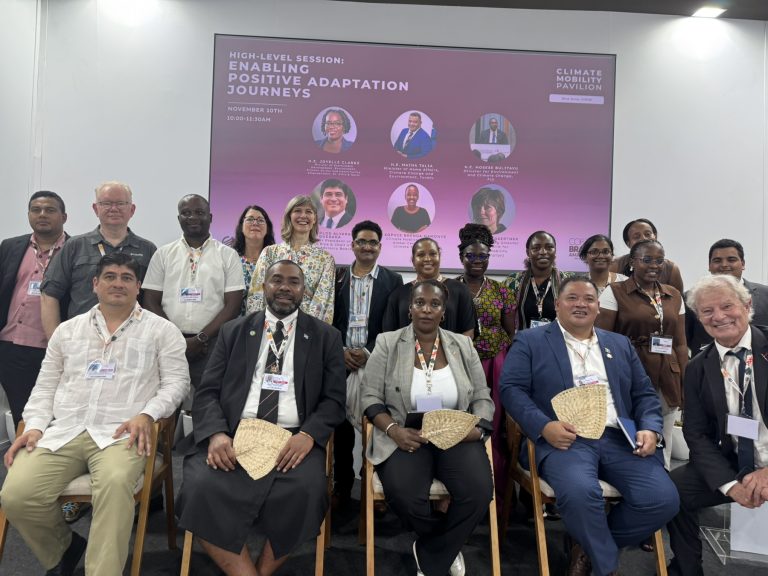
Speaking at a high-level dialogue on “Enabling Positive Adaptation Journeys” at the Climate Mobility Pavilion during COP30 in Belém, Minister Bulitavu said that for Fiji and other small island developing states, climate mobility is no longer a future concern but a present reality.

“Communities are already losing their ancestral lands, livelihoods, and cultural heritage as sea levels rise and coastlines recede,” the Minister said.

“This is not a distant risk. It is the lived experience of our people and it demands a collective and compassionate response.”

The Minister emphasised that climate mobility must be approached not as a story of loss, but as an opportunity to safeguard dignity, security, and hope for those most affected.

He urged the global community to ensure that when people are forced to move, they do so safely, fairly, and with dignity.

Minister Bulitavu outlined four key priorities to support communities facing climate-induced displacement:

*Regional Cooperation – He commended the Pacific’s leadership through regional frameworks such as the Pacific Regional Framework on Climate Mobility and the Boe Declaration on Regional Security, which guide collective action to manage displacement and cross-border mobility in a way that reflects shared values and Pacific solidarity.

*National Action: He shared examples of how Fiji has taken proactive steps through its Climate Change Act 2021, which enshrines rights and safeguards for affected communities. For example, the Standard Operating Procedures for Planned Relocation, which ensures that communities are relocated with care and respect. He reiterated that Fiji’s NDC 3.0 integrates climate mobility into national development planning, with a focus on sustainable livelihoods and long-term resilience.

*Evidence-Based Planning:Bulitavu underscored the importance of robust data and research in shaping fair and effective adaptation strategies. Fiji’s Comprehensive Risk and Vulnerability Assessment and its pioneering work on Non-Economic Loss and Damage Assessment provide critical insights into how policies can protect not only assets but also culture, identity, and community cohesion.

*Partnerships and Financing: Highlighting the Climate Relocation of Communities Trust Fund, the Minister noted that this model demonstrates how financing can empower affected communities to lead their own relocation processes. However, he cautioned that current global funding remains far from adequate.

“We call for dedicated, predictable, and accessible funding for climate mobility within the global adaptation finance framework,” he urged.

“Every nation has a role to play in ensuring that climate mobility is managed with justice and humanity.”

Minister Bulitavu also appealed to the moral conscience of the international community

He stated “our goal is simple yet profound — to ensure that those affected by climate change retain their dignity, agency, and hope. Positive adaptation journeys must be defined not by displacement and despair, but by resilience, empowerment, and opportunity.”

Bulitavu reaffirmed Fiji’s commitment to advancing a global vision anchored in solidarity and shared humanity.

He called on all countries to defend the right of communities to stay, their right to move with dignity, and above all, a right to a future where no one is left behind.

Climate Change is a social crisis and an existential threat: Tuvalu PM

0

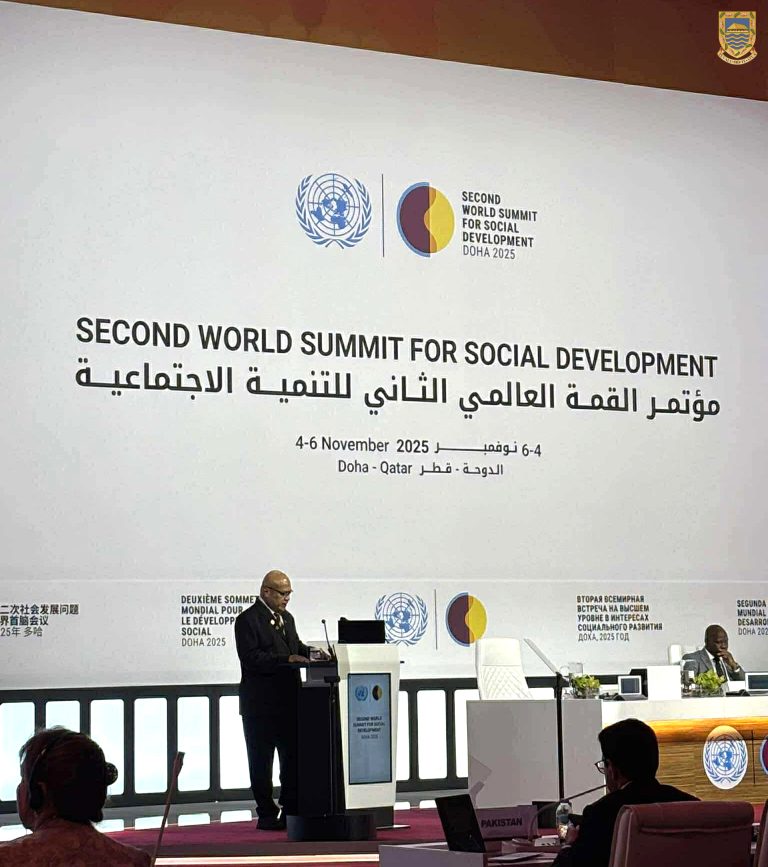
Tuvalu Prime Minister Feleti Teo told world leaders at the Second World Summit for Social Development that climate change poses the single greatest threat to his country’s survival and must be addressed as a core issue of global social development.

“I am honoured to address this 2nd World Summit for Social Development as the Prime Minister of Tuvalu.
“This second global social summit is certainly long overdue,” Teo said in his address in Doha, Qatar last week.

He said the world faces new and complex challenges since the first summit in 1995, driven by “the triple planetary crisis of pollution, climate change and biodiversity erosion.”

“These social issues are further exacerbated by the persistent stresses on global peace and security occasioned by numerous armed conflicts and the strains on multilateralism and international cooperation,” he said.

Teo called for “new and innovative, strategic and smart solutions” to today’s global challenges, stressing that “social development is no longer the exclusive and sole responsibility of governments. It is now a whole of society, and a whole of country responsibility.”
He welcomed the summit’s theme “Partnership for accelerating social development and climate solution” calling it “timely and highly appropriate considering the limited time left to achieve the SDGs by 2030.”

Teo reaffirmed Tuvalu’s commitment to the Copenhagen Declaration on Social Development, the 2030 Agenda for Sustainable Development, and the Pact for the Future.

“Tuvalu views investment in social development as an investment in the potential and resilience of humanity, and in the health and shared future for planet earth,” he said.

Announcing Tuvalu’s full support for the Doha Political Declaration, Teo said his country’s priorities are grounded in “inclusivity, gender equality and shared responsibilities,” ensuring that “every woman and man (young and old), including persons with a disability, can and is able to contribute to a resilient and sustainable Tuvalu society.”

“When women are empowered, communities grow stronger,” Teo said. “When women lead, peace and resilience follow. Tuvalu envisions a society where gender equality is not a matter for daily negotiation but a daily lived experience.”

The Prime Minister warned that Tuvalu’s social development efforts are being undermined by climate change.

“Climate change-induced sea level rise is the single greatest existential threat to the economy, security and future survivability of Tuvalu as a sovereign nation and as a people,” he said.

He thanked the UN General Assembly for convening the first high-level meeting on sea level rise and said he hopes the follow-up meeting in 2026 will adopt a UN Declaration “that espouses the principles of statehood continuity and the permanency of properly demarcated maritime boundaries.”

“For Tuvalu, the ocean that has sustained our livelihood for generations, the ocean that has defined us as a people and as a community with distinctive cultures and heritage now poses to engulf and challenge our very future existence,” Teo said.

“That is why Tuvalu continues to call on the global community to recognise the nexus between climate change and the ocean as an essential pillar of social development, poverty reduction, and global peace.”

“Climate resilience is social resilience,” he added. “Investing in climate resilience is an investment in the dignity, stability, and prosperous future of our people.”

Teo urged delegates to “rally behind the Doha Political Declaration” and ensure the summit becomes “a moment of action and a catalyst to putting back on track the UN social development agenda and the sustainable development goals.”

1.5°C limit ‘almost inevitable’, IPCC Chair warns as COP30 opens in Brazil

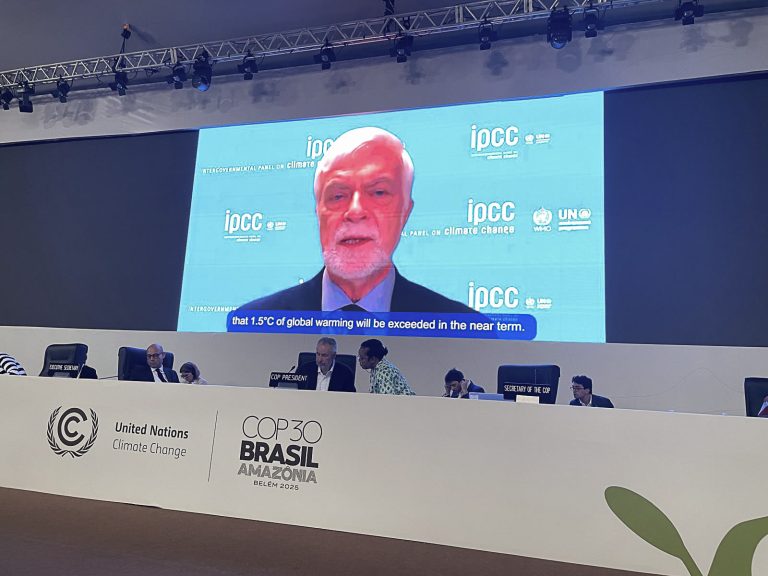
The world is “almost inevitably” set to surpass the 1.5°C global warming limit unless countries urgently ramp up emissions cuts and strengthen adaptation, the Intergovernmental Panel on Climate Change (IPCC) Chair, Professor Jim Skea, has warned.

In a video message to delegates at the opening of COP30 in Belém, Brazil, Skea congratulated the host country and city for hosting the first UN Climate Change Conference in Brazil since the historic 1992 Earth Summit in Rio de Janeiro.

“The ‘Rio Conventions’ stand as a testament to a global commitment to tackling environmental and development issues,” he said. “Since then, the challenges posed by climate change to both human and natural systems have become more acute and more evident.”

Citing the World Meteorological Organisation, Skea noted that “2024 was the warmest year on record, reaching 1.55 degrees Celsius above preindustrial levels.”

Despite progress under the Paris Agreement, he said, “even if countries fully implement their Nationally Determined Contributions, global temperatures could still rise by 2.3 to 2.5 degrees Celsius this century.”

This alarming forecast follows the “insufficient climate action over the last few years, and the consequent continued increase in greenhouse gas emissions.”

However, Skea maintained that it is still possible to bring global warming back down to 1.5°C by the end of the century, but only through “immediate, deep and sustained reductions in carbon dioxide emissions, as well as the removal of substantial amounts of carbon dioxide from the atmosphere.”

He revealed that IPCC member governments recently agreed on the e scientific content for a 2027 Methodology Report on Carbon Dioxide Removal Technologies, Carbon Capture Utilisation and Storage, which will form part of the panel’s seventh assessment cycle.

“For the first time in IPCC history, we will have chapters on adaptation finance and responses to losses and damages,” he said, adding that the upcoming report will place greater emphasis on climate resilience and adaptation.

“We have agency over our collective future. We have the know-how, the resources, and the tools to address the climate change challenge. The many adaptation and mitigation options identified in our reports can be implemented right now.”

Setting the tone for COP30, Skea said the IPCC would continue to deliver “clear, authoritative, timely and actionable” scientific findings to support the UNFCCC process.

“The key findings of our reports are durable. And I wish you all fruitful and constructive discussions in Belém.”

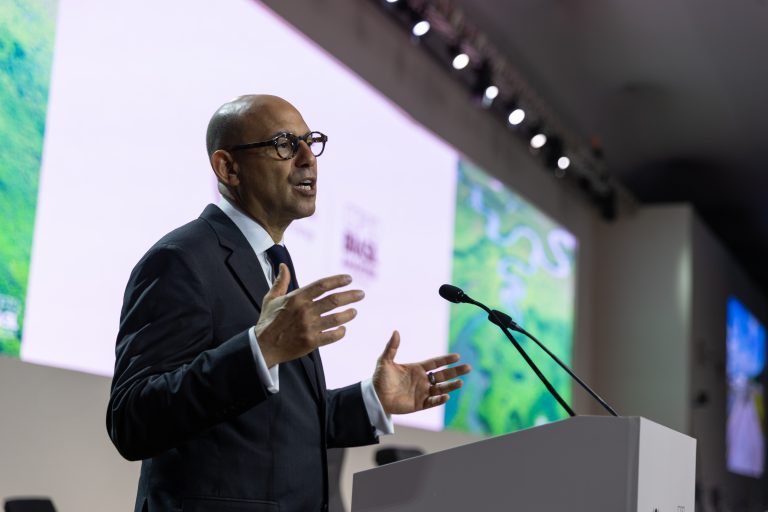
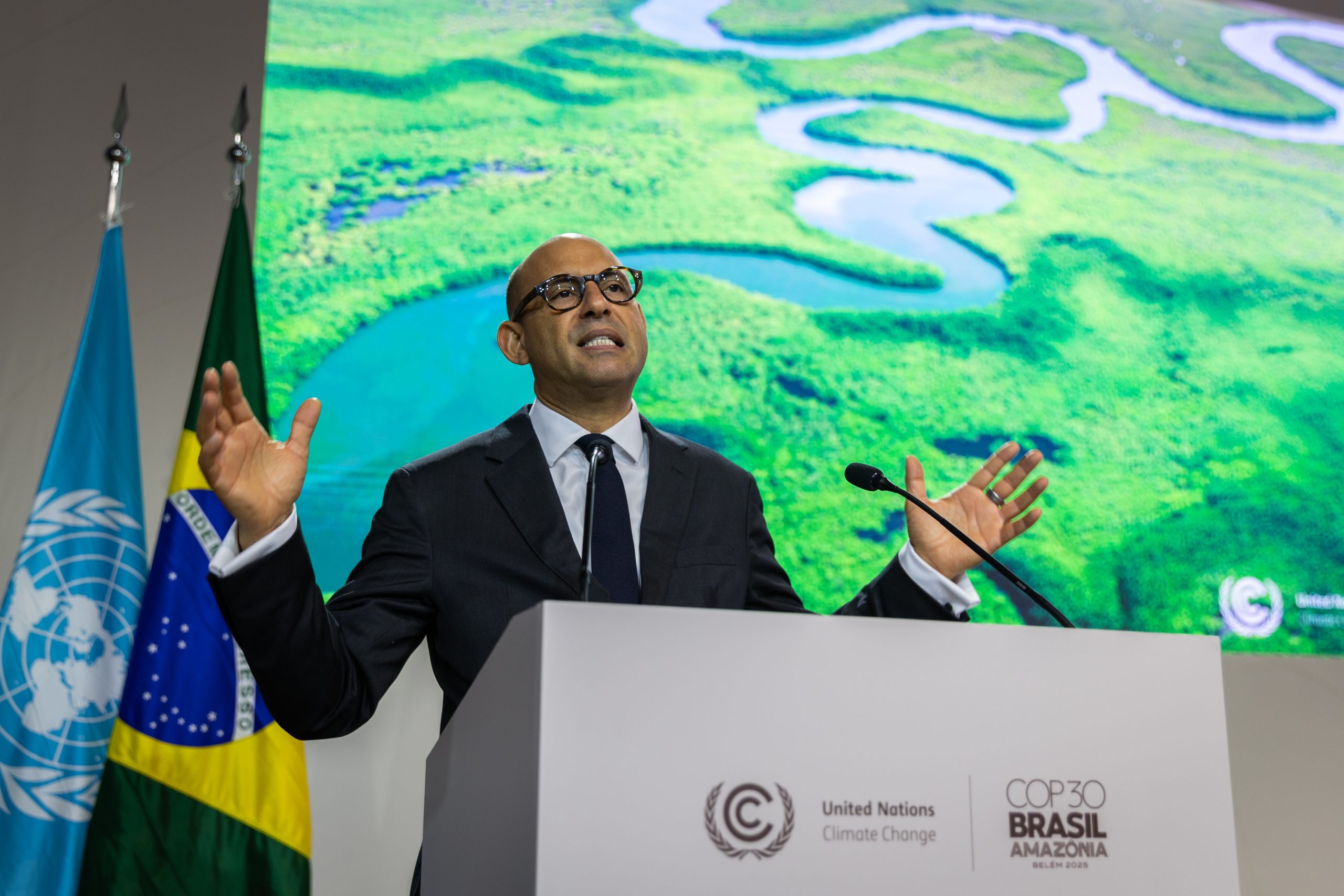
UN Climate Change Executive Secretary Simon Stiell. Photo: UN Climate Change – Kiara Worth

UN Climate Change Executive Secretary Simon Stiell opened the conference with a rallying call for urgency and unity.

Declaring himself “determined” to deliver a COP that drives real progress, Stiell told delegates, “COP30 President André Corrêa do Lago and I, and all our teams, are determined to have a COP that takes another major step forward.”

He said the conference had begun on a strong footing after an all-night negotiation secured the adoption of the official agenda.

“I spoke about solutions and the need for speed, so this is a very good start,” he said.

Highlighting new data on Nationally Determined Contributions, Stiell said updated commitments could reduce emissions by 12 percent by 2035, a milestone he described as “a big deal.”

“Every fraction of a degree of heating avoided will save millions of lives and billions of dollars in climate damage.”

Stiell noted that market trends are increasingly driving climate progress.

“Renewables are now cheaper than 90 percent of all fossil fuels. That’s why renewables have overtaken fossil fuels in investment and overtook coal this year as the world’s top energy source.”

But he cautioned that the current pace of action remains inadequate.

“Global heating is already dealing some devastating blows in every country,” Stiell said, pointing to “super-typhoons blasting the Philippines and Vietnam and the brutality of Hurricane Melissa crushing lives and businesses.”

As COP30 unfolds, Stiell reminded delegates that the process must remain centred on people.

“This COP process is ultimately all about people,” he said. “People who may not follow every negotiation, but who feel the consequences – in food prices, insurance costs, and energy bills that rise with every drought, flood, storm, and heatwave.”

He stressed that climate justice and fairness must guide every outcome: “We will only win the fight against the climate crisis if all people in all nations can get a fair piece of the epic benefits.”

Stiell urged countries to move quickly and decisively.

“There’s hard work ahead. The stakes are high. But I’ll be working side by side with the COP President to deliver the best outcome possible. We need to get straight to the hardest issues quickly. No delay. None of us can afford it,” he said.

Climate crisis is a health crisis, warns WHO regional director Piukala

0

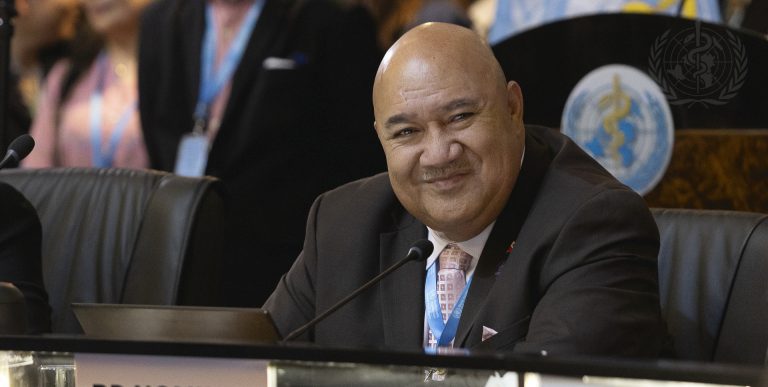
World Health Organisation (WHO) Regional Director for the Western Pacific, Dr Saia Ma’u Piukala, has warned that the climate crisis is also a health crisis, urging stronger global cooperation as COP30 gets underway in Belém, Brazil.

“The Climate crisis is a health crisis,” Dr Piukala said on X.

“Across the WHO Western Pacific Region and globally, climate-triggered crises are mounting from environmental degradation to storms, earthquakes and other disasters with devastating impacts on the health, safety and wellbeing of literally billions,” he said.

As the UN climate conference begins, Dr Piukala called for united action.

“We at WHO are urging governments, policymakers, health authorities and civil society partners to come together all the more to accelerate action aimed at reducing the harms of Climate Change.”

He commended countries in the region for their efforts but said more needs to be done.

“I commend our 38 countries and areas in the WHO Western Pacific Region – from China and Indonesia on one hand to the Pacific island countries on the other – for taking various actions to do just that.

We are seeing progress -but not enough,” he said.

Dr Piukala stressed that the solutions are already known but require stronger commitment.

“The thing is, we know what needs to be done – by countries individually, and by countries collectively. What we need is consistent political leadership -with the knowledge that we sink or swim together.” Dr Piukala said.

PNG PM Marape calls for fair climate action and stronger forest partnerships at COP30

0

Papua New Guinea has once again shown strong leadership on climate issues, with Prime Minister James Marape speaking up for forest and ocean nations at the COP30 Climate Conference in Belém, Brazil.

PM Marape called for fair climate funding, stronger global partnerships, and urgent action to protect tropical forests and oceans, which he described as “the lungs of the Earth.”

“For Papua New Guinea, climate adaptation and mitigation is not a choice, it is a matter of survival,” Marape told world leaders at the World Leaders Climate Action Summit.

He said PNG remains fully committed to the Paris Agreement, especially Articles 5 and 6, which support countries that protect forests and take part in regulated carbon markets.

Marape reminded delegates that PNG is home to 35 million hectares of rainforest and 7% of the world’s biodiversity, making it one of the planet’s most important natural guardians.

“Forests and oceans are our greatest allies; they preserve the air, regulate the climate, and sustain life on Earth,” he said.

The Prime Minister thanked the United Nations, France, Australia, the Green Climate Fund, ICRAF, and the Coalition for Rainforest Nations for helping PNG in its conservation efforts.

While in Brazil, Marape also met with President Luiz Inácio Lula da Silva, and the two leaders agreed to strengthen cooperation on climate action, food security, renewable energy, and protecting biodiversity.

President Lula described PNG as a “natural partner” in defending the world’s tropical forests.

The two countries also agreed to set up diplomatic missions in each other’s capitals and work together in areas like agriculture, clean energy, and green technology.

Marape proposed a new partnership called the “Pacific-to-Amazon” initiative, linking forest and ocean nations in the Pacific with Latin American countries.

“We are connecting the Pacific and the Amazon, two of the world’s great forest regions, in a common cause for climate and sustainable growth,” Marape said.

At a separate session reviewing the Paris Agreement’s progress, Marape urged rich countries to keep their promises and deliver real financial support to forest nations.

“Our forests deserve proper conservation financing,” he said. “One hectare of conserved forest can save the world far more than any industrial offset.”

Marape backed a new global plan called the Baku–Belém Roadmap, which aims to raise US$1.3 trillion each year by 2035 for developing countries.

He also supported the plan’s Five Action Fronts, Replenishing, Rebalancing, Rechanneling, Revamping, and Reshaping, to reform the world’s financial systems for fairer climate funding.

The Prime Minister highlighted PNG’s role as a bridge between the Pacific, ASEAN, and Latin America, and reaffirmed PNG’s carbon-negative status.

He said PNG is committed to stopping deforestation, restoring damaged land, and protecting 30% of its ocean areas from illegal activities.

Under the Earth3 Platform, PNG is developing carbon credit projects that will protect forests and support rural communities with sustainable income.

“If this generation of leaders fails to find real financing solutions for forest nations, history will judge us harshly,” Marape said.

“There is no planet like Earth, rivers, trees, mountains, and oceans sustain life. Mars and Mercury are uninhabitable. This planet is worth fighting for. Let us save it together.”

Marape said countries like Papua New Guinea, Brazil, and the Congo are helping the world survive by protecting the planet’s largest forests.

“Forests and ocean nations are carrying the burden of the entire planet’s balance,” he said. “The Amazon, Congo, and PNG’s tropical forests are the lungs of the Earth. Protecting them is the best way to save humanity.”

Marape said he now sees the fight against climate change as a fight to save people, not just trees.

“When I first started, I thought I was fighting to save our forests,” he said. “Now I know I am fighting to save humanity.”

He reminded world leaders that there is no other planet like Earth.

“There is no planet like Earth,” he said.

“Mars and Mercury are uninhabitable. Here, rivers, trees, and oceans sustain life. That is worth fighting for.”

Marape urged rich nations to help fund forest protection instead of destruction.

“Our forests deserve proper conservation funding,” he said. “One hectare of protected forest can save more lives and reduce more emissions than any industrial project.”

He said PNG remains committed to stopping deforestation, restoring damaged lands, and supporting forest communities.

Stay connected

529FansLike
172FollowersFollow
156SubscribersSubscribe
- Advertisement -