Home Blog Page 124

Pumas wary of Flying Fijians

0

Argentina head coach Felipe Contepomi has singled out Fiji as one of the most intriguing challenges in the Pumas’ Rugby World Cup 2027 pool, stressing that knockout calculations matter far less than preparation and performance on the day.

Argentina and Fiji are drawn together in the same pool for the expanded 24-team World Cup in Australia, alongside Spain and Canada, setting up a potential blockbuster clash between two sides known for their physicality and attacking flair.

While much has been made about possible knockout pathways under the new round-of-16 format, Contepomi downplayed the importance of trying to predict quarterfinal opponents.

“Logic often doesn’t prevail in World Cups, so that doesn’t worry me too much,” Contepomi said when asked about whether one side of the draw might be more favourable than another. This is the part you can’t control, which is the group you’re in and the bracket you’re in.”

The former Argentina international said Fiji remain a dangerous opponent regardless of how the draw unfolds, dismissing any suggestion that his side would look to manipulate finishing positions to avoid tougher matchups later in the tournament.

“Now that you know for sure what this group and bracket look like, you can plan, schedule, study, and then be your best version at the World Cup. There’s not much more to do than that. You can like one path or another, but that’s not how World Cups work. If you want to go far, you have to beat whoever is in front of you.”

Contepomi also rejected the idea that Argentina would ever consider easing off against a team like Fiji to influence their route through the knockout stages.

“If we want to go somewhere else in the draw, what, finish second and lose against Fiji? I don’t think so.”

With nearly two years remaining before the tournament kicks off, Argentina and Fiji are both expected to use upcoming international windows to build depth and cohesion, knowing that their pool meeting could have major implications in what promises to be one of the most unpredictable World Cups yet.

Lord Fakafanua elected Tonga’s new Prime Minister after parliamentary vote

0

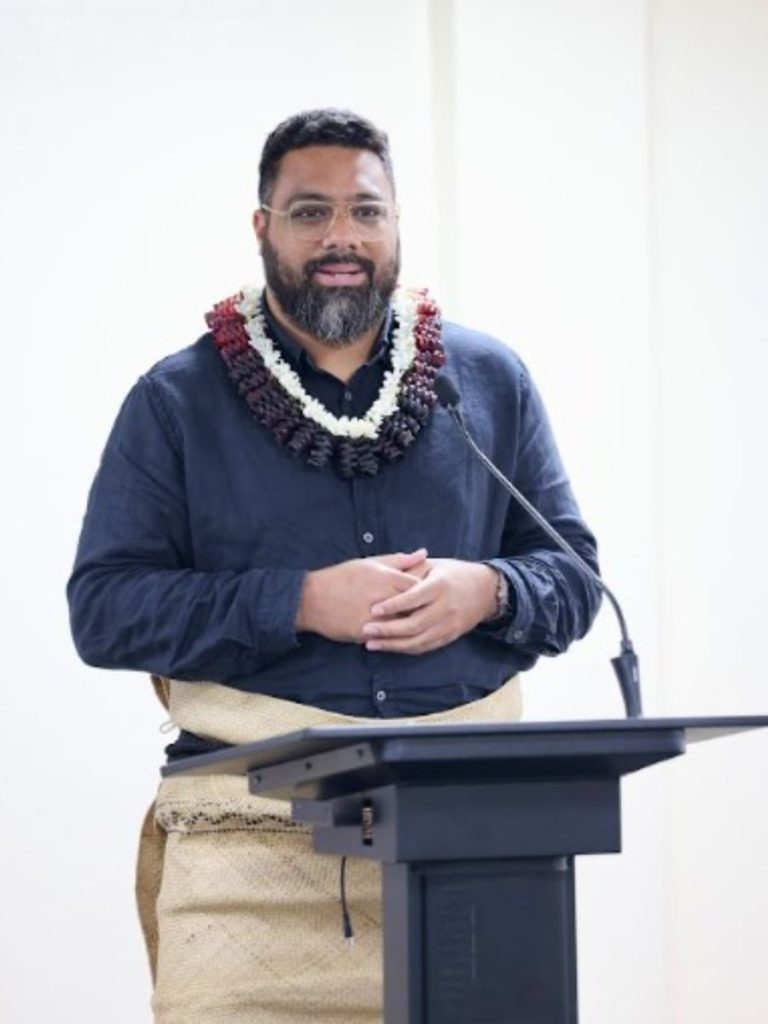
Tonga’s Legislative Assembly has elected Lord Fakafanua as the kingdom’s new prime minister following a secret parliamentary ballot this afternoon.

Interim Speaker Lord Tangi ʽo Vaonukonuka announced the result after returning from formally notifying His Majesty King Tupou VI of the outcome. Lord Fakafanua secured 16 votes in the secret ballot of 26 members, defeating Dr ʽAisake Valu Eke, who also stood for the leadership.

Earlier in the day, both candidates addressed the Assembly. Dr Eke’s nomination was supported by Tevita Puloka, Semisi Sika and Alani Tangitau, highlight his backing among several people’s representatives. Lord Fakafanua’s candidacy was endorsed by Viliami, Latu Seventeen Toumo‘ua and Lord Tuihaangana, reflecting support from noble peers.

After the speeches, the Assembly paused for members to cast their ballots in a process overseen by the Interim Speaker. With more than half of the votes cast in his favour, Lord Fakafanua was declared prime minister-elect.

In his first remarks, Lord Fakafanua thanked members of parliament for their support and called for unity among representatives and the wider Tongan community as the nation navigates post-election leadership transition. He said the government must work together to address shared challenges.

Under Tonga’s constitutional framework, the prime minister-elect will now select a cabinet and present it to King Tupou VI for formal endorsement. This follows Tonga’s general election on 20 November, which returned a new 26-member parliament with a mix of people’s and noble representatives.

After confirming the new prime minister, members of parliament elected Noble Vaea as Speaker of the Legislative Assembly, with Noble Tu‘iha‘angana chosen as Deputy Speaker.

The appointments mean two nobles now hold the most senior leadership positions in Tonga’s parliament, marking a notable concentration of noble representation at the top.

The outcome marks a significant moment in Tongan politics, with a noble representative assuming the premiership amid ongoing public discourse about democratic practice and traditional leadership roles in government.

Pacific health systems at breaking point as Australia, NZ labour schemes drain skilled workers: Report

0

A major new study by the Australia Institute has warned that labour migration policies promoted by Australia and New Zealand are accelerating a health workforce crisis across the Pacific, undermining already fragile health systems and threatening long-term development.

The study, Addressing the Health Workforce Crisis in the Pacific, finds that while labour mobility schemes deliver short-term income gains for individual workers and families, they are also stripping Pacific Island countries of skilled health workers they cannot afford to lose.

The report aligns its findings with the Pacific Islands Forum’s 2050 Strategy for the Blue Pacific Continent, which prioritises sustainable economic development. It echoes a warning from the Forum’s former Secretary General that to “facilitate this priority though, the region must consider strategies that promote immediate to short term wins, as well as long term economic viability”.

According to the research, current labour migration practices are delivering immediate benefits but are simultaneously weakening the foundations needed for long-term health system sustainability across the region.

Drawing on evidence from health workers and unions across Pacific Island countries, the study shows that health systems are under severe strain due to low wages, unpaid allowances, rising living costs, staff shortages and poor working conditions.

Many health workers are leaving public health services because facilities are understaffed, equipment is inadequate, training opportunities are limited and occupational health and safety risks are growing. Climate change is compounding these pressures, increasing risks for frontline health workers and adding to system stress.

Health workers remaining in the system are often overworked and unable to provide adequate care, creating daily stress and burnout. In many countries, anti-union discrimination and weak social dialogue prevent unions from addressing these problems effectively.

The report finds that significant numbers of Pacific health workers are migrating to Australia and New Zealand through multiple pathways, including government-managed schemes such as PALM and RSE, as well as employer-sponsored skilled migration programs.

A key concern is the growing recruitment of nurses and other skilled health professionals into lower-skilled care jobs in aged care, disability support and early childhood education. These roles often do not recognise workers’ qualifications and provide little or no skills development relevant to Pacific health systems.

The study notes that losing even small numbers of experienced workers can have devastating impacts in small health systems already struggling to cope.

The recruitment of nurses into personal care roles is described as de-skilling, undervaluing workers and failing to meet both individual aspirations and national health needs.

The report highlights a lack of oversight of recruitment practices by labour hire firms, private training providers and aged care employers. Recruiters are accused of providing misleading information and false promises about job roles, conditions and pathways to skills recognition.

It warns that increased reliance on private recruitment agencies, with limited government or union involvement, is likely to worsen exploitation and poor treatment of Pacific workers.

The study also points to structural problems in aged care sectors in Australia and New Zealand, including low pay, poor job quality and chronic understaffing, which drive demand for migrant labour. Temporary migrant workers, particularly women, are identified as highly vulnerable to exploitation, racism and discrimination.

While Australia and New Zealand have committed to supporting Pacific development priorities and have strengthened some worker protections, the report says both governments take a narrow and siloed approach to labour migration.

Their focus is largely on individual worker outcomes rather than broader impacts on health systems in countries of origin. At the same time, skilled migration programs are expanding to include care workers with far less regulatory oversight than Pacific-specific schemes.

The report notes that under these programs there are no effective controls to prevent the recruitment of skilled health workers from Pacific countries with already depleted workforces.

It contrasts this approach with the United Kingdom, where labour migration programs for social care workers are being shut down due to exploitation and failure to address poor pay and conditions.

A recurring finding is the lack of “real reciprocity” in labour migration arrangements. Unions in both Pacific Island countries and destination countries argue that current systems benefit Australia and New Zealand while placing disproportionate costs on Pacific health systems.

Public sector and health unions in the Pacific are often excluded from migration policy design and implementation, especially where labour migration is treated as a trade issue rather than a human and workforce issue.

The report stresses that unions are central to building sustainable health systems and achieving development goals, yet are routinely sidelined.

The study calls for urgent reforms by Pacific governments, Australia and New Zealand, and regional partners.

Key recommendations include developing labour agreements that treat migration holistically, align with WHO and ILO standards, and explicitly protect Pacific health systems. It urges stronger bilateral agreements that include caps, fair recruitment rules, mutual recognition of qualifications and return migration requirements.

The report calls for greater investment in Pacific health workforce training, improved data systems to track migration impacts, and stronger social dialogue with unions at every stage of policy development.

For Australia and New Zealand, it recommends tighter regulation of skilled migration pathways, increased development assistance targeted at health workforce retention, and stronger protections to ensure migrant workers receive equal treatment.

Pacific Island governments are urged to engage unions as key partners, strengthen collective bargaining, invest in domestic training institutions and ensure returning health workers can reintegrate into the system without penalty.

The report concludes that labour migration should not come at the cost of collapsing health systems, warning that without coordinated action, Pacific countries risk losing the skilled workers essential to the health and wellbeing of their people.

TD03F upgraded to tropical depression, bringing heavy rain and strong winds to Fiji

0

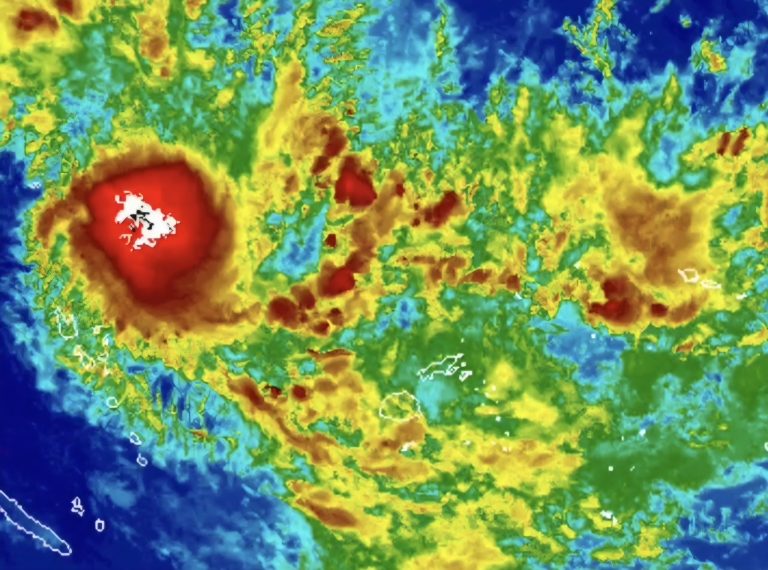
Tropical Disturbance TD03F has been upgraded to a Tropical Depression and is expected to bring heavy rain and strong northerly winds to Fiji over the coming days.

According to the Fiji Meteorological Service, TD03F remains slow-moving over open waters northeast of Vanuatu and is currently tracking southeastward between Fiji and Vanuatu.

The system is forecast to enter Fiji waters on Tuesday (16 December) and exit through the Lau Group by late Wednesday (17 December).

While TD03F has a low potential of developing into a tropical cyclone, its associated trough of low pressure is already affecting Fiji, producing overcast conditions and intermittent to persistent rainfall.

Strong northerly winds, averaging 50 km/h with gusts up to 70 km/h, are expected from Tuesday through Wednesday.

These winds will particularly affect the northern parts of Vanua Levu, Yasawa and Mamanuca Groups, northern Lau, and Lomaiviti Groups.

Mariners should expect northerly winds of 15–20 knots with moderate to rough seas, worsening to up to 30 knots with gusts of 40 knots on Wednesday over Vanua Levu waters, the Yasawa and Mamanuca Groups, the Koro Sea, and northern Lau waters.

The tropical depression is forecast to maintain unsettled conditions across Fiji through Wednesday, with rainfall increasing as TD03F approaches from the west.

Gradual improvement is expected from Thursday.

Fiji PM Rabuka condemns the terrorist attack at Bondi beach

0

Fijian Prime Minister and Minister for Foreign Affairs Sitiveni Rabuka has condemned the antisemitic terrorist attack at the Bondi Beach in Australia during a celebration of the first day of the Jewish festival of Hanukkah.

The Prime Minister Rabuka on behalf of the Government and the people of Fiji, expressed his heartfelt condolences to the families who lost their loved ones and wished speedy recovery to the survivors and their families.

He said Fiji stands strong with our Vuvale at this difficult time, stating that the thoughts and prayers of the people of Fiji are with the families of the victims and the survivors.

The Prime Minister Rabuka acknowledged the extraordinary acts of bravery of the Australian police officers and the bystanders for their great courage in saving the innocent lives.

He said there should be zero tolerance for terrorism, hate, violence and such inhumane acts should be condemned in all forms. The Prime Minister expressed hope that justice will prevail, and peace will be restored and the resilience of our Vuvale will remain strong.

The Prime Minister has reached out to Australian Prime Minister Anthony Albanese and has conveyed Fiji’s solidarity and support for our Vuvale.

OACPS Ministers push reform agenda as Council hears call for unity and action

0

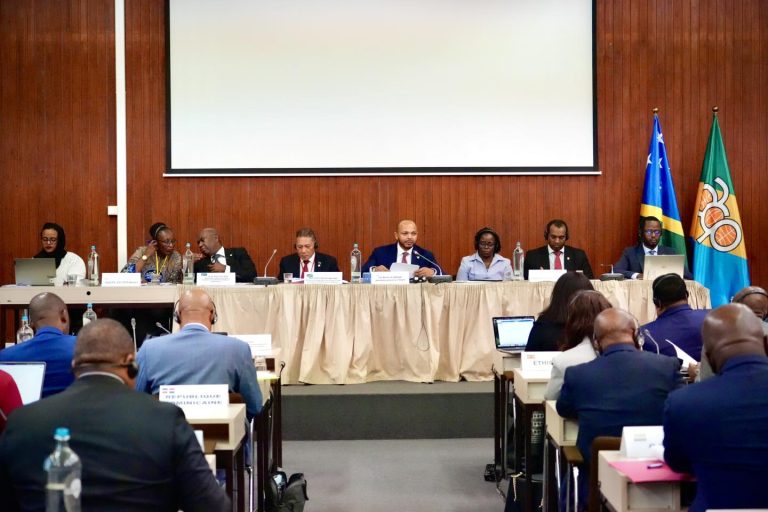
The Secretary-General of the Organisation of African, Caribbean and Pacific States (OACPS), Moussa Batraki, has presented his report to the 120th Session of the OACPS Council of Ministers, outlining key activities, initiatives and reforms since the last ordinary session.

The report set out the Organisation’s strategic priorities, including advancing reform and modernisation, strengthening financial viability, improving governance and performance, and consolidating intra-OACPS and external partnerships.

Against a backdrop of global instability, the report reaffirmed the need for the OACPS to demonstrate its value through clearer, more efficient and more decisive action in support of its Member States.

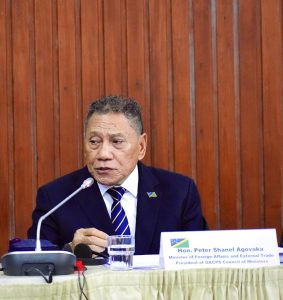
Opening the Council, President of the OACPS Council of Ministers and Solomon Islands Foreign Minister Peter Shanel Agovaka outlined the path ahead, saying the Organisation’s future requires “vision, political resolve, and strategic clarity.”

He stressed that in an uncertain global environment, the OACPS’ greatest strength remains unity and solidarity, which he described as the foundations of the Organisation.
Agovaka urged ministers to move forward with renewed conviction, guided by the belief that a stronger, more coherent and more influential OACPS is achievable.

During the session, ministers observed a minute of silence in memory of victims of recent natural disasters worldwide.

The tribute was dedicated particularly to those affected by Hurricane Melissa in the Caribbean, especially Jamaica, and to communities impacted by Cyclone Senyar in Southeast Asia, notably Indonesia.

The OACPS expressed deep solidarity with the affected populations and reaffirmed its support for the Member States concerned.

On the margins of the Council, Secretary-General Batraki held a bilateral meeting with United Nations Under-Secretary-General and UNFPA Executive Director Diene Keita, a special guest at the session.

The discussions underscored strong alignment between the OACPS and UNFPA on a people-centred development approach, with a focus on women and youth. Both sides agreed that strengthening structured partnerships, in line with the Samoa Agreement and the 2030 Agenda, is critical to advancing development priorities across OACPS Member States.

In congratulating Keita on her recent appointment, Batraki called for stronger multilateral cooperation to support shared priorities as part of the OACPS renewal agenda.

OFC 2026 tournament schedule confirmed

0

OFC has confirmed its full competition schedule for tournaments (excluding the OFC Pro League) in 2026.

The OFC Women’s Champions League will feature 10 of the 11 OFC Member Associations, signalling a major milestone for women’s football in Oceania. The qualifying tournament will be staged in the Cook Islands, while the Championship will return to the Solomon Islands, which last hosted the event in 2024.

On the men’s side, Fiji will host the OFC Men’s Champions League, continuing its long-standing tradition of delivering top-tier regional football, whilst the OFC Beach Soccer Nations Cup returns to Tahiti, the powerhouse nation that has appeared in two FIFA Beach Soccer World Cup finals.

Across the age-grade pathway, tournaments will be spread throughout the Pacific, reflecting OFC’s commitment to accessibility and regional development. Cook Islands and Tonga will host key qualification events, while Papua New Guinea (Men’s) and the Solomon Islands (Women’s) will host the OFC U-16 Championships.

Samoa, which opens the year with the OFC Men’s Champions League – Qualifying in late January, will also host the OFC U-19 Men’s Championship in September.

OFC’s dedication to player development is further highlighted through its partnership with UEFA Together, under which for the first time both a Boys and Girls U-15 Development Tournament will be held in the same year. The Girls’ Tournament will take place in Fiji in May, followed by the Boys’ Tournament in New Zealand in October, giving young talent across Oceania unprecedented exposure and development opportunities.

OFC Men’s Champions League – Qualifying – 31 January – 6 February, Samoa

FIFA Women’s World Cup™ 2027 – Oceania Qualifiers Round Two – 24 February – 7 March, Fiji and Solomon Islands

OFC U-16 Men’s Championship – Qualifying – 25 – 31 March, Tonga

FIFA Women’s World Cup™ 2027 – Oceania Qualifiers Round Three – 12 – 15 April, New Zealand

OFC U-16 Women’s Championship – Qualifying – 18 – 24 April, Papua New Guinea

OFC Women’s Champions League – Qualifying – 20 – 26 April, Cook Islands

OFC U-15 Girls’ Youth Development Tournament – 4 – 12 May, Fiji

OFC U-19 Men’s Championship – Qualifying – 6 – 12 June, Cook Islands

OFC Women’s Champions League – 27 June – 10 July, Solomon Islands

OFC U-16 Men’s Championship – 12 – 25 July, Papua New Guinea

OFC Men’s Champions League – 9 – 22 August, Fiji

OFC U-19 Men’s Championship – 1 – 14 September, Samoa

OFC U-16 Women’s Championship – 6 – 19 September, Solomon Islands

OFC U-15 Boys’ Youth Development Tournament – 1 – 9 October, New Zealand

OFC Beach Soccer Men’s Nations Cup – 22 – 31 October, Tahiti.

New report warns of Solomon Islands health system under strain

0

Australia is being accused of draining skilled health workers from Pacific Island countries to fix its own shortage of care workers, pushing fragile health systems in the region closer to collapse, according to a new report.

Research by the Centre for Future Work at The Australia Institute and Public Services International finds that nurses and other trained professionals from Fiji, Papua New Guinea, Samoa, the Solomon Islands and Vanuatu are abandoning frontline jobs to take up better-paid but lower-skilled care roles in Australia under the Pacific Australia Labour Mobility (PALM) scheme.

The report warns that health services in some countries are now running at “30–40 percent capacity or below.” It also reveals Pacific workers are being “deskilled, underpaid and exploited” once they arrive in Australia, with their visa status leaving them vulnerable.

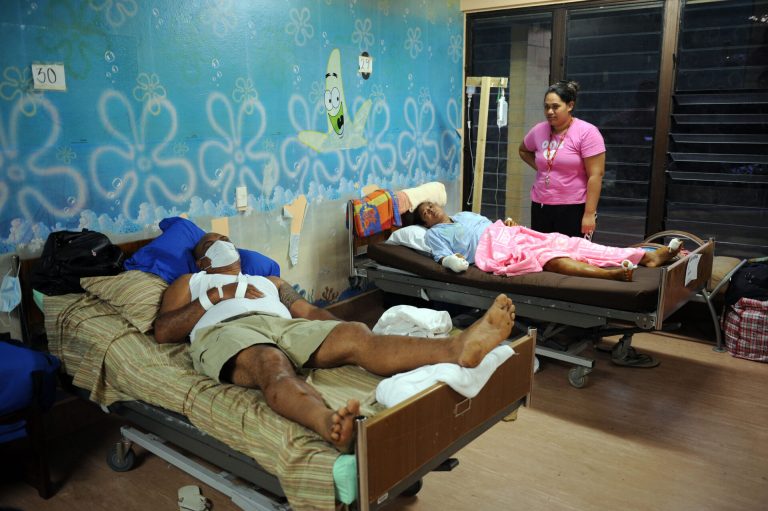
In the Solomon Islands, the report notes the country’s population of 720,000 is spread across 900 islands, already making the delivery of quality health care difficult. Public health services are struggling, pushing people toward private providers and creating new inequalities.

Workers told researchers that low wages, rising living costs and overloaded workplaces are driving migration. Training gaps, lack of equipment skills, and shortages of doctors mean nurses are often forced to perform higher-level duties.

Unions say the “brain drain” is widening. Older experienced workers are leaving, and younger staff are not receiving proper mentoring or support. Public sector unions report that existing labour laws offering allowances and benefits are not being enforced.

One workshop participant summed up frustration with treatment in Australia and New Zealand, saying: “Employers in Australia and New Zealand say ‘workers are like our families’. This is not true.”

The Solomon Islands Council of Trade Unions (SICTU) has been pressuring the government to take urgent action to protect citizens working under PALM. Concerns follow a UN report highlighting serious issues with the treatment of temporary migrant workers in Australia.

The report says poor oversight of private recruitment firms continues to expose workers to false promises, exploitation and unfair conditions. Workers with limited English skills are particularly vulnerable.

While remittances accounted for 5.4 percent of Solomon Islands’ GDP in 2023 and are improving living standards for many families, the report warns labour mobility is creating new income gaps at home and worsening shortages of skilled workers.

Workshop participants called for stronger regional cooperation to prevent workforce crises, including more scholarships for health workers, mutual recognition of qualifications, and secondment schemes to build capacity. They also urged greater involvement of unions in labour mobility programs to ensure worker protection and transparency.

Unions said that without urgent reforms, labour mobility risks deepening inequalities and further weakening an already strained health system in the Solomon Islands.

Fiji secures agreement on Ocean and climate action Resolution at UNEA-7

0

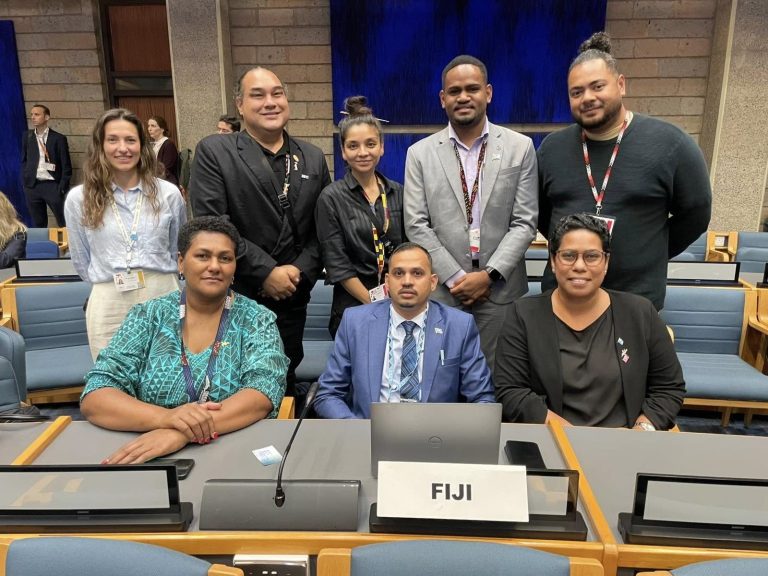
Pacific delegations at the seventh session of the UN Environment Assembly (UNEA-7) are celebrating a breakthrough in Nairobi with Fiji securing an agreement on their resolution, “Accelerating Global Action to Promote the Climate Resilience of Coral Reefs.”

The breakthrough was achieved on Wednesday night at the ongoing UNEA-7 negotiations, the first of 15 resolutions under negotiation at the meeting.

The milestone signals global recognition of Fiji’s leadership on Ocean and climate action. The “Accelerating Global Action to Promote the Climate Resilience of Coral Reefs” resolution calls for enhanced international cooperation and financing to protect coral reef ecosystems from mounting threats like climate change, pollution, and overexploitation.

Fiji’s technical team, led by the Permanent Secretary for Environment and Climate Change, Dr Sivendra Michael, and the Director of Environment, Senimili Baleicakau, navigated complex scientific, environmental and geopolitical issues to bring all countries on board.

“Fiji extends its sincere appreciation to all countries and partners for their constructive engagement, flexibility, and support,” a statement issued by the Fiji delegation said.

“This early success underscores Fiji’s leadership in multilateral environmental diplomacy and reaffirms our commitment to protecting the world’s coral reefs and the communities that depend on them.”

The week before, during the opening plenary of the Seventh Open-Ended Committee of Permanent Representatives, Fiji made the case for the resolution to the global community, echoing the call by all Pacific countries for urgent action on Ocean health and the protection of our Blue Pacific Continent.

“We face a stark reality: scientific projections warn that by 2030, we could lose over 90% of the world’s coral reefs if current trends continue,” Fiji’s statement said.

“This alarm must drive us to move beyond rhetoric to tangible implementation that centres on the well-being of our people and the integrity of our ecosystems, aligning with the theme of UNEA-7: ‘Advancing sustainable solutions for a resilient planet.’”

Fiji urged the multilateral process to confront the evidence that the triple planetary crisis—characterised by a global warming rate of approximately 0.2°C per decade and over eight million tons of plastic waste entering our Ocean annually— continues to accelerate, often outpacing the global response.

“It is our firm belief that effective multilateralism, grounded in the best available science and inclusive of all stakeholders—including Indigenous Peoples and local communities—remains our most powerful tool,” Fiji urged.

It is in this spirit of constructive cooperation and urgent necessity that Fiji, alongside our co-sponsors Palau, Kenya, Barbados, Colombia, and Australia, and with the backing of the Pacific Small Island Developing States, has tabled the draft resolution titled: “Accelerating global action to promote the climate resilience of coral reefs.”

“This coalition promises significant economic and social dividends. By enhancing coral reef resilience, we strengthen the local economies that depend on them, boosting tourism, sustaining fisheries, and securing food sources, thereby inspiring additional support and participation in our joint efforts.”

Fiji and Pacific delegations are amongst 6,000 participants from more than 180 countries, gathering at UNEA-7 to discuss sustainable solutions at a time when the world continues to struggle with the worsening impacts of the triple planetary crisis of climate change, pollution, and biodiversity loss.

UNEA meets biennially to set priorities for global environmental policies and develop international environmental law. The Assembly provides leadership, catalyses intergovernmental action on the environment, and contributes to the implementation of the UN 2030 Agenda for Sustainable Development.

UNEA-7 is negotiating 15 draft resolutions on issues ranging from saving the world’s glaciers to reining in massive seaweed blooms and reducing the environmental impact of artificial intelligence.

While not legally binding, UNEA-7 resolutions help countries find common ground and have in the past laid the groundwork for precedent-setting international agreements.

The Secretariat of the Pacific Regional Environment Programme (SPREP) is providing support to amplify Pacific voices at UNEA-7.

The Late Akilisi Pōhiva: A Tongan Voice for Justice and Liberation of West Papua

0

By Mele Tuuakitau, USP Journalism Student

Tonga’s Support for decolonisation in the Pacific: Can we do more?

As a small island state in the Pacific, Tonga is the only remaining Kingdom that has never been colonized in the region, valuing sovereignty and self-determination which are principles that could shape a moral stance forWest Papuan.

Unified under King George Tupou I in the mid-19th century, the Kingdom of Tonga has been governed by a constitution that was established in 1875. This legacy has been prolonged over centuries and it is a source of Tongan pride. This Tongan expression of sovereignty and self determination is a key link that could support Pacific struggles such as West Papua.

Akilisi Pohiva: A Pacific Voice for Justice

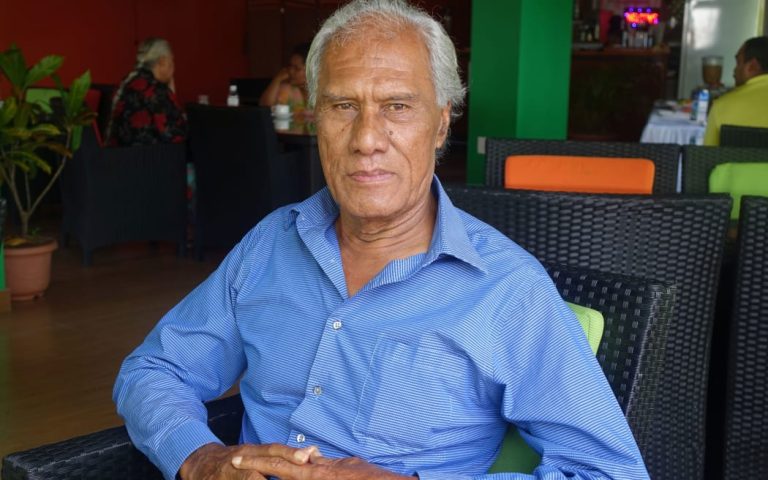
The Late Samiuela ʻAkilisi Pōhiva (1941–2019) rose from a modest upbringing to become the defining figure of Tonga’s pro-democracy movement and one of the Pacific’s most influential political voices. A former teacher turned activist, he used radio and his newspaper Keleʻa in the 1980s to expose corruption, challenge entrenched power, and champion transparency and accountability, values he argued were rooted in Tonga’s own moral traditions. Despite being dismissed from his job and even jailed for his activism, Pōhiva remained unwavering. His decades-long struggle culminated in 2014 when he became Tonga’s first commoner elected Prime Minister, marking a historic victory for the people’s movement over hereditary privilege.

As Prime Minister, he extended his moral leadership across the region, urging unity grounded in compassion, justice, and moral courage. He championed human rights across Oceania, most notably the plight of West Papua, insisting that Pacific leaders uphold the principle of leaving no one behind.

West Papua’s long-standing cry for help has echoed across Pacific regional meetings and spaces for years, yet the issue remains unresolved. Among the strongest voices was that of the late Prime Minister Pōhiva, who consistently used his platform to highlight the suffering of the West Papuan people. “Tonga does not condone the injustice, cruel violation of human rights, dignity and brutal treatments around the world especially in West Papua in the Pacific,” he declared at the UN General Assembly in 2015. Throughout Forum meetings, he stood firm, unafraid to speak when others remained silent, earning him the reputation of a “true leader.” Even as Indonesia’s political and economic influence in the region grew, Pōhiva never wavered. During the 2016 Pacific Islands Forum, he urged regional leaders, “We should not let others control us. We should stand together in solidarity in support of the people of West Papua.” He called for UN investigations into human rights abuses and backed the United Liberation Movement for West Papua (ULMWP)’s bid for recognition.

Pōhiva refused to abandon what he saw as his moral duty to his “brothers and sisters” in West Papua, grounding his stance in principle rather than politics. Since his passing in 2019, questions have lingered over whether Tonga or its future leaders will continue his firm stand for Pacific solidarity on this issue. While an equally vocal advocate has yet to emerge, Pōhiva’s legacy continues to inspire Tongan youth and civil society. As youth leader Vika Taufa reflected, “Pohiva taught us that even a small nation can have a loud voice when it speaks the truth.”

A Pacific Future Built on Justice

A just and peaceful Pacific cannot be built on silence and selected solidarity, instead we must make an effort to stand up for those who cannot, and be the voice for the voiceless. While Pohiva remained an advocate for West Papua, he also reminded us that true leadership means standing up for those who cannot speak freely, especially if it is within your capabilities. He assured us that the problems that West Papua struggled with is not a distant issue but a Pacific wound.

If we consider the future of the Pacific, justice must remain as the foundation of our vision, the challenges we face, whether it is climate change or our culture slowly fading, we must consider those, who are around us. This future also requires the empowerment of our fellow Pacific Youths, so that they can continue the legacies of leaders like Pohiva. They must be filled with history and knowledge of issues that are happening around them and not just limit them to their own countries.

For Akilisi, justice was not something to be negotiated or to turn a blind eye to, it was a moral imperative. His constant stance for West Papua was noticeable. He also urged the other leaders to put truth over diplomacy even if that put him in a difficult position. In standing with West Papua, we are not merely defending the rights of certain people or that particular land but we are standing together with them to support the people of the Pacific, our very own people.

Pacific youth, churches, civil societies and regional leaders now have to carry Pohiva’s legacy and his responsibilities forward. They must continue this advocacy through actions rather than words, by ensuring that the Pacific is aware of the struggles of West Papua and that they lend a helping hand if they are able to. In the future, there are hopes of a better life built on justice where West Papua is free of their struggles.

Pacific Solidarity

Most of the Pacific especially the younger generation are not aware of the struggles that the West Papuans face. Ronny Kareni is a musician and activist for West Papua and even though he was born in West Papua he states that you don’t have to be from West Papua to be able to speak on their situation. He claims that “Growing up in exile has taught me that identity is about memory, connection, and purpose. It began when I witnessed the strengths of the elders, the songs of longing and hope, and the communal spirit that refused to be broken in refugee camps.

Ronny believes that identity is one of the things that shape them as West Papuans and that it has allowed him to share the West Papuan stories through a personal lens with the world. That way the world can view what they are dealing with through his experiences. He also confirms that there are ongoing human rights violations and brutal military occupations that have effectively rendered West Papua as a non-international armed conflict zone, under humanitarian law. “This silence is both political and historical avoidance”. Ronny believes that being silent about these issues are politically related but are also historical. Although West Papua is a land of many tribes and rich biodiversity, we must be able to look beyond the headlines and listen closely to what the people need. “It is a fight for the right to exist fully: to sing our songs, to speak our languages, and celebrate who we are”, he adds.

It is quite important that the Pacific Islanders are well informed of these situations, so that we are able to make sure that we are helping the right people rather than encouraging what is currently happening or turning a blind eye to the people who are our brothers and sisters. Neomai Pohiva, Akilisi Pohiva’s granddaughter said “West Papua’s cry for freedom is the unfinished struggle of our Pacific, their voices, long silenced by repression, calls us to stand together because until West Papua is free, the Pacific cannot truly be whole”.

When speaking about regionalism, West Papua and the spirit of leaving no one behind, Pohiva, challenged the Pacific leaders and said, “We should not let others control us. We should stand together in solidarity in support of the people of West Papua.”

The life of the late Akilisi Pohiva is an example of true leadership, and not one rooted in privilege or politics, but in the moral responsibility to stand firmly for truth, even when the path is difficult. This is a genuine calling for us, the future generation of Tonga, to embrace his spirit of justice as a moral obligation.

Let us be the loud, clear voice for accountability and transparency in your own kingdom, and extend that spirit of Pacific solidarity to all our Pasifika family across the ocean. As our nation holds a mighty legacy of sovereignty, we continue Pohiva’s legacies to transform moral principle into meaningful actions, safeguarding the future of the Pacific, which is built on freedom and the commitment of leaving absolutely no one behind.

Stay connected

529FansLike
172FollowersFollow
156SubscribersSubscribe
- Advertisement -