
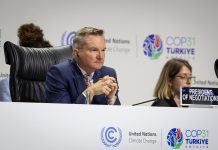
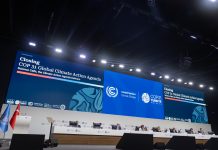

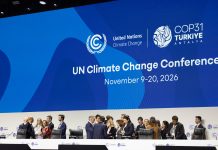
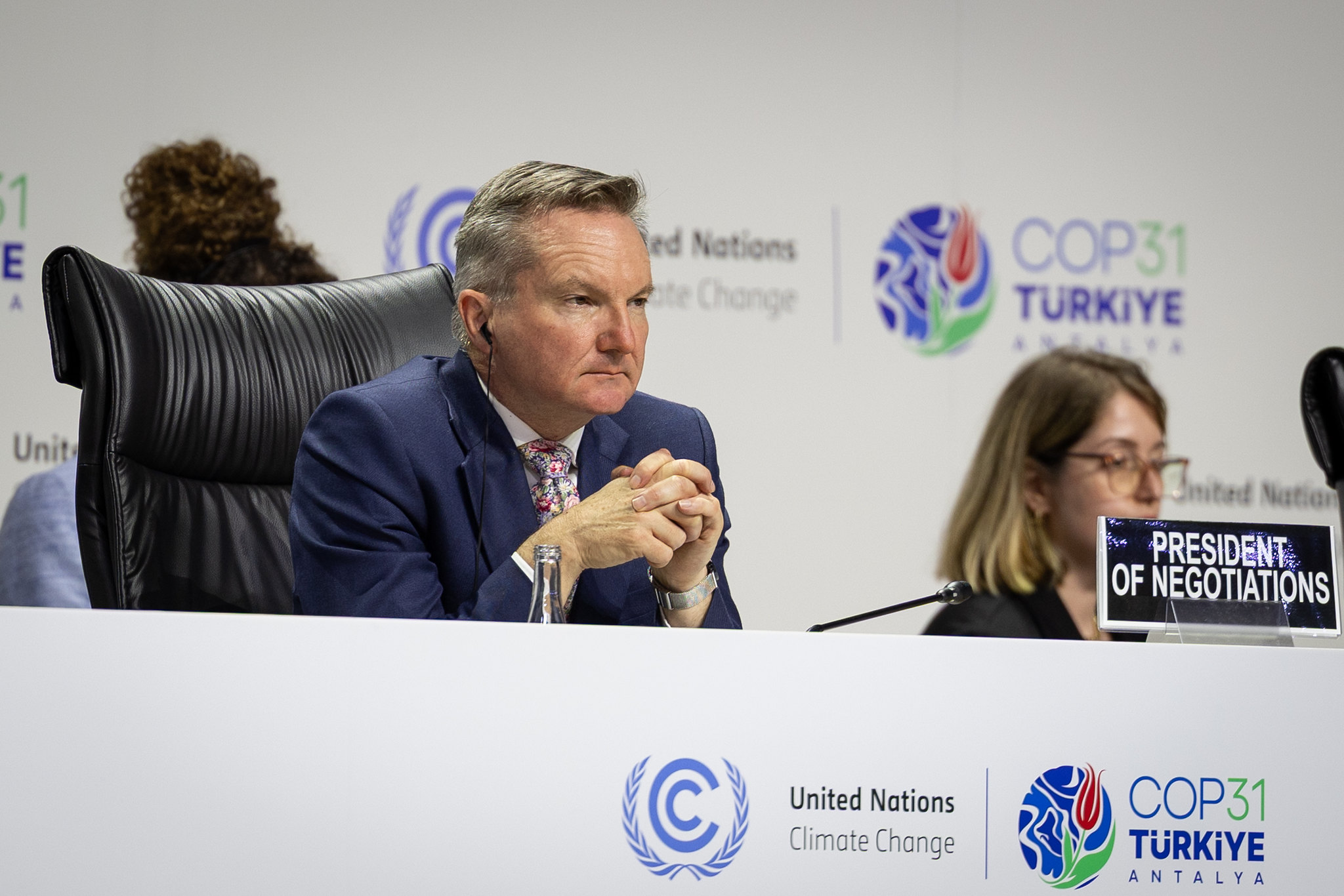
Australian Climate Change and Energy Minister Chris Bowen has admitted COP31 failed to deliver an agreed cover decision, blaming entrenched positions among countries over fossil fuels and climate finance.
Bowen said the failure was disappointing despite progress on clean energy commitments, including more than 90 countries signing an electrification pledge.
He said several countries held firm red lines on key issues, making it impossible for negotiators to reach consensus despite repeated attempts.
“Unfortunately, we’re unable to reach agreement on a cover decision, and that’s disappointing. Very disappointing,” Bowen told a press conference in Antalya, Türkiye.
One of the main sticking points was the proposed reference to transitioning away from fossil fuels, with some countries insisting it be included while others threatened not to support any agreement containing such language.
Bowen said the commitment to transition away from fossil fuels agreed at COP28 remained part of the UN climate process, despite not being specifically mentioned in the outcomes of COP29 and COP30.
“It is the position of the COP,” he said.
He maintained that the global shift away from fossil fuels was already underway and would continue regardless of the failure to secure agreement at COP31.
“Transition away from fossil fuels in the real world is inevitable. It’s happening. It’s happening at speed, and it’s irreversible,” Bowen said.
He said efforts to advance the transition would continue both within and outside the United Nations climate negotiations.
Bowen said Australia had pushed for an implementation-focused COP31, including an electrification agenda aimed at reducing emissions and accelerating the shift towards clean energy.
He said achieving the proposed electrification target of 35 percent by 2035 could deliver emissions reductions equivalent to removing every plane and car in the world.
“That’s why we fought so hard for it. It was worth fighting for. I regret we didn’t get there,” he said.
Bowen said the electrification agenda had attracted considerable support and was not the main obstacle to an agreement.
He identified disagreements over how fossil fuels should be addressed and climate finance as the major barriers to securing the final decision.
Despite the setback, Bowen said COP31 had raised the profile of Pacific climate concerns and strengthened recognition of the challenges facing small island developing states.
He singled out Pacific leaders and Fiji’s Climate Change Minister Lynda Tabuya as important partners during the negotiations, saying they had met several times each day throughout the conference.
“I believe through the whole COP31 process, we elevated the issues of the Pacific in a way which is sustained,” he said.
Bowen said the pre-COP meeting in Tuvalu had left a strong impression on delegates, particularly on the impacts of climate change on low-lying island nations.
He said discussions on ocean issues had also made progress, although the failure to adopt the overall cover decision meant those gains were not formally reflected in a final COP outcome.
“I do want to pay a particular shout out to my friends from the Pacific,” Bowen said.
He also highlighted the difficult geopolitical environment and worsening climate impacts as factors complicating the negotiations.
Bowen said recent extreme summers in the Northern Hemisphere and the effects of El Niño on vulnerable communities had increased pressure on countries and hardened negotiating positions.
He thanked the Australian delegation, the Turkish Government and conference workers, including interpreters and cleaners, for their efforts during the two weeks of negotiations.
Bowen said he had spent the last three nights without sleep as negotiators worked to bridge differences between countries.
He maintained that international cooperation remained essential despite the failure to reach agreement.
“The process goes on. I still believe multilateralism matters, and I still believe good things, as I started with, happened at this COP. It just would have been good to have some more of them,” he said.