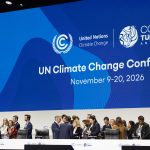

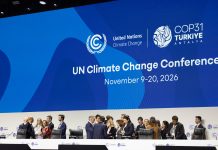

Australian Climate Change and Energy Minister Chris Bowen says the United Nations climate negotiations need to improve their decision-making process after COP31 failed to secure agreement on a final cover decision.
Bowen said the requirement for all 195 countries to reach consensus made it difficult to overcome strong opposing positions, even when most countries agreed on the broader climate agenda.
He said the consensus-only system, established when the UN climate process was created, remained one of its biggest challenges.
“I think the fundamental root of the problem is that when COP was created, for reasons I understand, it was made consensus only. That’s a very tough ask, and you also need consensus to change consensus, which is a particular challenge,” Bowen told a press conference in Antalya, Türkiye.
Bowen said most negotiated mandates at COP31 had been approved, allowing countries to continue work under the United Nations Framework Convention on Climate Change (UNFCCC).
He said countries would continue their renewable energy transition and reconvene at COP32 in Ethiopia next year to advance climate action.
Asked whether the dual presidency arrangement involving Australia and Türkiye had contributed to the failure, Bowen said the model had worked and was not responsible for the lack of agreement.
“The presidency, as we always do, 195 countries must be unanimous. That can be okay, but when positions are so strong, that’s a very big challenge for any presidency, joint or individual,” he said.
Bowen said the climate process had experienced setbacks before, including the Copenhagen climate conference, but had subsequently delivered major agreements such as the Paris Agreement and the Glasgow Climate Pact.
He said COP31 had come close to reaching agreement, with only a small number of issues ultimately proving impossible to resolve.
Bowen also acknowledged that the failure came at a critical time, with the United Nations warning that the world was heading towards an overshoot of the 1.5 degrees Celsius warming threshold and climate impacts worsening globally.
He said those developments had increased pressure on countries to secure stronger commitments but had also intensified disagreements.
“I think the 1.5 overshoot, combined with the climate impacts that we’re seeing around the world, really increased the ambition of some parties, and I share that ambition,” he said.
“But that made those red lines irreversibly irreconcilable.”
Bowen said the global energy crisis had also created an opportunity for countries to recognise the benefits of renewable energy in strengthening energy security and reducing dependence on imported fuels.
“More renewables are more sovereignty and more reliability,” he said.
He accepted some responsibility for the failure to secure agreement but maintained that the negotiations remained a party-driven process.
Bowen defended the decision to include competing positions in the initial draft negotiating text, saying the Australian and Turkish presidencies had committed to transparency.
“We put everything in the first text to bring out the issues and find out people’s red lines. Transparency can be uncomfortable. We said we’d run a transparent COP. I believe we did,” he said.
On criticism that the proposed cover decision was not strong enough to reflect the urgency of climate change, Bowen said stronger language on fossil fuels would have faced opposition and potentially been vetoed by other countries.
He said the presidency had attempted to find a compromise by referring to the UAE Consensus agreed at COP28, which called for transitioning away from fossil fuels.
Bowen said the commitment remained the agreed position of the COP, even though it was not explicitly repeated in the outcomes of subsequent conferences.
“I would have been happy with transition away from fossil fuels being the text, but that was not going to get support from parties,” he said.
He said the failure to adopt the cover decision also meant important issues, including ocean protection and access to climate finance for small island developing states, were not formally included in the final outcome.
Bowen said the draft had contained language on oceans, which he described as the world’s largest climate regulator, and the need to improve access to finance for small island developing states.
He said those issues had received support during negotiations and could still inform future discussions, despite the absence of a formal agreement.
Without the cover decision, Bowen said those issues would not have received the same opportunity to advance through the COP process.
He also pointed to the Santa Marta dialogue as an increasingly important platform for advancing climate action outside the formal UN negotiations.
However, he stressed that it would complement rather than replace the COP process.
Bowen said domestic climate action would continue regardless of the outcome in Antalya.