

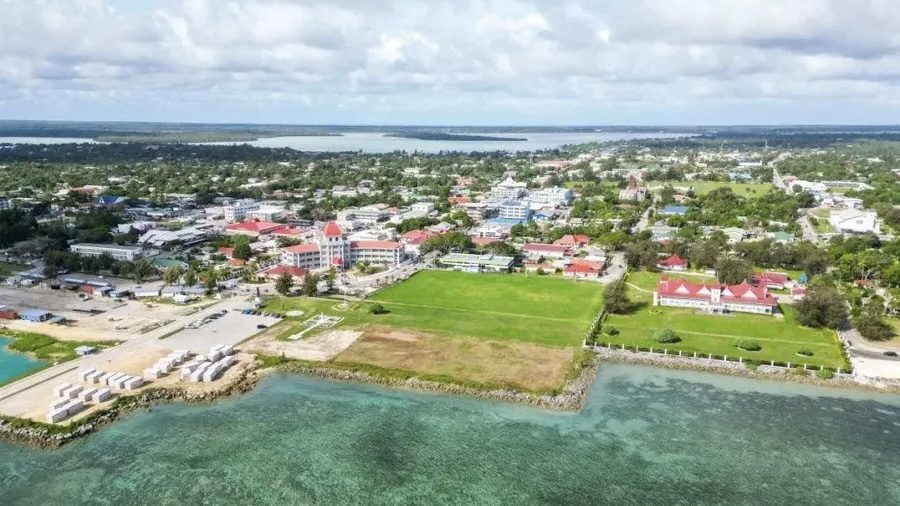
Tonga has declared a nationwide state of emergency over worsening El Niño-driven drought, with authorities warning of growing threats to water supplies, agriculture, livestock and public health.
Acting Prime Minister Dr Viliami Uasike Latu issued the 28-day declaration Thursday, covering all land and sea areas of the Kingdom.
The emergency took effect at 11am Thursday and will remain in force until 11am on 17 December unless extended or revoked.
The declaration follows worsening drought conditions across the island nation, with Tonga Meteorological Services forecasting an 80 to 100 percent chance of very dry conditions throughout the country in November and the November 2026 to January 2027 period.
The Ministry of Meteorology, Energy, Information, Disaster Management, Environment, Climate Change and Communications (MEIDECC) recommended the emergency declaration following assessments of the drought’s impacts.
The Prime Minister’s Office said preliminary information indicated significant effects on communities, water sources, agriculture and livestock, with potential consequences for public health.
The declaration classifies the severe meteorological and hydrological drought as a natural hazard under the Disaster Risk Management Act 2021, allowing emergency response arrangements to be activated and resources mobilised.
Tonga’s latest meteorological assessment, based on rainfall data up to the end of October, places Niuafo’ou, Niuatoputapu, Ha’apai, Tongatapu and ‘Eua under drought declarations, while Vava’u remains under a drought warning.
Under the emergency directions, government agencies, businesses, communities and households are required to conserve available water and prioritise drinking, cooking, essential hygiene and other critical needs.
Non-essential activities, including faikava, vehicle washing and gardening, are to be reduced as far as practicable.
Major construction projects and other activities requiring large amounts of water are also expected to consider alternative supplies, recycling and water reuse.
The Ministry of Lands, Survey, Planning and Natural Resources, through Tonga Geological Services and its Water Resources Team, will monitor groundwater availability, freshwater lens conditions, salinity levels and borehole performance.
Emergency drinking-water distribution will be coordinated by the National Disaster Risk Management Office (NDRMO) and island authorities, with assistance prioritised according to assessed needs and vulnerability.
Schools, health facilities and institutions serving older people and people with disabilities have been identified as priorities for water assistance.
The Ministry of Health will monitor risks associated with reduced access to safe drinking water, sanitation and hygiene, and provide guidance on water quality, treatment and safe storage.
The Ministry of Agriculture, Food and Forests will assess damage to crops, livestock and agricultural production, while monitoring the implications for food security and household livelihoods.
The NDRMO will coordinate the national response through the National Emergency Operations Centre and island-level emergency operations centres.
Government agencies have also been directed to identify resources and funding required for priority response activities, with development partners, churches, non-government organisations and businesses expected to assist where necessary.
The National Disaster Risk Management Committee will advise Cabinet on whether the emergency declaration should continue or be lifted, based on updated assessments and the effectiveness of response measures.
The declaration comes after drought warnings across Tonga last month, with meteorological authorities indicating that El Niño’s effects could continue until at least June 2027.
The government has not yet released figures on the number of people affected, current water availability or the scale of agricultural losses.