

Pacific Island countries have presented 70 renewable energy projects worth US$2.3 billion at COP31, seeking investment to reduce the region’s dependence on imported fossil fuels and accelerate its transition to clean energy.
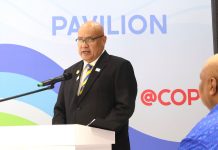
The Pacific Renewable Energy Investment Prospectus, launched at the Moana Blue Pacific Pavilion, identifies 70 solar, battery, hydro, wind and electricity grid projects across 14 Pacific countries.
Of the total investment pipeline, US$358.2 million remains unfunded, offering investors opportunities to support renewable energy development across the region.
The initiative comes as Pacific countries face some of the world’s highest electricity costs, with households and businesses paying an average of about US$0.47 per kilowatt-hour, nearly three times the global average.
Heavy dependence on imported diesel has also left Pacific economies vulnerable to international fuel price increases and supply disruptions.
Briefings provided to New Zealand Foreign Minister Winston Peters ahead of the Pacific Islands Forum Leaders Meeting in Palau estimated that the region faced an additional US$517 million in fuel costs during the first six months of the Iran conflict, up to July.
Tina Stege, COP31 Regional Envoy for Oceania and Climate Envoy for the Republic of the Marshall Islands, said the transition to renewable energy was essential for the region’s energy security and economic resilience.
‘For Pacific Island countries, the energy transition is a pathway to a more resilient and secure future, and it makes sense,” Stege said.
She said dependence on imported fossil fuels exposed Pacific communities, particularly those on remote islands, to volatile prices, supply chain disruptions and external shocks.
In the Marshall Islands, she said fuel costs about US$8 a gallon in urban centres and US$15 in outer islands.
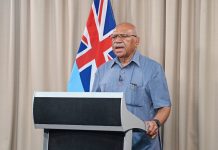
Palau President and Pacific Islands Forum Chair Surangel Whipps Jr said Pacific countries could no longer afford delays in delivering renewable energy commitments.
“Our islands cannot afford another decade of promises. COP31 must be where commitments become delivery,” Whipps said.
He said Pacific leaders had endorsed the ambition for the region to become the first in the world to be fully powered by renewable energy.
At the 55th Pacific Islands Forum Leaders Meeting in Palau in September, leaders endorsed the renewable energy goal and launched the investment prospectus to turn regional commitments into projects ready for financing.
Tuvalu’s Minister for Climate Change Maina Talia also called for simultaneous investment in renewable energy and climate resilience.
“We cannot choose between investing in climate resilience and investing in renewable energy. We must do both at the same time,” Talia said at a COP31 session on energy access and security in Small Island Developing States.
“The Pacific didn’t come to COP31 to ask for permission. We came to show what’s possible,” he said.
Pacific Community (SPC) Deputy Director General Dr Andrew Jones said the prospectus provided investors with a clear pipeline of projects and would support the work of the proposed Pacific Renewable Energy Commissioner.
He said regional cooperation could help small island economies overcome investment barriers, including through economies of scale in procurement.
The pipeline includes a power purchase agreement in Nauru at 23 US cents per kilowatt-hour, about 36 percent below the cost of diesel-generated electricity, an independent power producer tender in Tonga and a grid-scale solar project in Honiara, Solomon Islands.
Electricity grid and transmission projects account for US$500.4 million of the investment pipeline.
Despite the opportunities, the region faces a major financing gap.
The Pacific NDC Hub estimates that about US$650 million a year is needed to meet regional renewable energy targets. However, the Pacific received only US$57 million in renewable energy financing in 2023.
The prospectus was prepared for SPC and its Pacific Centre for Renewable Energy and Energy Efficiency by Island Minds Ltd Vanuatu, the Smart Energy Council and the Renewable Energy Council Asia-Pacific.
The project pipeline is publicly accessible, allowing investors to explore the projects, download the dataset and register their interest.
The Pacific requires an estimated US$14 billion over the next decade to decarbonise its electricity sector, highlighting the scale of investment needed to achieve the region’s renewable energy ambitions.