



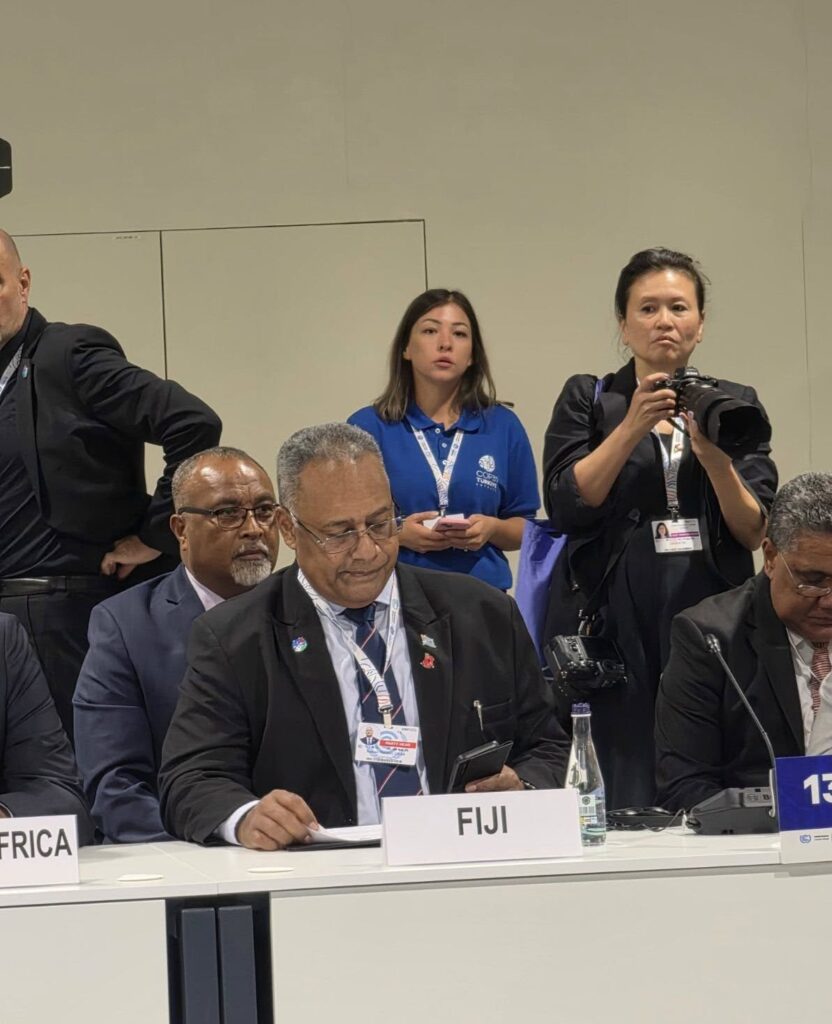
Fiji has called for sustained climate financing, stronger community capacity and improved international cooperation to ensure early warning systems reach vulnerable communities before disasters strike.
Minister for Foreign Affairs and External Trade Sakiasi Ditoka said early warning systems were critical to protecting lives, livelihoods and development gains, particularly in Pacific Small Island Developing States facing increasing climate threats.
Delivering Fiji’s national statement at the High-Level Event on Early Warnings for All at COP31 in Antalya, Türkiye, Ditoka stressed that warnings must reach communities in time and through channels they understand and trust.
“Warnings must reach people in time, in forms they understand and from sources they trust. The last mile matters most,” he said.
Ditoka welcomed progress reported in the Global Status Report, which showed a 143 percent increase in the number of countries with multi-hazard early warning systems since 2015.
He acknowledged the global initiative led by the United Nations Secretary-General, in partnership with the World Meteorological Organisation (WMO), the United Nations Office for Disaster Risk Reduction (UNDRR) and other international partners.
However, he said expanding national systems must translate into practical protection for people at the community level.
Ditoka outlined three priorities for strengthening the Early Warnings for All initiative.
He said countries must strengthen community-based systems by combining modern forecasting technology with trusted local networks, including village leaders, faith-based organisations, women’s groups and community volunteers.
He also called for financing to cover the entire early warning system, including weather radars, monitoring equipment, maintenance, operations and technical capacity.
For Small Island Developing States, he said predictable and accessible funding was essential to maintaining effective systems.
Ditoka said the 2027 global target for Early Warnings for All should be treated as a milestone rather than the end of the initiative.
Fiji called for the programme to continue beyond 2027 and be integrated into climate adaptation, anticipatory action and risk-informed development, in line with the 2050 Strategy for the Blue Pacific Continent.
He also highlighted the immediate climate pressures facing Fiji and the wider Pacific, warning that a strong to very strong El Niño event was intensifying dry conditions across the country, with impacts expected to continue into early to mid-2027.
He said prolonged dry conditions and the possibility of a strong tropical cyclone in the Southern Hemisphere reinforced the need for countries to prepare for multiple and overlapping climate hazards.
“These evolving conditions reinforce why early warning must go beyond forecasting. It must inform anticipatory action, strengthen preparedness and enable communities and governments to act before disasters strike,” Ditoka said.
Fiji also expressed its readiness to support the coalition being launched at the event and share its experience in strengthening community-based early warning systems through regional cooperation.
Ditoka said Pacific countries continued to face common challenges relating to climate vulnerability, equitable access to climate finance and the need for stronger adaptation support.
He said global climate commitments must deliver practical results for communities on the frontlines of climate change.
“NO ONE SHOULD BE LEFT UNWARNED. TOGETHER, WE MUST TURN THAT COMMITMENT INTO ACTION,” he said.