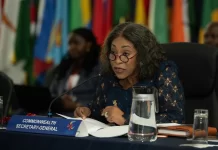
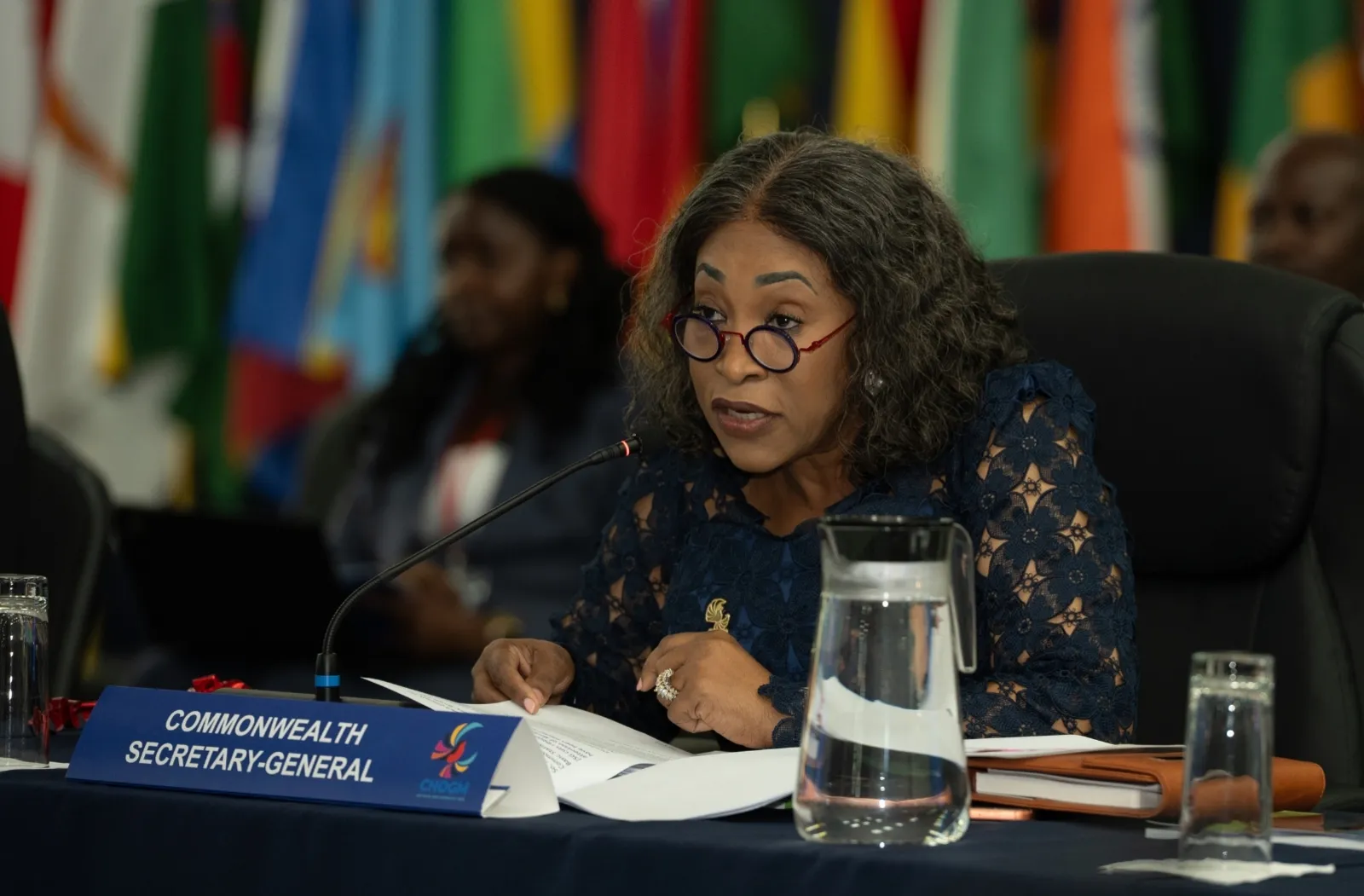
Commonwealth Secretary-General Shirley Botchwey has called for urgent reform of the international financial system, saying small states must have better access to affordable financing and debt relief to strengthen their resilience and support sustainable development.
Botchwey said small states continued to face unfair financial pressures despite their vulnerability to climate change, economic shocks and geopolitical tensions.
Addressing the Commonwealth Ministerial Meeting on Small States in Antigua and Barbuda, she said vulnerability must be recognised alongside national income when determining access to concessional financing and assessing debt sustainability.
“The recognition of vulnerability alongside income in determining sustainable debt and concessional funding should be non-negotiable,” Botchwey said.
She said the Commonwealth was determined to move calls for a more equitable international financial system from advocacy to action, using the Bridgetown Initiative and the Antigua and Barbuda Agenda for Small Island Developing States (ABAS 4) as common platforms for engagement with major international financial institutions.
She urged Commonwealth leaders to use their membership of groups such as the G7, G20 and Paris Club, as well as their engagement with the International Monetary Fund and World Bank, to push for changes that better reflect the needs of small states.
Botchwey said the Commonwealth Secretariat would work with the Organisation for Economic Co-operation and Development (OECD), the United Nations Development Programme (UNDP) and international non-government organisations to advance the reform agenda.
She said the challenges facing small states included climate crises, economic fragmentation, geopolitical tensions and financial vulnerabilities, but stressed that their size should not limit their ability to contribute to global solutions.
“Size need not be a limitation. It can be a source of agility,” she said.
Botchwey said resilience must extend beyond rebuilding after disasters to include economic diversification, job creation, skills development and investment in infrastructure, renewable energy, digital connectivity and transport networks.
She said partnerships with governments, international institutions and the private sector were essential to mobilising the investment needed to achieve these priorities.
Commonwealth member countries had submitted bankable investment projects worth more than US$34 billion, which Botchwey said demonstrated the potential for greater investment across the organisation.
She also proposed a Commonwealth Investment Week next year, alongside the next Commonwealth Ministers of Trade Meeting, to build on investment opportunities discussed at the Commonwealth Heads of Government Meeting.
The Secretary-General said the Commonwealth was strengthening programmes to help small states access finance and attract investment, including the Climate Finance Access Hub, Blue Charter Project Incubator and the COP29 Presidency-Commonwealth Fund for Small Island Developing States.
She also highlighted the Commonwealth Bankable Investment Projects Initiative and Commonwealth Investment Network as mechanisms to connect member countries with potential investors.
Botchwey said small states should not be defined solely by their vulnerabilities but recognised for their contributions to global trade, environmental protection, maritime governance and sustainable development.
“Strategic relevance means small states shaping the decisions that affect them and turning assets and ideas into opportunity for their people,” she said.
She made the remarks while launching the 23rd volume of the Commonwealth Small States Economic Review and Basic Statistics, titled Beyond Resilience to Strategic Relevance: The Future of Small States.
The publication includes a special report on enhancing investment through public-private partnerships in Commonwealth small states, examining ways to strengthen investment pipelines, improve institutional capacity and attract private capital.
Botchwey said many small states were custodians of large ocean spaces, rich biodiversity and important natural resources, giving them an important role in shaping regional and international policy.
She said the success of small states was central to the wider Commonwealth agenda of resilience and shared prosperity.
“We cannot achieve our wider Commonwealth goal of resilience and shared prosperity without the contribution of small states,” she said.
The ministerial meeting was held ahead of the Commonwealth Heads of Government Meeting (CHOGM).