

Australia’s “permanent contest” with China for influence in the Pacific region, a challenge compared to the 19th century’s Great Game, has made progress over the past few years, according to the official leading the charge against Beijing.
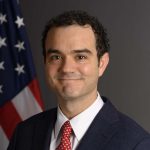
“I think we’ve done pretty well,” Minister for Pacific Island Affairs Pat Conroy said in an interview.
Yet Canberra now has to deliver on commitments it has made across the region if it wants to remain the partner of choice, he said, adding it’s his job to ensure “every Pacific nation that’s elevated their relationship with us sees the benefits of that.”
Since taking power in 2022, the centre-left government has focused its foreign and defence policies on China, rebooting ties with Beijing while also attempting to counter its growing sway across the region. Pacific island nations have been a particular focus of Canberra, which is working to undo China’s attempts to build security ties with the tiny states and replace them instead with stronger relationships with Australia, the U.S and New Zealand.
“We can’t rest on our laurels. It’s a permanent contest,” Conroy said late Wednesday in his office in Canberra, which is decorated with gifts from across the region gathered during his four years in the role.
“But if you think about what we’ve achieved since 2022 with the treaties with Tuvalu, with Nauru, with Fiji, PNG, Vanuatu, the two new alliances, the fact that we’re negotiating treaties right now with Solomons and with Tonga — I think this is one of the critical foreign policy achievements of the Albanese government.”
The attempt to overturn China’s pact with the Solomon Islands is emblematic of that effort.
In 2022, just prior to the Australian election that brought Conroy’s Labor party to power, the Pacific nation signed a security deal with China. Canberra has spent the past four years trying to reverse that accord and an “in principle” deal agreed last month with the Solomons’ new, Australia-friendly leader, is seen as a vindication of that effort.
Prime Minister Anthony Albanese said Thursday he would meet with his Solomon Islands counterpart Matthew Wale next week at an international meeting, along with the leaders of Papua New Guinea, Fiji, Tuvalu and Nauru.
While Australia is the largest development partner for Pacific island nations, according to the Lowy Institute in Sydney, it has failed to sufficiently promote those efforts and to emphasise the economic advantages of ties with Canberra compared with Beijing, Conroy said.
“Being very frank with you, we can do better on public diplomacy,” he said.
“We’ve been focused on delivering projects that have the best value for our partner countries, rather than getting credit for it. And that’s obviously something that comes at a cost for us. So, we need to get better at the public diplomacy aspect of it.”
Another area where the government has sought to roll back Beijing’s influence is by reducing the presence of Chinese contractors in the construction phase of development activities across the region.
“Too often, there are projects around the Indo-Pacific, but particularly in the Pacific, that are funded by countries like Australia and Japan, that because the tendering process has been flawed, and they’ve chosen the lowest bidder rather than the best quality, have gone to a state-owned enterprise of China,” Conroy said.
“Then the Chinese state-owned enterprise has branded it with their branding, and people assume China is funding the project, when it’s taxpayers of Japan or Australia,” he said.
Chinese SOEs win a substantial amount of the contracts from multilateral development banks, according to Lowy, although these institutions have acknowledged complaints from Australia and others, according to Conroy.
He said the World Bank is moving the fastest to change its procurement practices to prioritise quality and local content over cost.
The Asian Development Bank (ADB) is also improving, but “I’d still like them to do better in terms of choosing tenderers who prioritise local content,” Conroy said.
“If a project’s good enough to be in the Solomons, it’s good enough to use Solomons companies and Solomons workers rather than shipping them all in.”
Australia’s drive in the Pacific has elicited some pushback from China, according to Conroy. While declining to detail the specific countermeasures Beijing has used, he reiterated that “we’re in a permanent state of contest. We expect every move we take to advance our partnerships to be tested by other countries who want to be the primary partner, said Conroy.