

By Pita Ligaiula
The Pacific Community (SPC) has warned that rising fuel costs, climate change, natural disasters and constrained development financing are increasing pressure on Pacific Island countries, reinforcing the need for greater regional resilience, self-reliance and stronger Pacific-led responses.
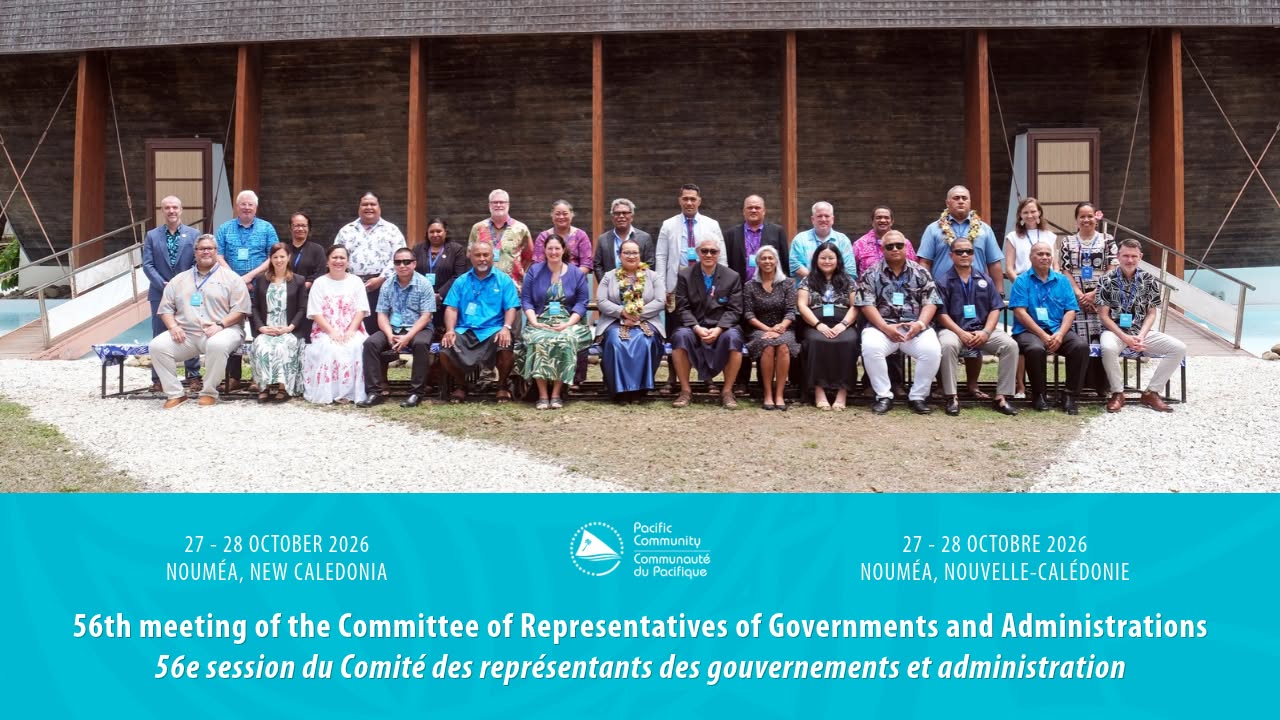
In its 2026 Director-General’s Report, presented as members gather for the 56th meeting of the Committee of Representatives of Governments and Administrations (CRGA56), SPC says global economic and geopolitical uncertainty is compounding the vulnerabilities of small island economies already struggling with the effects of climate change and rising costs.
The report highlights the region’s exposure to external shocks, particularly through its heavy dependence on imported fuel, which affects transport, electricity generation, food prices and the delivery of essential services.
“The fuel crisis is a stark reminder of our region’s vulnerability to external shocks,” SPC Director-General Dr Paula Vivili says in his first report since taking up the leadership of the regional scientific and technical organisation.
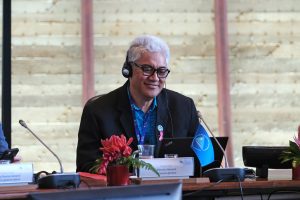
He says climate change remains the defining challenge for the Pacific, with rising sea levels, warming oceans, extreme weather events and increasing pressure on food, water and natural resources threatening communities and national economies.
“With global warming now expected to exceed 1.5°C, urgent and sustained action is needed to limit the scale and duration of this overshoot and return temperatures below 1.5°C as quickly as possible.
“Every fraction of a degree and every year above this threshold matters,” Dr Vivili said.
The report warns that the consequences extend beyond the environment, threatening food and water security, livelihoods, economic stability and the long-term habitability of Pacific islands.
It says these pressures make it increasingly important for governments and regional organisations to strengthen their capacity to anticipate, withstand and respond to overlapping crises.
The report also highlighted a more complex international environment, with ongoing conflicts in Europe and the Middle East and rising global defence spending contributing to geopolitical uncertainty and placing additional pressure on multilateral institutions and international development financing.
Although the Pacific is geographically distant from many of these conflicts, it remains exposed to their economic consequences.
SPC cites the fuel crisis as an example of how quickly international developments can affect island economies, increasing the cost of transport, energy, food and essential services.
In March, the Marshall Islands declared a state of economic emergency in response to rising fuel prices and anticipated economic impacts on a country heavily dependent on imported goods and energy.
Tuvalu declared a state of public emergency a month later because of fuel supply risks and instability in power generation.
The report says governments across the region have been monitoring fuel supplies and preparing for possible disruptions and further price increases, while higher costs have increased pressure on household budgets.
Some governments have also faced the prospect of providing additional subsidies to maintain essential services, placing further strain on already limited public finances.
For small island economies spread across vast distances, these pressures are compounded by the high cost of delivering services and maintaining infrastructure across remote communities.
SPC says accelerating the transition to more resilient, affordable and sustainable energy systems is critical to reducing the region’s exposure to future fuel shocks.
SPC targets stronger regional delivery as it approaches 80 years
The report outlines a broader effort to strengthen SPC’s ability to support its 27 member countries and territories while managing rising costs and a constrained funding environment.
SPC, established in 1947, is the Pacific’s principal scientific and technical organisation. It has more than 950 staff working across the region and provides technical expertise and development support to governments and communities.
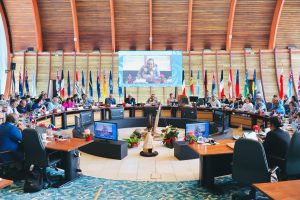
Dr Vivili says the organisation must ensure that its growth is matched by its capacity to deliver services effectively and sustainably.
“This means consolidating where needed, strengthening integration across SPC, ensuring continuity of services to members and investing in the systems and capabilities that enable our people to do their best work,” he says.
The report identifies the organisation’s flagship programmes and the One SPC Transformation Programme as important parts of that effort.
The flagship programmes bring together expertise from different areas of SPC to address complex regional challenges through integrated solutions rather than relying solely on separate projects and sectors.
The One SPC Transformation Programme is intended to strengthen the organisation’s internal systems, improve integration and ensure it remains efficient and capable of responding to members’ changing needs.
The report says constrained funding, rising operating costs and shifting global priorities require SPC to become more strategic and disciplined in how it deploys its resources.
Dr Vivili says SPC must continue to serve as an extension of national capability, bringing together science, technical expertise and partnerships to deliver practical solutions for the region.
The organisation will mark its 80th anniversary in 2027, providing an opportunity to assess its contribution to Pacific development and the support members will require in the coming decades.
Climate and disasters intensify regional risks
Climate change remains central to SPC’s assessment of the challenges facing the Pacific.
The report identifies sea-level rise, warming oceans, extreme weather events and growing pressure on food and water resources as threats already affecting communities and economies.
It also documents several emergencies and natural hazards during the reporting period.
In April, Solomon Islands declared a state of emergency for provinces affected by Tropical Cyclone Maila. The Northern Mariana Islands and the Federated States of Micronesia also declared states of emergency following the impacts of Typhoon Sinlaku.
Underwater volcanic activity in the Bismarck Sea generated large pumice rafts affecting coastal communities in Papua New Guinea in May, while Vanuatu continued to experience ashfall associated with activity from Manaro Voui volcano on Ambae Island.
The report says El Niño has added to water security concerns, affecting livelihoods, essential services and economic activity, with consequences expected to continue beyond the immediate period.
SPC warns that these hazards cannot be addressed in isolation because climate, geophysical, economic and geopolitical pressures increasingly overlap.
The report argues that strengthening resilience and self-reliance must go hand in hand with continued Pacific advocacy for global action to limit warming.
It also identifies food and water security, livelihoods and the habitability of islands as key concerns as global temperatures exceed the 1.5°C threshold.
For SPC, this reinforces the need to combine scientific knowledge, technical support and regional cooperation to help countries prepare for and respond to the effects of climate change.
Pacific leadership in climate and ocean governance
Despite the challenges, SPC says Pacific countries have demonstrated their ability to influence international decisions on climate change, ocean governance and sustainable development.
The report points to the entry into force of the Biodiversity Beyond National Jurisdiction (BBNJ) Agreement, the International Court of Justice Advisory Opinion on Climate Change and preparations for the 31st session of the Conference of the Parties (COP31) as examples of progress achieved through collective action.
It says these developments demonstrate the value of Pacific countries organising around shared priorities and presenting a united position internationally.
The report also stresses the importance of strategic partnerships and regional cooperation in protecting the peace, security and well-being of Pacific peoples.
For SPC, that role includes helping members access scientific and technical knowledge that can inform national planning, strengthen institutions and support sustainable development.
The organisation’s work is guided by a vision of a resilient Pacific where communities can live safe, healthy, sustainable and productive lives, with development shaped by the region’s cultures, environments and resources.
Its mission is to advance the rights and well-being of Pacific peoples through science and knowledge, informed by an understanding of Pacific contexts and cultures.
Seven priorities underpin SPC’s development work
The Director-General’s Report 2026 sets out seven key focus areas under SPC’s Strategic Plan, covering the region’s major development challenges and the organisation’s own institutional effectiveness.
These are:
*Resilience and climate action: supporting members to respond to climate change and strengthen resilience.
*Natural resources and biodiversity: addressing the sustainable management of the region’s natural resources and ecosystems.
*Food systems: supporting food security and more sustainable food systems.
*Equity, education and social development: advancing equitable opportunities and social well-being.
*Sustainable economies and livelihoods: supporting economic development and livelihoods across the
region.
*Planetary health: addressing issues affecting the health of people and the environments in which they live.
*Transforming institutional effectiveness: improving SPC’s ability to deliver integrated and effective services to its members.
The report also outlines SPC’s regional and satellite offices, partnerships, resource mobilisation, financial outlook and follow-up to decisions made at the 55th CRGA meeting in 2025, along with decisions adopted out of session.
These areas form part of SPC’s wider effort to align its technical programmes with member priorities while maintaining the systems and partnerships needed to deliver regional support.
Members central to SPC’s achievements
Dr Vivili says the organisation’s progress depends on the leadership of its members and the work of communities, governments, the Council of Regional Organisations in the Pacific (CROP) family and development partners.
“These achievements are not SPC’s alone. They are the result of our members’ leadership and the collective efforts of our communities, governments, CROP family and development partners,” he says.
He also acknowledges SPC staff across the region, recognising their contribution to the organisation’s scientific, technical and development work.
As CRGA56 brings representatives together to review progress, share priorities and consider the region’s future direction, the report places renewed emphasis on collective action at a time of mounting pressures.
SPC says its immediate challenge is to maintain effective support for members while responding to climate threats, economic shocks and uncertainty in development financing.
The report’s central message is that regional cooperation, stronger national capabilities and integrated technical support will be essential as Pacific countries confront increasingly interconnected challenges.
For SPC, the approach builds on nearly eight decades of service to the region, with the organisation preparing to mark its 80th anniversary in 2027 while considering what Pacific governments and communities will need from it in the years ahead…. PACNEWS