
National Capital District Governor Powes Parkop says Papua New Guinea must respect Bougainvilleans’ decision on their political future, warning that their desire for self-determination predates the country’s independence.
Speaking during Parliament’s debate on the 2019 Bougainville referendum results, Parkop questioned whether the Government could change the position expressed by Bougainvilleans over decades.
“The challenge is, can we (Government) change that? No, because from historical perspective before the referendum and even before independence in 1975, their intentions were already expressed,” Parkop said.
He said Bougainville’s position reflected longstanding concerns about its place within Papua New Guinea, despite efforts by successive governments to maintain national unity.
“They want to leave and they have expressed their intentions very clearly, so how else are we going to reach out to keep them in the union?” he said.
Parkop said Bougainvilleans had held senior positions in government, including ministerial roles, deputy prime minister and governor-general, and he saw no widespread discrimination against them in public life.
However, he said those factors had not changed their desire to determine their political future.
Parkop urged Parliament to consider both Papua New Guinea’s sovereignty and the internationally recognised principle of self-determination.
“Of course we can say that sovereignty is absolute but equally section 1.2 of the UN charter also announces the right to self-determination and to people of the world and it recognises inalienable right that cannot be taken away,” he said.
He also reminded Parliament of the human cost of the Bougainville conflict, saying many people had died during the war while others remained displaced and traumatised.
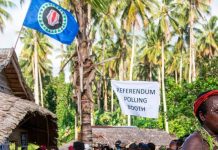
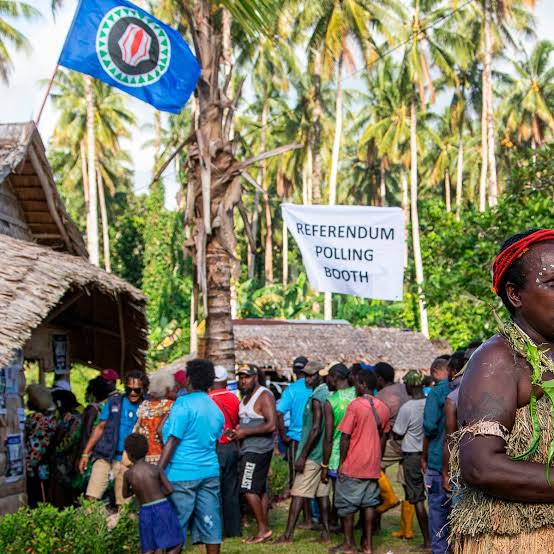
His comments came as MPs debated the outcome of the 2019 referendum, in which Bougainvilleans voted overwhelmingly for independence.
Deputy Opposition Leader and Hiri-Koiari MP Keith Iduhu also called on the Government to establish whether key conditions of the Bougainville Peace Agreement (BPA) had been fulfilled before Parliament made its decision.
Iduhu said reports verifying weapons disposal and assessing good governance in Bougainville had not been tabled in Parliament.
The BPA, signed by the PNG Government and Bougainville leaders in Arawa on 30 August 2001, established three pillars: autonomous government, weapons disposal and a referendum on Bougainville’s future political status.
Iduhu referred to concerns raised by the Prime Minister in March 2021 about weapons remaining in Bougainville and questioned the absence of updated verification.
“No current verification of total weapons disposal has been laid before this House. That is a fundamental fact,” he said.
He also called for an assessment of Bougainville’s governance against the standards set out in the peace agreement.
However, Iduhu said the PNG Government must also account for its own commitments under the agreement, including funding, the transfer of powers and joint consultation.
“If we ask Bougainville to show how it kept its word, we must show we kept ours too,” he said.
Iduhu said dialogue should continue regardless of Parliament’s decision on the referendum result.
He said the 2025 Melanesian Agreement provided for both governments to accept Parliament’s decision and continue consultations.
If Parliament approved the referendum result, transitional arrangements would need to be negotiated and constitutional amendments made, he said. If the result was rejected, negotiations and dialogue would still need to continue.
Meanwhile, MP Joe Sungi said Parliament must consider Bougainville’s capacity to govern itself and sustain development as it determines the region’s political future.
Sungi said Bougainvilleans were capable of managing their own affairs, whether under independence or autonomy, but stressed the need for a proper assessment of governance, public service capacity and development needs.
He said Bougainville should have the opportunity to assess its readiness to take on greater responsibilities.
Sungi added that Bougainville could continue to develop under full autonomy, but urged MPs to carefully weigh its institutional capacity and constitutional arrangements before making a decision.