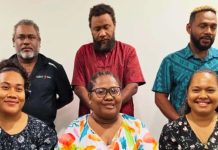

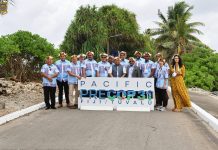
The Pacific Conference of Churches (PCC) has rejected a United States call to end the mandate of the United Nations Special Committee on Decolonisation, warning that the move would undermine the right of Pacific peoples to determine their political future.
PCC General Secretary Reverend James Shri Bhagwan said the committee remained essential while six Pacific territories continued to be listed by the United Nations as Non-Self-Governing Territories.
“Our people are not props, and our homes are not junkets,” Bhagwan said in a statement.
He rejected the U.S description of the committee’s Pacific engagement as “yearly junkets”, saying its regional seminars and visiting missions provided important opportunities for communities, churches, customary leaders, women and young people to present their views directly to the United Nations.
The six Pacific territories on the UN list are American Samoa, French Polynesia, known as Mā’ohi Nui, Guam, New Caledonia, known as Kanaky, Pitcairn and Tokelau.
Bhagwan said the continued presence of more than 80 former colonies as UN member states demonstrated the effectiveness of the decolonisation process rather than a reason to end it.
“Decolonisation is complete when the peoples still on the list have freely determined their future,” he said.
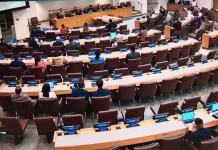
The statement follows a 15 October meeting of the UN General Assembly’s Fourth Committee, which approved more than 20 decolonisation resolutions, many recommended by the Special Committee on Decolonization, also known as the C-24.
At the request of the United States, the draft resolutions were put to recorded votes, including those concerning the six Pacific territories, which are normally adopted by consensus.
The United States and Israel were the only countries to vote against every resolution.
A resolution calling on administering powers to fulfil their reporting obligations under Article 73(e) of the UN Charter passed by 160 votes to two, with the United Kingdom, France and Paraguay abstaining.
Another resolution on disseminating information about decolonisation passed by 164 votes to three.
In its explanation of vote, the United States called for the C-24’s mandate to be ended and described the 1960 Declaration on the Granting of Independence to Colonial Countries and Peoples, known as Resolution 1514, as non-binding.
Bhagwan said the right to self-determination was not optional and hghlighted the International Court of Justice’s 2019 advisory opinion on the Chagos Archipelago, which addressed the legal significance of the right to self-determination in the decolonisation process.
He said the United Nations framework already recognised that territories could choose independence, free association, integration or another political status through a genuine expression of their wishes.
“The problem in our region is not that the C-24 refuses other options. It is that some administering powers refuse to let a genuine choice take place,” he said.
Bhagwan also challenged the U.S position that the committee should not intervene in the internal affairs of sovereign states.
He said Article 73 of the UN Charter established administering powers’ responsibility to promote the well-being of the peoples of Non-Self-Governing Territories and report to the United Nations.
“International oversight is an obligation they accepted, not interference,” he said.
The PCC also raised concerns about Guam, where a planned plebiscite on political status was blocked by a U.S federal court ruling. Bhagwan said the United States could not claim to support self-determination while the CHamoru people remained unable to exercise that right.
He said the region’s colonial history, including nuclear testing in Mā’ohi Nui and the Marshall Islands, also underscored the importance of ensuring Pacific peoples had a say in decisions affecting their lands and communities.
The PCC has long advocated for self-determination through its member churches and engagement with the United Nations.
In 2013, it supported the Mā’ohi Protestant Church’s campaign that led to French Polynesia’s inclusion on the UN list of Non-Self-Governing Territories.
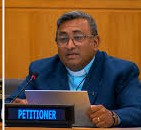
In June 2026, Bhagwan and Reverend Billy Wetewea, General Secretary of the Église Protestante de Kanaky Nouvelle-Calédonie, addressed the C-24 in New York, presenting findings from the Pacific Peoples’ Mission to Kanaky and calling for a joint mission involving the C-24 and the Melanesian Spearhead Group.
The PCC also continues to advocate for the self-determination and human rights of the people of West Papua, which is not on the UN list.
Bhagwan said the church’s position was grounded in its commitment to liberation, human dignity and the relationship between Pacific peoples, their land and ocean.
The PCC is calling on UN member states to reject efforts to weaken or end the C-24 mandate, adequately fund visiting missions and regional seminars, and support genuine self-determination processes.
It has also urged the United States to cooperate with the committee and support a self-determination process for the CHamoru people, while calling on all administering powers to agree on clear timetables for completing decolonisation before the end of the Fourth International Decade for the Eradication of Colonialism in 2030.
The PCC further called on Pacific Islands Forum leaders to reaffirm regional support for the right to self-determination of all six Pacific territories and urged the Melanesian Spearhead Group to pursue a joint mission to Kanaky.
“The peoples of our region are not asking for favours. They are asking for a promise made in 1960 to be kept,” Bhagwan said.