

Pacific leaders must use the momentum from the Fiji-Tuvalu Pre-COP31 meeting to secure climate finance, strengthen regional resilience and ensure the voices of vulnerable communities influence global decisions, former Fiji Ambassador to the United Nations Dr Satyendra Prasad says.
In an opinion piece titled ‘A Blue Pacific on Fire on the Road to COP31’, Dr Prasad says the region has demonstrated leadership and innovation in addressing climate change, raising expectations for world leaders ahead of the UN climate conference in Antalya, Türkiye.
He said the Pacific should not be treated as a passive recipient of international assistance but recognised as a region developing its own solutions to the climate crisis.
“This time the Pacific did not turn up as spectators — not as communities to be piloted upon — but as drivers who were framing, leading, implementing and learning as they did so,” Dr Prasad says.
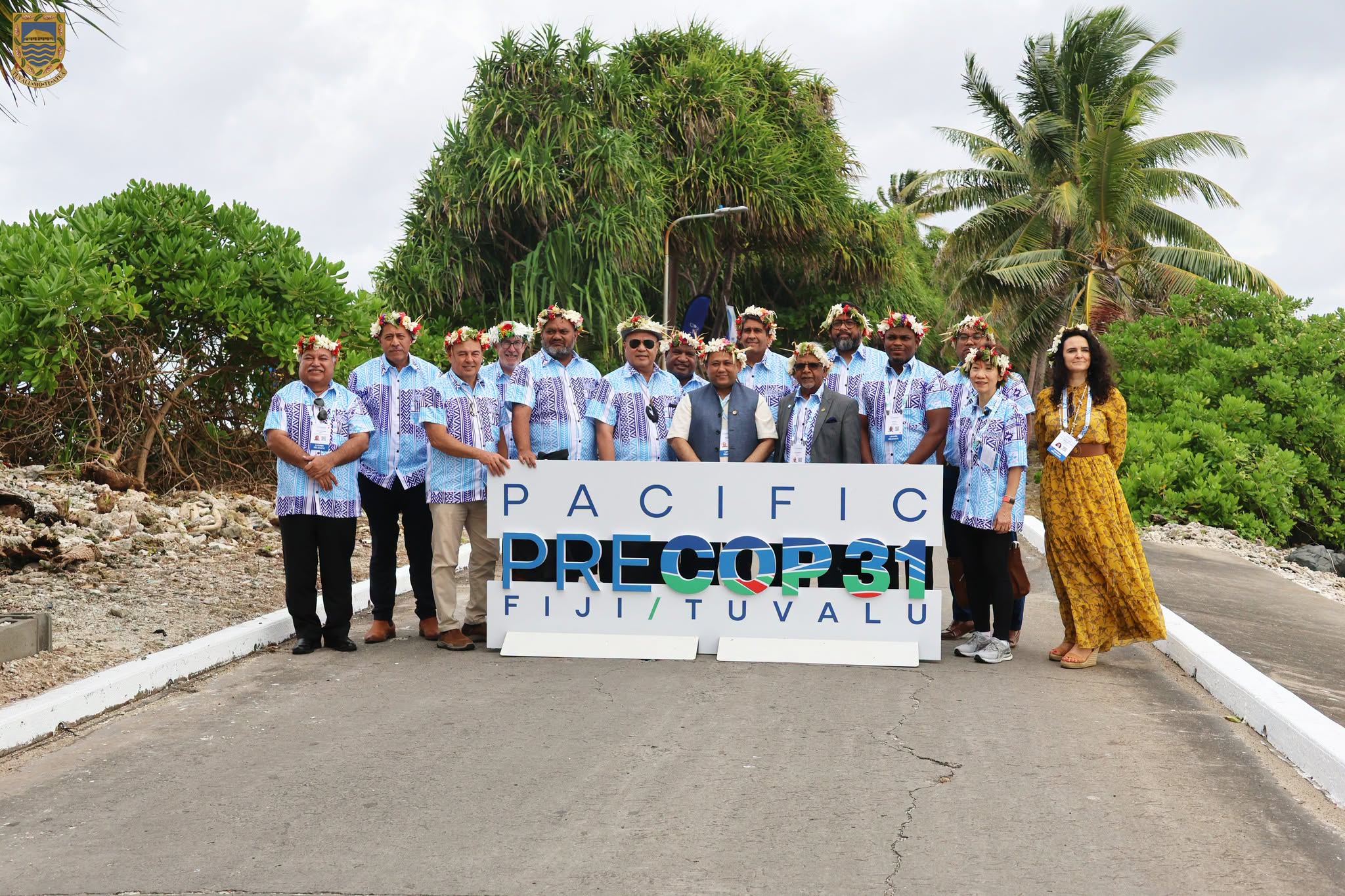
He congratulates the Fiji and Tuvalu governments for hosting the Pre-COP31 meeting, which brought together about 5,000 community leaders, faith representatives, researchers, scientists, activists, diplomats and negotiators.
He also acknowledges Australia’s role in advocating for and supporting a Pacific Pre-COP, describing the event as a significant demonstration of partnership with the region.
Dr Prasad said the gathering provided an important platform for Pacific communities on the frontlines of climate change to share their experiences and solutions with international decision-makers.
“The Pre-COP31 is a moment that was owned by people and communities who lived on frontlines of climate change.
“But they are not only living on its frontlines. They are indeed holding the frontlines for the rest of the world,” he said.
Despite the progress, Dr Prasad says the region continues to face the challenge of turning international climate commitments into practical support for vulnerable communities.
He highlighted the need to restore farms affected by saltwater intrusion, relocate health centres threatened by rising seas and build sea walls to protect coastal villages.
“How hard can it be to secure resources to support rebuilding farms that have lost to salt water intrusion?.
“How hard can it be to relocate some 50 health centres across the region to higher grounds? How hard can it be to build the 15,000 or so sea walls to keep rising seas at bay for that much longer from our coastal villages?” he asks.
He says the difficulty of repeatedly making the case for more climate finance remains frustrating for Pacific countries facing immediate and growing risks.
However, the voices of Pacific advocates and young people at the Pre-COP31 gathering offered renewed determination and hope, he said.
Dr Prasad said the meeting also demonstrated that Pacific countries are moving beyond seeking solutions from the international community and are developing their own approaches to climate resilience.
He highlights Solomon Islands and Tonga’s presentation of new climate ambitions and national climate funds, supported in part by domestic resources.
Papua New Guinea showcased progress in developing policy foundations to protect its forests, which represent about five per cent of the world’s primary forestland, while Palau, Niue, Tonga and other countries presented initiatives linking ocean and marine conservation with economic opportunities and improved livelihoods.
Dr Prasad said these initiatives show how Pacific countries can turn their natural resources, traditional knowledge and community experience into practical solutions.
He also points to the emergence of financial approaches that combine national, international, public and private funding to support ocean protection and biodiversity conservation.
The Pacific Resilience Facility (PRF) is another example of regional leadership, providing a mechanism to strengthen community resilience without increasing countries’ debt burdens.
“The region has undertaken bold steps to protect its communities by providing sufficient resources in ways that communities can access through its Pacific Resilience Facility.
“A region tired of climate debts set up its own facility to rebuild resilience without driving up national debt,” he said.
Dr Prasad challenges international partners to match the region’s commitment by contributing to the facility.
“If some of the smallest and most vulnerable states can make their own significant financial contributions into the Pacific Resilience Facility — so can the rest of the World.
“If the World did so, we can, as a region rebuild our resilience at pace. Antalya should deliver on this,” he said.
He said the Pacific’s central message remains the need to limit global warming to 1.5 degrees Celsius, which he describes as a critical safeguard for both the region and humanity.
“Our messages were and will remain simple. We have placed our trust in the World’s scientists. They agree that 1.5 degree Celsius temperature rise is a guardrail for us across the Blue Pacific. They agree that 1.5 is equally the guardrail for whole of humanity,” he said.
Dr Prasad said the region’s role as steward of a significant share of the world’s ocean must also be reflected in the outcomes of COP31.
He argues that ocean protection, climate action and the preservation of marine biodiversity should be central to the conference agenda.
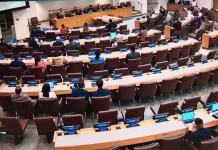
Beyond finance and emissions reduction, Dr Prasad said Pacific countries must secure stronger representation in international decision-making, particularly in forums where their long-term security and survival are determined.
“The UN’s climate meetings are the place where the Pacific’s gravest priorities — the risk of state failures arising from repeated climate stresses ultimately get decided,” he said.
He says the success of the Pre-COP31 has strengthened the region’s position, but Pacific leaders must now convert that momentum into concrete outcomes.
“Our collective futures now depend on our leaders succeeding into getting into the DNA of decision making by the international community,” he said.
Dr Prasad said Pacific leaders will carry the expectations of communities, faith groups and people whose experiences are often overlooked in global negotiations into COP31.
“ To have raised our expectations from our leaders is not an unfair ask this time around therefore,” he said.