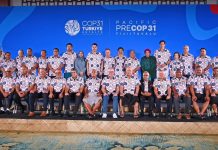
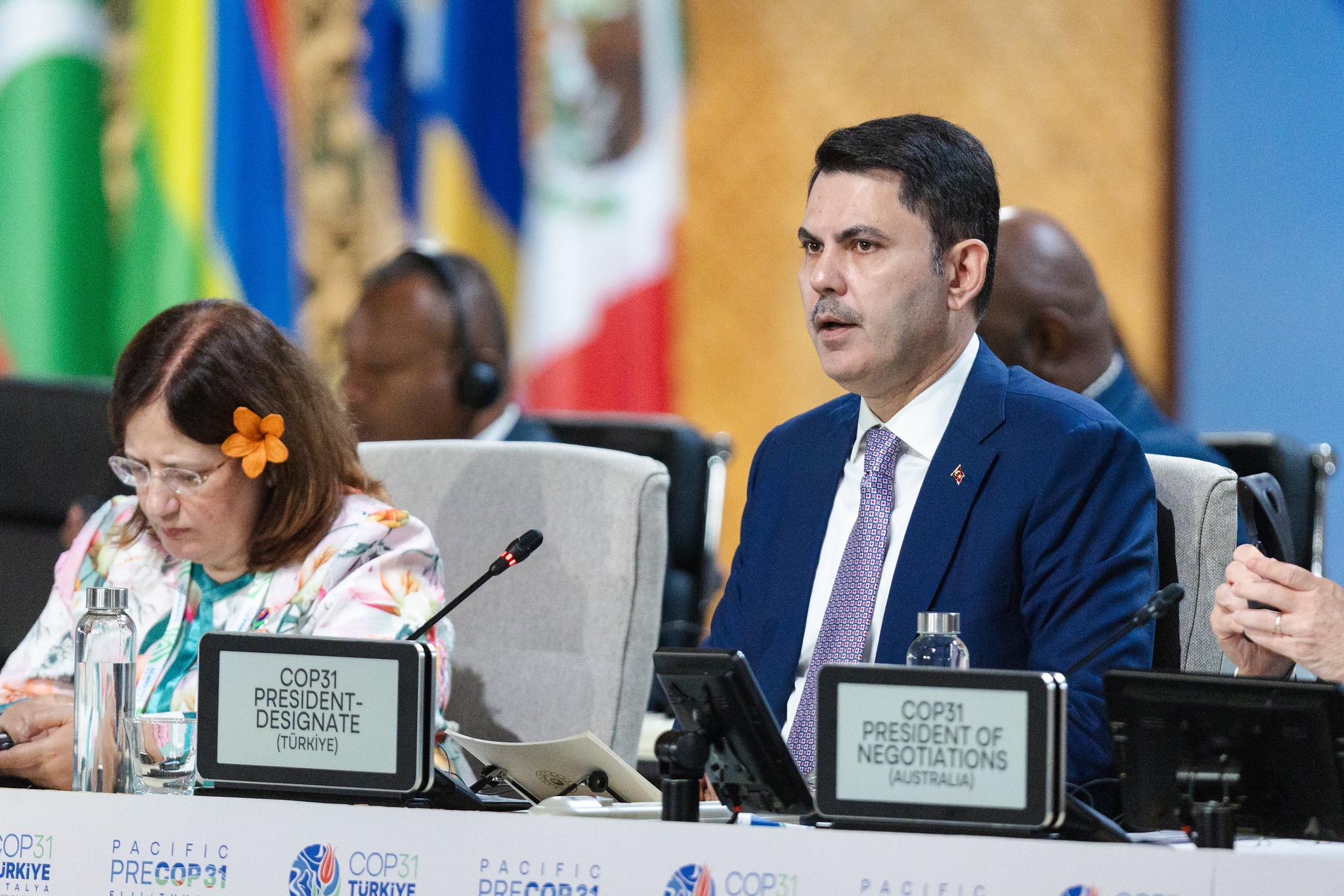
COP31 President Murat Kurum says the climate crisis facing Pacific island countries requires stronger international action, with climate finance, implementation and the survival of vulnerable states expected to remain central issues at the November climate summit in Türkiye.
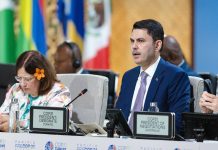
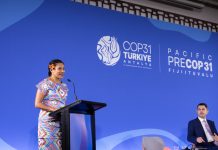
Speaking at the Pre-COP Ministerial press briefing in Nadi today, Kurum said the decision to hold the Pre-COP in the Pacific was intended to put the region’s concerns at the centre of the COP31 process.
“The Pacific is the front line of the climate crisis,” he said.
Kurum said his visit to Tuvalu had demonstrated the reality of the threat facing small island states, which he said had made little or no contribution to the climate crisis.
“Tuvalu has made no contribution in this crisis, but unfortunately, they are faced with… an existential crisis and they’re paying the heaviest price,” he said.
He said the international community could not continue to delay action, warning that the Paris Agreement’s 1.5-degree Celsius temperature goal was increasingly at risk.
“The 1.5 degree goal… is a matter of survival,” Kurum said, describing it as a question of protecting “cultures, history, memories, your homeland, your homes.”
Kurum said the message from the Pre-COP could be summed up under five headings: urgency, implementation, solutions, financing and unity.
He placed particular emphasis on climate finance, saying funding must reach countries most affected by climate change without lengthy processes and bureaucracy.
“Justice in climate finance is essential,” he said. “Resources must reach those in need in a timely and an accessible manner, not through a lot of red tape.”
He said the burden of climate action could not continue to fall on small island developing states and least developed countries.
“That’s why the cost should not be paid by SIDS or LDCs,” Kurum said.
Kurum also highlighted US$1.5 billion in climate finance, saying, “1.5 billion US dollars for 1.5 degrees will save the Pacific.”
“Life will continue in Tuvalu. Children will be smiling again,” he said.
The COP31 president also signalled that Türkiye wants the November summit to focus less on new promises and more on delivering existing climate commitments.
“We have always been saying that it is enough to talk, it is enough to make promises,” Kurum said.
He said Türkiye was approaching COP31 as an “implementation COP”, with a focus on putting the Paris Agreement into practice.
Among the areas he identified for action were electrification, methane reduction and zero waste.
Kurum also said the COP31 presidency wanted to begin early consultations with countries on a political COP31 decision text covering mitigation, adaptation, finance and implementation.
He said the text should be inclusive, transparent, party-driven and presidency-led, while providing a common political direction for implementing existing commitments.
He stressed that any such outcome would not replace the formal negotiating tracks or create new obligations or commitments, but would instead provide political coherence between the different elements of COP31.
Kurum said the process would be shaped through early and inclusive consultations with countries rather than through a predetermined outcome.
“There won’t be any surprise decisions in COP31,” he said.
He also stressed that countries would need to take responsibility for delivering climate action rather than relying solely on the COP presidency to drive progress.
“At the end of the day, what we need to do is that we definitely need to take upon the responsibility and pull our weight,” Kurum said.
Kurum said Türkiye, Australia and Pacific countries had taken on different leadership roles in the COP31 process, with Türkiye presiding over the summit, Australia leading the negotiations and the Pacific helping to shape the process through the Pre-COP.
He said the role of the presidency was to listen to all parties and work towards consensus.
“We will leave no one behind in this process,” he said.
Kurum said unity would be essential to maintaining progress despite wider political tensions.
“Dialogue, consensus, and action,” he said, adding that the Pacific had reminded the world that “our strength comes from our unity.”
Kurum drew a direct comparison between global defence spending and the threat climate change poses to Pacific island nations.
Referring to North Atlantic Treaty Organisation (NATO) countries’ decision to increase defence investment, he questioned whether the world was showing the same level of urgency towards countries facing climate-driven threats to their existence.
“Tuvalu is going away,” he said. “What does it mean to spend 5 percent for defence? If you don’t have a country to live on, what does it mean to defend it?”
Kurum said the same level of political determination being applied to security issues was needed for climate action.
“We expect each and every country to show in climate action as well,” he said.
Kurum said there would be “no turning back” on the climate path despite the political and economic challenges facing countries.
“We will not take a step backwards because we still believe that a more just world is possible,” he said.
COP31 will be held in Antalya from 9 to 20 November, where Kurum said the expectations and concerns raised in the Pacific would be carried into the negotiations.
He said the goal was to deliver a clear, balanced and implementation-oriented outcome, while ensuring that the voice of the Pacific is heard strongly in Antalya.