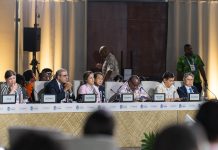

Pacific countries have renewed calls for a United Nations visiting mission to New Caledonia, saying an independent assessment is needed as the territory continues to face political uncertainty and socio-economic hardship following the deadly unrest of May 2024.
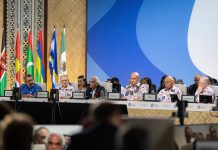
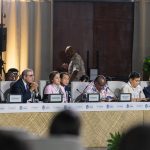
The call was made during the Fourth Committee’s consideration of New Caledonia at the UN General Assembly, where Pacific representatives backed the territory’s right to self-determination and urged France and the UN to strengthen efforts towards a lasting political settlement.
Papua New Guinea said the UN mission should take place as soon as possible and called for funding to be made available.
“An independent assessment through the UN Visiting Mission could assist the UN to better support all concerned parties, including the administering power,” PNG said.
PNG reaffirmed its support for New Caledonia’s self-determination in line with the UN Charter and the Declaration on the Granting of Independence to Colonial Countries and Peoples.
“The self-determination decision ultimately and solely rests with the people of New Caledonia,” the PNG representative said.
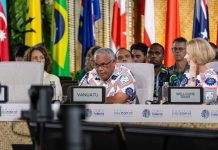
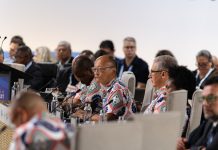
The Melanesian Spearhead Group(MSG), represented by Vanuatu, also expressed concern over the situation in New Caledonia, particularly the continuing social and economic pressures facing Kanak communities.
The MSG said the unrest in May 2024, along with challenges in health, education and employment, required close attention from both the UN and France as the administering power.
“The fragile peace forged in New Caledonia requires tactful, sensitive and cooperative efforts from all stakeholders in New Caledonia and the administering power to uphold and further strengthen,” Vanuatu said on behalf of the MSG.
The group said it supported efforts to rebuild trust and find a peaceful pathway towards self-determination, while stressing the importance of the Nouméa Accord and the aspirations of New Caledonians.
The debate also exposed sharp divisions among petitioners over New Caledonia’s political future.
Roland Arnold told the committee that Kanak people must be given the opportunity to freely determine their future, describing self-determination as an inalienable right.
“Kanaky New Caledonia, the non-self-governing territory, must be given the opportunity to freely decide their own future,” Arnold said.
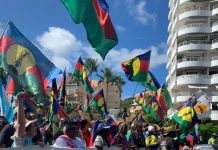
Another petitioner, speaking on behalf of the pro-independence movement Urgence Kanak, said the French Government’s handling of the third referendum and subsequent changes to the electoral system had contributed to the confrontation that erupted in 2024.
He said the 2024 unrest resulted in 13 deaths and lasting trauma.
“We reject the criminalisation of pro-independence activists and we demand freedom and self-determination, and this must never be equated with a crime,” he said.
The petitioner also called for the dispute over the third referendum to be examined by the International Court of Justice and reaffirmed the FLNKS’ support for securing observer status at the UN.
Other petitioners called on the Fourth Committee to strengthen its monitoring of New Caledonia and apply international law more directly to the decolonisation process.
One petitioner argued that continued UN monitoring had failed to prevent the 2024 crisis.
“Has your monitoring succeeded in averting the conflict that was foreseeable for May 2024? No,” he said.
France rejected calls suggesting its approach was undermining the territory’s political process and told the committee it remained committed to self-determination and dialogue.
The French representative said recent provincial elections had allowed about 10,000 additional Caledonians to participate after an adjustment to the electoral roll.
France also said it had resumed negotiations with political actors in New Caledonia following the rejection of the 2025 Bougival Agreement.
“The rejection of this agreement did not signify the end of the process,” France said.
It said more than €2 billion(US$2.24 billion) had been committed over five years to support New Caledonia’s economic recovery, including assistance to the mining sector and public services.
France said its objective was to reach the end of the political process while respecting the different views and aspirations of the people of New Caledonia.
The debate also saw one petitioner argue that the territory should be removed from the UN list of non-self-governing territories, saying three self-determination consultations had demonstrated support for remaining part of France.
“The destiny of New Caledonia belongs to the Caledonians. Only they can make a choice about their future,” he said.
But the pro-independence petitioners rejected that position, arguing that the self-determination process remained incomplete and that the UN must do more to ensure the rights of the Kanak people.
The Fourth Committee was also warned that the continued uncertainty could have wider implications for peace and security in the Pacific.
PNG said decolonisation remained unfinished business for the UN and urged continued international support for territories still on the list of non-self-governing territories.
“Decolonisation remains unfinished business for the UN,” the PNG representative said.
“No nation is so small that its people should be trodden, downtrodden.”
The Fourth Committee is expected to continue consideration of the situation in New Caledonia as part of its work on decolonisation and non-self-governing territories.