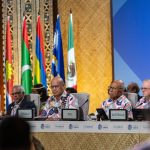

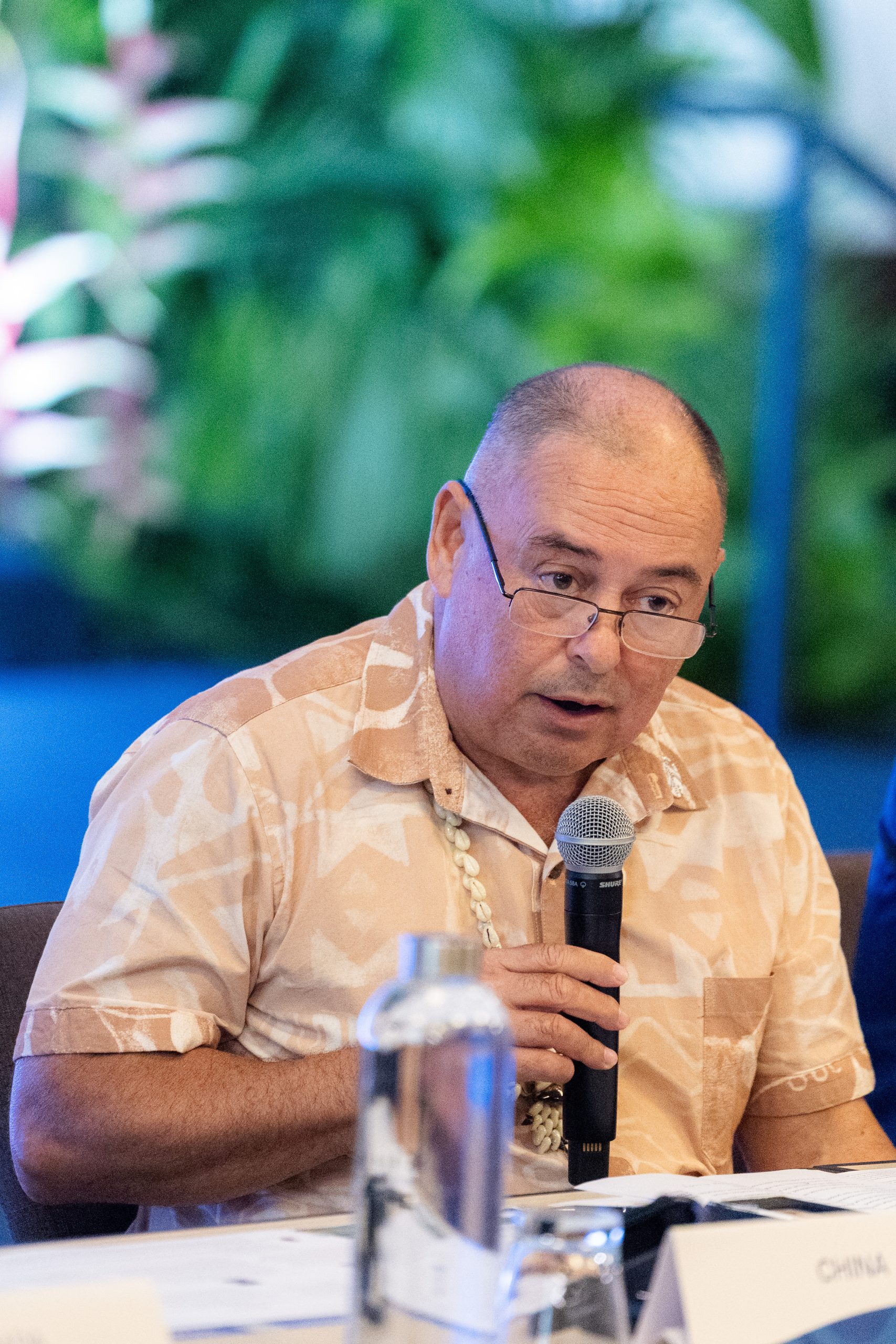
Cook Islands Prime Minister Mark Brown has challenged developed countries to match the Pacific’s urgency on climate change, calling for faster climate finance and deeper emissions cuts to protect communities already facing rising seas and climate impacts.
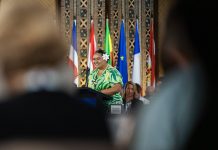
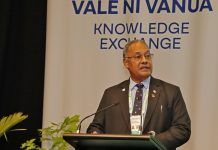
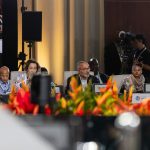
Speaking at the Pacific Pre-COP31 Leaders’ Plenary in Denarau, Brown said Pacific countries were not waiting for international assistance but were already developing their own solutions and investing in climate resilience.
“Climate change has been given its power and ferocity by high emissions, forcing an entire region to change with urgency.
“Today we ask the same urgency of our partners, because urgency is a two-way street,” Brown said.
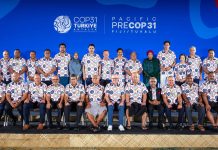
Brown spoke after Pacific leaders spent a day and a half in Tuvalu, where they discussed climate impacts and regional priorities ahead of COP31 in Antalya, Türkiye.
He said his first visit to Tuvalu had reinforced the similarities between the challenges faced by Tuvalu and vulnerable communities in the Cook Islands, particularly in the remote northern group.
“The conditions that the people of Tuvalu are forced to live with are deeply familiar to my own people, particularly those in the northern group of our most remote areas.
“Communities, homes, our very future, threatened every day,” Brown said.
Brown said Pacific leaders understood the consequences of climate change because their communities were already living with them.
“Imagine living with the knowledge that unless the world cuts emissions, the land upon which you stand, upon which your ancestors rest, could be lost,” he said.
He said Pacific governments were being forced to make difficult choices while waiting for resources needed to protect their people.
“These are choices that no leader wants to make, yet they are choices that our governments face,” Brown said.
But he said the Pacific was not waiting for others to act.
“We are identifying our risks, we’re developing our solutions like the PRF, and we’re making the hard choices about our future and our ocean,” he said.
Brown highlighted the Cook Islands’ recent investment in climate and geospatial information, including the launch of LiDAR mapping and its GeoPortal, to strengthen planning and understanding of climate risks.
He said the tools would provide stronger evidence for decision-making across the country.
Brown also criticised the barriers Pacific countries face in accessing climate finance, saying the region was often assessed primarily through its vulnerability.
“Too often, the Pacific is viewed through the lens of risk, and that assessment comes with more conditions, more criteria, more hurdles, before climate finance can reach our communities,” he said.
He said some of those decisions were being made by institutions and decision-makers who had never visited the Pacific.
“We recognise the need for accountability. We ask that the way it is applied recognises the Pacific, the Pacific way,” Brown said.
The Cook Islands Prime Minister questioned whether the same scrutiny imposed on Pacific countries seeking climate finance was being applied to those responsible for providing it.
“If the world is prepared to assess our suitability for climate finance, why is it not equally prepared to scrutinise whether those responsible for delivering it are meeting their obligations?” he asked.
Brown also questioned why governments had been able to mobilise hundreds of billions of dollars within months to respond to the global fuel crisis but had not shown the same urgency on climate finance.
“Why cannot the same urgency be applied and commitment be applied to climate finance?” he said.
He highligted the Tuvalu Coastal Adaptation Project as evidence of the Pacific’s capacity to design and deliver effective climate projects.
“The Tuvalu Coastal Adaptation Project, TCAP, is living proof that the Pacific is more than capable in knowledge, expertise, and leadership, and in accountability,” Brown said.
He challenged international partners to accelerate support for similar projects while also delivering the emissions reductions needed to keep the 1.5°C temperature goal within reach.
“We need both. Adaptation has limits,” he said.
Brown said the Pacific could not address climate change alone because it did not control global funding decisions and was not responsible for the majority of global emissions.
He said this should be reflected in the Taku Pakasoa Declaration, which Pacific leaders are expected to sign ahead of COP31.
“Unity must mean more than standing together for a declaration that is completely voluntary. It must mean following through together,” Brown said.
“Back Pacific leadership with the finance so that we can get on with our solutions.”
Brown also called for deeper emissions cuts from major emitters.
“Deliver the emissions reductions needed now, so that my descendants can stand on the shores of Funafuti, as I have today.
“Show up. Be the example future generations require of us,” he said.
The Pacific Pre-COP31 Leaders’ Plenary is expected to consolidate the region’s priorities ahead of COP31 and provide direction to Pacific ministers and negotiators heading into the climate negotiations in Türkiye.