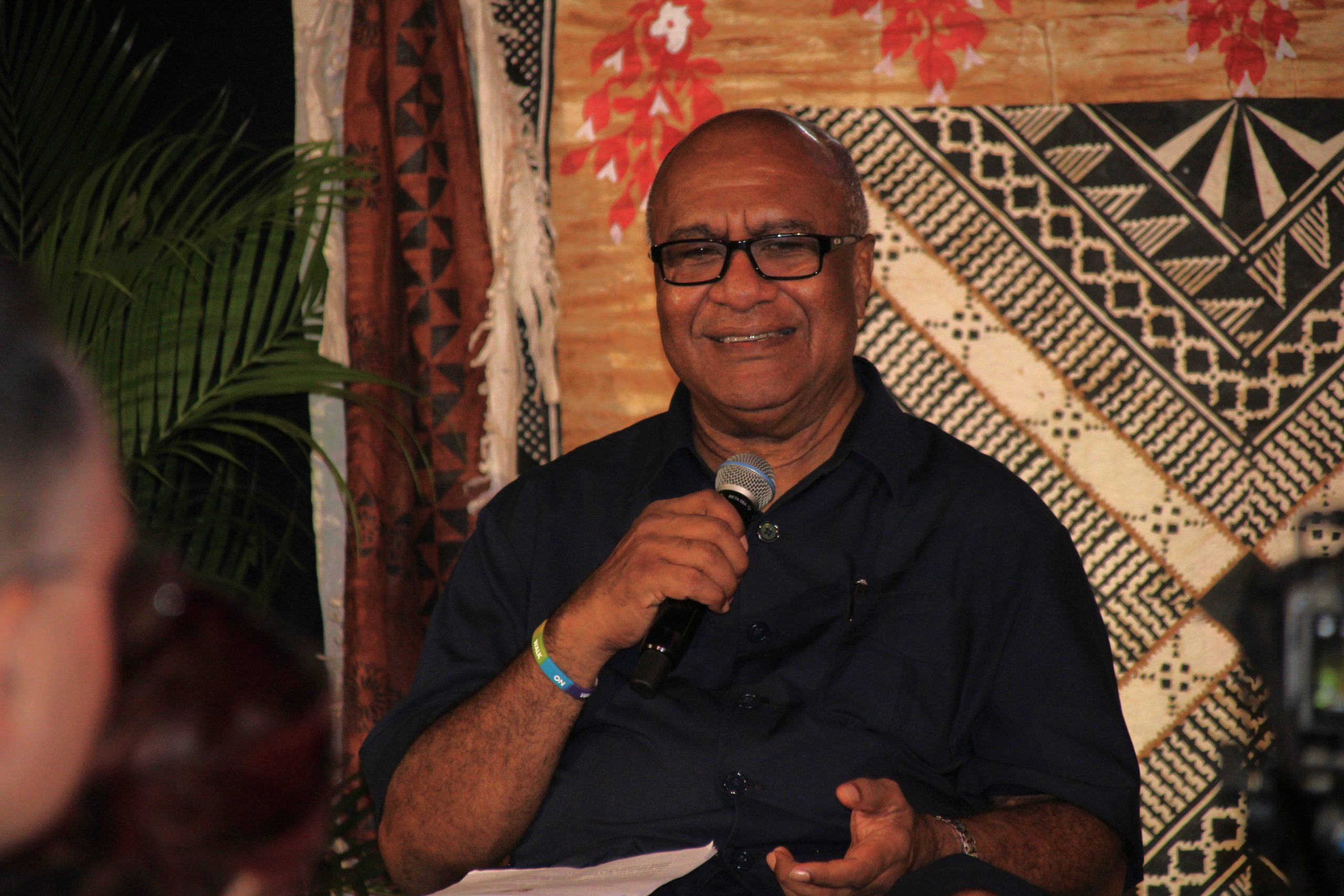
By Pita Ligaiula in Savusavu
Governments must work with the media to tackle misinformation and disinformation while ensuring news organisations have the resources to remain sustainable, Fiji deputy Prime Minister Manoa Kamikamica says.
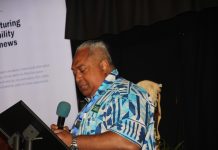
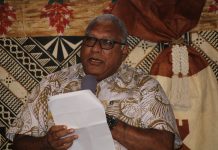
Speaking at the 8th Pacific Media Summit in Savusavu, Kamikamica said media should be recognised not only as a democratic institution but also as an industry that employs people and requires investment in technology.
“Just as a democratic institution, we must also talk about it as an industry.
“It employs people, technology, newsrooms can’t afford. Journalists will eventually produce less journalism or even not survive,” Kamikamica said.
He said rapid changes in technology had blurred the lines between traditional forms of broadcasting, radio, television and digital media, creating new challenges for both governments and news organisations.
“The ability for governments to understand that and try and see how we can work together with the industry is very important,” he said.
Kamikamica said Fiji had relaunched a public service broadcasting grant to support media organisations and their work.
He said misinformation and disinformation were also becoming major issues for governments globally, particularly with the rapid development of artificial intelligence.
“It’s a very topical issue for governments around the world now,” Kamikamica said.
He said Fiji had started work on a framework to address misinformation and disinformation, driven partly by the need for governments to provide accurate and timely information to the public.
“If we don’t provide the right information, clearly people make up their own minds and then the narrative gets distorted,” he said.
Kamikamica said developments in artificial intelligence had added urgency to the issue.
“And of course AI, as we all know, is also one of the drivers of why there’s a need to really get our hands around this particular issue,” he said.
He said the government’s expectation was that media organisations would continue to report responsibly and accurately as the sector moved towards greater self-regulation.
“All the government is hoping for is in this process of allowing the media to manage its own ministry, that reporting continues to be responsible, continues to be accurate,” Kamikamica said.
But he stressed that responsibility did not rest solely with the media.
“It is not a one-way street.
“Us as a stakeholder in the supply of information, we must play our part as well, and ensure that the media is fully informed, and also we are providing enough information so that we can get the right information out there,” he said.
Kamikamica said Fiji’s experience over the past four years showed that cooperation between government and other stakeholders could deliver results.
“When stakeholders in any industry work together, a little bit of trust, a little bit of empowerment, things can go a long way, as opposed to trying to over-manage, over-regulate, and try and place rules on the business,” he said.
Pacific Islands News Association (PINA) President Kalafi Moala welcomed Kamikamica’s remarks, saying confidence and security were important for journalists to perform their work.
“When media feel secure about themselves and what they’re doing, they get to do their job much better than when they are always defensive or always insecure in what they’re trying to do,” Kalafi said.
He said media sustainability also required stronger outreach to remote Pacific communities that remained underrepresented in regional media networks.
Kalafi said the Pacific Islands News Association was working to restructure its organisation to reach more remote areas and countries, including French Polynesia, New Caledonia, West Papua and the Federated States of Micronesia (FSM).
“Remoteness is a key issue, because we think if we reach the remote areas, we’ll be able to help them and assist them.
“But there are also a lot of things that we need to learn from the remote areas,” he said.
Kalafi said greater outreach would also help Pacific media become more culturally relevant.
He said Pacific media must recognise differences in culture and language rather than treating regional unity as requiring communities to adopt one approach.
Using the Tongan language as an example, Moala said there were two words that could be translated into English as “freedom”, but with different meanings.
He said tawatarina referred to freedom of speech, choice and assembly, while faiteleha carried the idea that freedom came with responsibility.
“There’s a responsibility in freedom. There’s a responsibility in our communication,” Kalafi said.
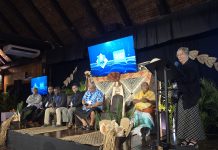
The discussion was held under the summit theme of sustainable and resilient media for a free and democratic Blue Pacific, with misinformation, disinformation, media regulation, media sustainability and the impact of technology among the issues discussed.