

By Pita Ligaiula in Savusavu
Pacific media partnerships must be flexible, long-term and built around local needs, while protecting editorial independence, speakers at the Pacific Media Summit in Fiji have stressed.
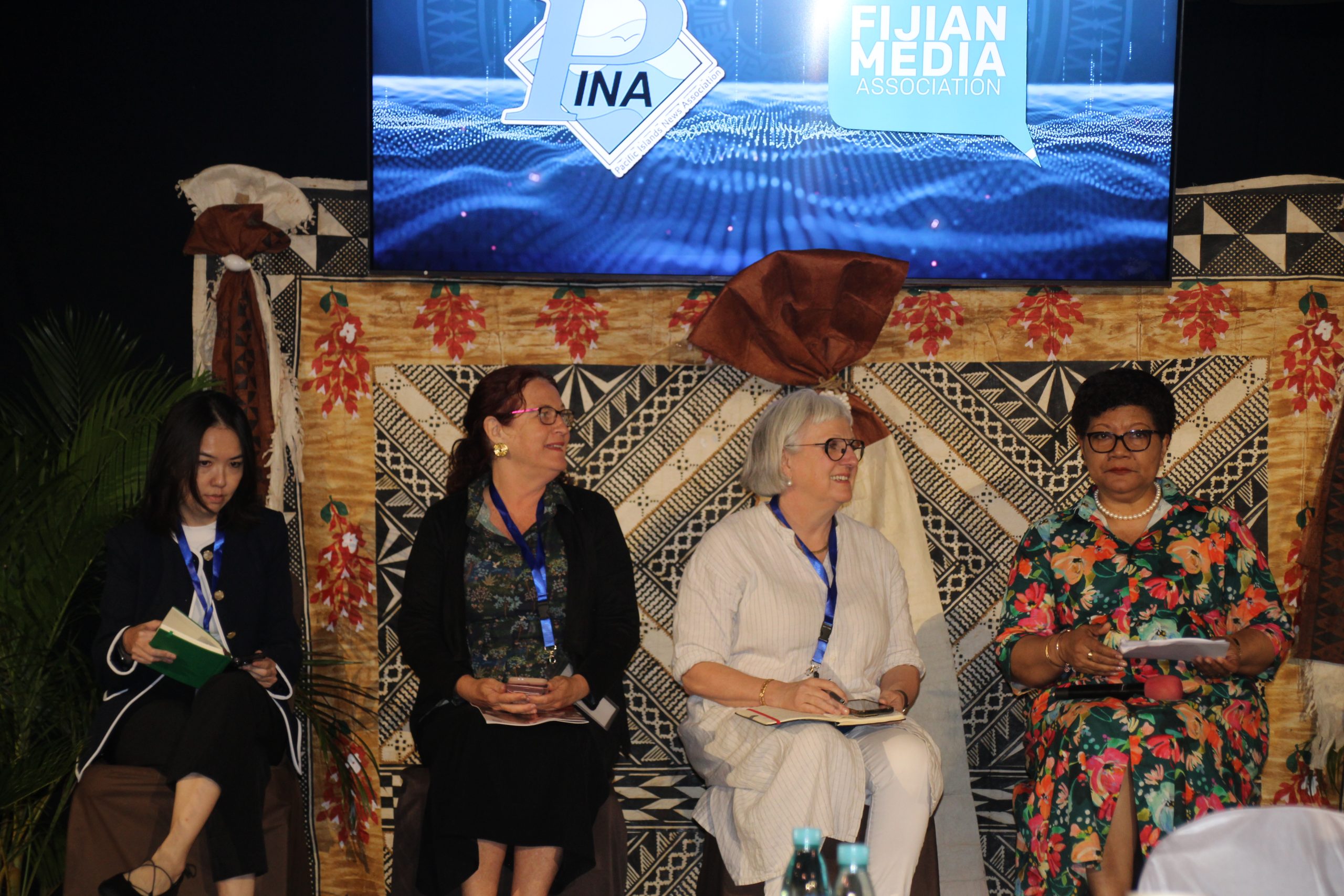
The call came during a plenary discussion on “Models and Lessons of Pacific Media Partnerships”, where media development partners and Fiji’s Ministry of Information outlined what has worked and what more is needed to strengthen collaboration across the region.
ABC International Development (ABCID) Head Claire Gorman said there was no single partnership model that could work across the Pacific.

“There is no single model that works across the Pacific.”
Gorman said partnerships should start with the purpose they are intended to achieve rather than a predetermined model.
She said institutional partnerships, regional networks, peer-to-peer relationships and targeted technical support could each serve different purposes, with the strongest approach often combining several models.
“Trust and continuity are essential infrastructure,” Gorman said.
She said sustained relationships allowed partners to understand local contexts, have more honest conversations, adapt to changing circumstances and work through challenges together.
Gorman also stressed that editorial independence must remain non-negotiable, particularly where media development partnerships operate alongside government or diplomatic objectives.
“Clear boundaries, transparency and respect for Pacific editorial sovereignty are fundamental to credibility,” she said.
“Without them, partnerships risk weakening the audience trust that they are intended to support.”
Gorman said adaptation was also a sign of a strong partnership, with partners needing to agree on shared outcomes while remaining flexible about how those outcomes were achieved.
She cited ABC’s partnership with Papua New Guinea’s National Broadcasting Corporation (NBC) around the country’s 50th independence anniversary as an example of long-term collaboration built around local priorities.
The project began discussions about two years before the anniversary and combined content production with media capacity building.
Gorman said the partnership enabled the creation of content that respected Papua New Guinea’s “story sovereignty” while also helping Australian audiences better understand the country’s independence story.
Regional Partnerships Director at BBC Media Action, Rachael McGuinn said flexibility and adaptation had also been central to her organisation’s work in the Pacific.
“We’ve really felt the challenge over the last couple of years with the change in international funding,” McGuinn said, noting the impact of reduced development funding on local media organisations.
She said BBC Media Action had worked with local media organisations and media associations to identify their needs and develop programmes around them.

“What has worked for us is actually having a very flexible and adaptive approach to our programming,” she said.
McGuinn said audience research had also been important, particularly as Pacific audiences increasingly moved between platforms.
She noted that radio remained a major source of information across the Pacific, alongside digital platforms.
The BBC Media Action approach has also included localisation, training-of-trainers programmes and mentoring, including fact-checking initiatives.
McGuinn said training local trainers helped strengthen collaboration across the media sector because journalists could take the skills back into their own newsrooms.
She also called for greater coordination among development partners to identify gaps and avoid duplication.
“We have a six-week catch-up conversation with each other to try to understand different funding priorities of different media development partners and donors in the region,” she said.
The aim, she said, was to identify areas where other funders were not providing support.
Fiji’s Permanent Secretary for Information, Eseta Nadakuitavuki, said Fiji’s experience showed that media partnership models must evolve as audiences and technology change.
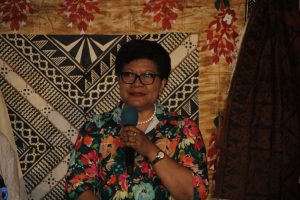
She traced Fiji’s public broadcasting model from the establishment of the Fiji Broadcasting Commission (FBC)in 1954 to the current system involving radio, television and newspapers.
Nadakuitavuki said the earlier model, which relied heavily on one public broadcaster, had provided an effective mechanism for delivering public-interest information but became less suited to a fragmented media environment.
“The media environment did not stand still,” she said.
As commercial broadcasters, newspapers, digital platforms and social media expanded, audiences became more fragmented.
“If the objective is public reach, then our partnership model also has to follow the audience,” Nadakuitavuki said.
She said Fiji began opening its public service broadcasting grant to other media organisations in 2024 through a competitive process.
The programme was expanded to commercial television and radio providers and, in 2026, to Fiji’s two major newspapers.
Nadakuitavuki said the experience showed government did not have to rely on one platform to deliver public service information.
“Different media organisations reach different people, they operate across different languages, communities and platforms,” she said.
She said government-media partnerships were increasingly being used for public awareness campaigns on issues including illicit drugs, HIV and AIDS, non-communicable diseases, gender-based violence, cyberbullying, online harassment and disaster preparedness.
But she stressed that government funding must not compromise editorial independence.
“Partnership does not mean compromising media independence,” Nadakuitavuki said.
“Public service broadcasting support is for great public interest content. It should not be about purchasing favourable editorial coverage.”
She said government had a responsibility to provide timely and accurate information and ensure public resources were used transparently, while media had a responsibility to inform, question and scrutinise government and other institutions.
“Those roles can and must co-exist,” she said.
Looking ahead, Nadakuitavuki said Fiji could consider expanding public-interest media support beyond established broadcasters and newspapers to content creators producing documentaries, films, dramas, music, cultural programmes and digital content.
She said this could create opportunities for more Fijian and Pacific stories to be told “in our own voices, for our own people and for the world.”
For the Pacific media sector, she said the challenge was not to identify one perfect partnership model but to keep developing partnerships that respond to changing audiences, technology and community needs.
“The fundamental objective remains: how do we ensure our people have access to information that informs them, educates them, protects them and connects them?”. Nadakuitavuki said.