

Vanuatu has formally put forward its interest in hosting a Multi-Hazard Early Warning Centre for the Pacific region, drawing on its growing capacity in meteorological, geological and disaster-risk monitoring.
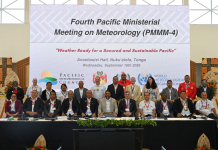
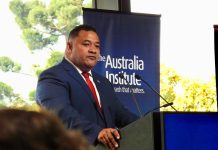
Vanuatu’s Minister for Climate Change, Meteorological and Hydrometeorological Services, Environment, Energy, Disaster Management and Geological Hazards, Ralph Regenvanu, made the announcement during the Fourth Pacific Ministerial Meeting on Meteorology in Tonga Wednesday.
Minister Regenvanu said Vanuatu was prepared to use the systems and expertise it had developed in weather, climate and geo-hazards monitoring to support early warning efforts across the Pacific.
“I wish to formally register Vanuatu’s interest in hosting a Multi-Hazard Early Warning Centre for the Pacific region, building on the capability we already have,” he said.
He said he would work to advance the proposal in his capacity as minister, with further details expected to be announced during the next Pacific Meteorological Council meeting, scheduled to be held in Vanuatu in 2028.
“I will do my part as Minister, with further details to be announced at PMC in Vanuatu in 2028. I invite SPREP to engage with my team to progress this further,” Minister Regenvanu said.
Speaking under the agenda item on the sustainability of weather, climate, water and ocean services for a safe, secure and prosperous Pacific, Regenvanu outlined Vanuatu’s progress in developing its national meteorological and hydrometeorological services.
He acknowledged Fiji’s regional role as the Regional Specialised Meteorological Centre for tropical cyclones and thanked the country for its work in developing regional training and instrument centres.
Regenvanu said Vanuatu Meteorological and Hydrometeorological Services (VMHS), formerly known as the Vanuatu Meteorology and Geo-Hazards Department (VMGD), had developed over the past 15 years.
He said Vanuatu had increasingly taken responsibility for providing cyclone information and warnings for the country, reflecting the growing capacity of national meteorological services across the Pacific.
Regenvanu also spoke about the importance Vanuatu places on strengthening early warning systems to save lives. The country’s institutional structure was reorganised in the early 2000s to bring meteorology, geo-hazards and disaster management responsibilities under a coordinated framework.
He said this structure enabled Vanuatu to expand its weather, climate and geological-hazards work through different monitoring systems supported by a unified information-dissemination platform.
Regenvanu referred to recent geological events, including the devastating earthquake of 17 December 2024, and the ongoing volcanic eruption on Ambae, which has been declared a disaster area.
In response to these challenges, the Government has expanded the former Geo-Hazards Division within VMGD into a separate Vanuatu Geological Hazards Department.
The expansion also strengthens Vanuatu’s role as host of the Melanesian Volcano and Earthquake Network, known as ORSET, allowing the country to provide increased scientific and technical support for geo-hazards monitoring across the sub-region.
Regenvanu said Vanuatu was now able to provide national and sub-regional information on geological hazards, including earthquakes and volcanic eruptions.
He said the development was consistent with the country’s long-term vision of becoming a regional support centre, complementing the role of the Regional Specialised Meteorological Centre in Nadi, Fiji.
He described the proposed multi-hazard approach as an example of the Pacific’s commitment to strengthening early warning systems through the Weather Ready Pacific programme and the Early Warnings for All initiative.
The proposed centre would bring together Vanuatu’s existing meteorological, geological and disaster-management systems to support regional coordination, information sharing and early warning preparedness across the Pacific.