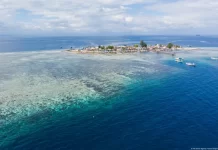
Pacific Islands Forum Leaders have adopted a new Ocean Statement calling for stronger political leadership, urgent climate action, tighter fisheries management and Pacific-led financing to protect the Blue Pacific.
The 2026 Pacific Islands Forum Leaders’ Ocean Statement places the ocean at the centre of Pacific security, food security, economies, culture and livelihoods, while warning that climate change, biodiversity loss, pollution, overfishing and illegal, unreported and unregulated fishing are putting the region’s ocean under growing pressure.
Leaders committed to “responsible stewardship of the Blue Pacific ocean” for current and future generations and agreed to strengthen political leadership by convening a Pacific Ocean Ministerial Meeting ahead of the fourth United Nations Ocean Conference.
The regional preparatory process will be led by the Pacific Ocean Commissioner with support from CROP agencies and the Pacific Ocean Alliance, working with the hosts of the UN Ocean Conference.
The leaders also called for greater integration of ocean, climate and biodiversity priorities across global and regional processes.
They urged countries to take “bold and decisive action” to close the ambition gap under the Paris Agreement and stressed the importance of keeping the 1.5°C temperature goal within reach.
The statement calls for the UNFCCC Ocean and Climate Change Dialogue to become more action-oriented and more directly linked to UNFCCC decisions.
Leaders also highlighted the growing threat posed by sea-level rise and called on states to support Pacific declarations protecting maritime zones and the continuity of statehood as climate change reshapes coastlines and threatens communities.
They urged timely ratification and implementation of the BBNJ Agreement on the conservation and sustainable use of marine biodiversity in areas beyond national jurisdiction, while stressing that implementation must recognise the special circumstances and capacity constraints of Pacific Small Island Developing States(PSIDS).
The leaders committed to implementing the Kunming-Montreal Global Biodiversity Framework and ensuring that at least 30 percent of terrestrial, inland water, marine and coastal areas of the Blue Pacific are effectively conserved and managed by 2030.
On fisheries, leaders committed to strengthening sustainable management and resilience through the Vakamanu Regional Pacific Fisheries Strategy 2026–2035.
They called for the elimination of harmful fisheries subsidies, stronger action against IUU fishing and continued investment in fisheries science and management.
“Fisheries are a cornerstone of food security, livelihoods, economic development, public revenue and cultural identity across the Blue Pacific Continent,” the statement says.
Leaders also adopted a strong maritime transport focus, committing to implement the Pacific One-Maritime Framework 2026–2050.
The framework is intended to improve maritime safety and security, resilient infrastructure, clean and green shipping, digital transformation, capacity development and connectivity across the region.
On marine pollution, Forum leaders called for an ambitious and legally binding global agreement on plastic pollution covering the full life cycle of plastics and existing marine pollution.
They also highlighted the need for international support to address marine debris, abandoned or lost fish aggregating devices, unexploded ordnance, shipwrecks and other remnants of war, as well as the Runit Dome in the Marshall Islands.
The leaders reaffirmed their position that maritime zones established under the UN Convention on the Law of the Sea must continue to apply despite climate change-related sea-level rise.
They committed to urgently completing outstanding maritime boundary and extended continental shelf work across the Blue Pacific.
On deep-sea minerals, leaders agreed to pursue member-led regional approaches to improve understanding of the deep sea and strengthen regional dialogue while respecting national sovereignty and UNCLOS.
They also called for greater investment in ocean and climate science, technology, traditional knowledge and capacity building, including through programmes such as Weather Ready Pacific.
A major focus of the statement is access to finance.
Leaders called for ocean finance to be “Pacific-led, additional, predictable, long term, flexible, accessible, fit for purpose” and responsive to the special circumstances of Pacific SIDS.
They called for direct access, simplified procedures and financing approaches that protect national sovereignty and deliver benefits to communities.
International partners were urged to meet development finance commitments and support Pacific-led mechanisms, including the Pacific Resilience Facility (PRF), the Unlocking Blue Pacific Prosperity initiative and the East New Britain Initiative’s Regional Fisheries Development Fund.
Leaders also agreed to pilot ocean conservation and ecosystem service financing instruments that recognise the economic and social value of healthy marine ecosystems.
The statement says such financing must ensure Pacific countries and communities are clear beneficiaries and must support, rather than undermine, national development aspirations and sovereign rights.
Leaders further called for investment in sustainable blue economy activities, including fisheries, ocean renewable energy, maritime connectivity, aquaculture and tourism.
They said these sectors can help reduce emissions, accelerate the clean energy transition, provide alternative livelihoods and strengthen economic development.
The statement also commits the Forum to improving coordination through the 2050 Strategy Ocean and Environment Thematic Advisory Group and the Pacific Ocean Finance Group to strengthen national ocean finance capacity and track investment against the 2050 Strategy.
The Ocean Statement will guide Pacific advocacy and implementation ahead of key international meetings, including the UN General Assembly, Pacific Pre-COP and COP31, CBD COP17, the first Conference of Parties to the BBNJ Agreement and the fourth UN Ocean Conference.
The leaders also reaffirmed the importance of Indigenous and traditional knowledge in guiding Pacific relationships with the ocean and called for inclusive ocean action that gives women and girls, persons with disabilities, youth, Indigenous Peoples and local communities meaningful participation and leadership.
The statement reinforces the Forum’s position that protecting the ocean is not only an environmental priority but central to Pacific sovereignty, security, economic development and the future of its people.