By Pita Ligaiula
The Green Climate Fund (GCF) has warned that climate finance will mean little for the Pacific unless projects are delivered, citing successful investments in Tuvalu, Fiji and Nauru as evidence that climate funding can produce results on the ground.
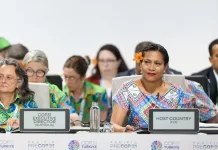
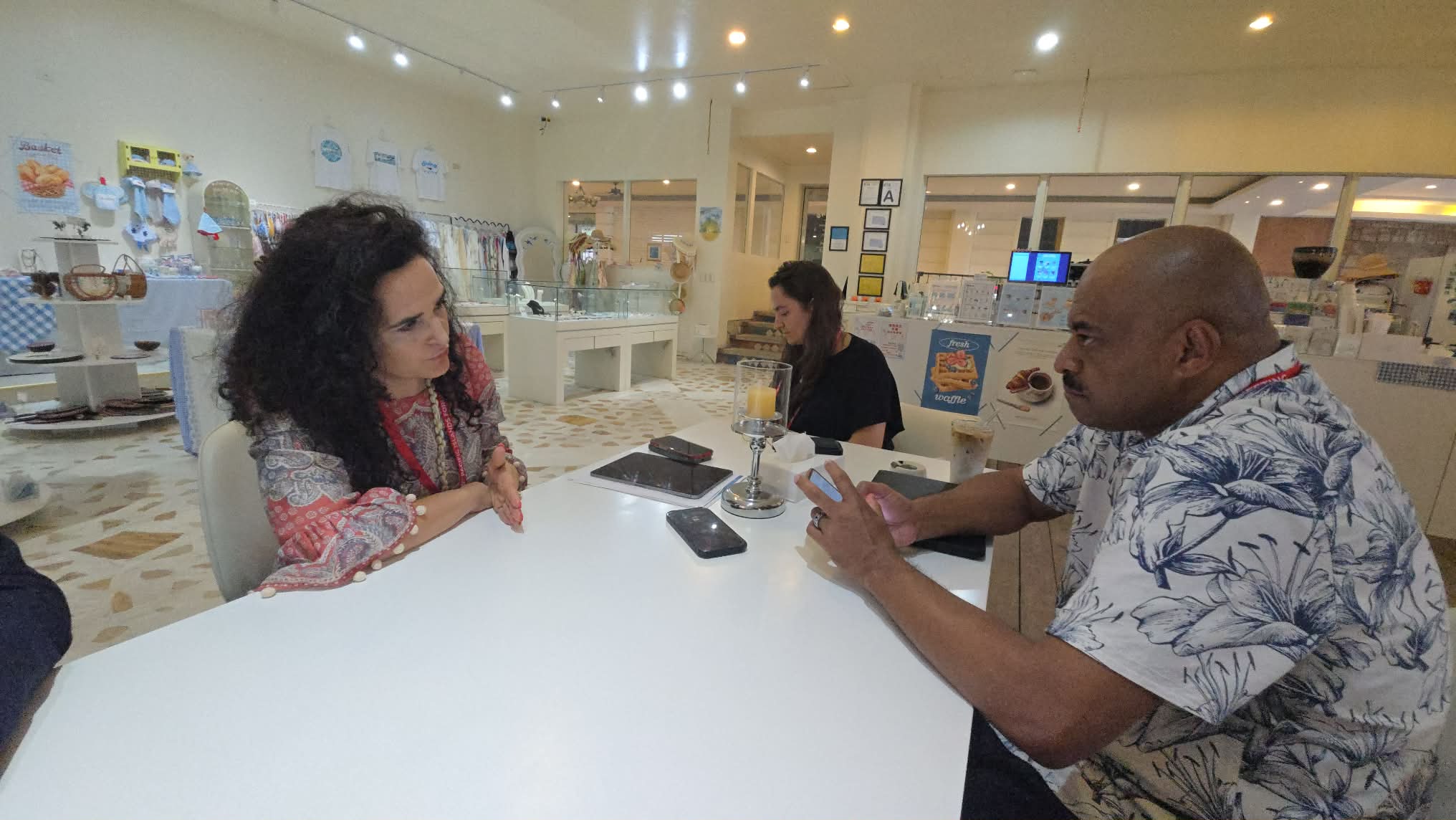
GCF Executive Director, Mafalda Duarte told PACNEWS in an interview that Pacific leaders visiting Tuvalu ahead of COP31 would see the results of GCF-backed investment through the Tuvalu Coastal Adaptation Project (TCAP).
“The project that they are going to see in Tuvalu is our project, is a highly successful project, TCAP.
“It’s a land reclamation, a very successful project,” Duarte said.
Duarte said the project demonstrated that when countries and development partners have sufficient ambition, climate finance can translate into practical results.
“What this shows is that when there is ambition, there can be delivery,” she said.
Duarte said the GCF had a range of financial instruments available to Pacific countries, including grants, loans and equity.
“GCF is interesting in that sense because we have all of the instruments,” she said.
The Fund can support countries with institution-building, capacity development, policy development and project preparation before providing financing for implementation.
“Even here in the Pacific, actually 84 percent of what we do is grants.
“But we can do all other structures,” Duarte told PACNEWS
She said the GCF was also examining new financing models for the Pacific, including an equity fund and debt financing.
“We are looking at an equity fund right now for Pacific. We are looking at also debt. So we have all of that flexibility,” Duarte said.
However, Duarte acknowledged that implementing large climate portfolios remained difficult for Pacific governments because of limited human and institutional capacity.
“We know that capacity is constrained,” she said.
She said Pacific governments often had to manage the same responsibilities as much larger administrations but with far fewer people.
Duarte said her own experience working as a civil servant in a developing country had given her an appreciation of capacity constraints, but her engagement with Small Island Developing States(SIDS) had changed her perspective further.
“I really feel for them,” she said.
GCF Regional Director for Asia and the Pacific, Hemant Mandal said implementation was critical because committed climate finance would not translate into actual investment unless projects were delivered.
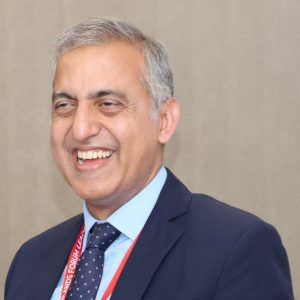
“If implementation doesn’t happen, money doesn’t come in,” Mandal told PACNEWS
He said the GCF had committed about US$1 billion to the Pacific, which was expected to leverage around US$2.4 billion in total investment.
Mandal said the Fund’s financing was largely concessional, including grants, highly concessional loans and junior equity designed to attract additional investment.
“From our perspective, implementation becomes critical because the need is so big that we need all kinds of financing.
“It’s not that you only do private sector or public sector, you need all kinds,” he said.
Mandal said the Pacific’s heavy reliance on public sector financing also highlighted the region’s capacity constraints.
With about 97 percent of climate finance currently flowing through the public sector, he said there was a need to increase private sector participation.
“We need to expand the private sector to do the work,” he said.
But Mandal said private investment alone would not solve the problem and that different financing instruments would be required.
Mandal said the GCF was also looking beyond individual projects to develop models that could continue operating after initial climate finance ended.
“We need sustainability to happen.
“For that, we need other sources of funding after these projects are done to continue the work and to expand the work,” he told PACNEWS.
He said the GCF was examining potential investments in areas including forestry and reefs, while also looking at ways to create private sector opportunities through adaptation projects.
“Even in adaptation, we’re trying to come up with different models that will be sustainable, financially and technically,” Mandal said.
He cautioned that some projects under consideration had not yet been approved by the GCF Board and could not be discussed publicly.
GCF Sub-Regional Head for the Pacific and Asian SIDS, Zarak Khan said the impact of GCF investment should also be measured by changes in people’s lives, not only by the amount of money committed.

“Sometimes we often forget, the numbers are obviously very critical.
“But sometimes when you go beyond the numbers, you look at it that this is not just climate projects that we’re deploying and delivering in the Pacific.”
“Many of our projects are transformational and life-changing in terms of changing the lives of Pacific Islanders,” Khan told PACNEWS
Khan highlighted the Viria Water Treatment Plant in Fiji, funded by the GCF in partnership with the Asian Development Bank (ADB), which he said would provide piped clean water to hundreds of thousands of people in the Suva-Nausori corridor.
He also highlighted the Nauru Port Project, funded in partnership with ADB, which he said would create the country’s first world-class port facility.
Khan said these projects demonstrated how climate finance could deliver broader development benefits while strengthening resilience in Pacific countries.
Duarte said demonstrating results would also help build confidence that climate finance could deliver solutions that could be expanded across the region.
“It’s important in these processes to demonstrate results, to give confidence and hope that we can accomplish this and demonstrate solutions that can be scaled up.
“We actually have a number of projects that we hope that also once they are successful, they can be replicated across the Pacific,” she said.