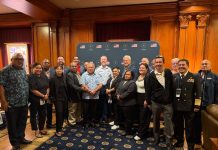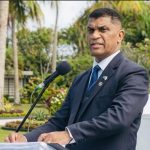
New Zealand Foreign Minister Winston Peters has reaffirmed his country’s support for stronger Pacific parliamentary cooperation and increased women’s representation, telling Pacific women parliamentarians their role has never been more important as the region faces growing challenges.
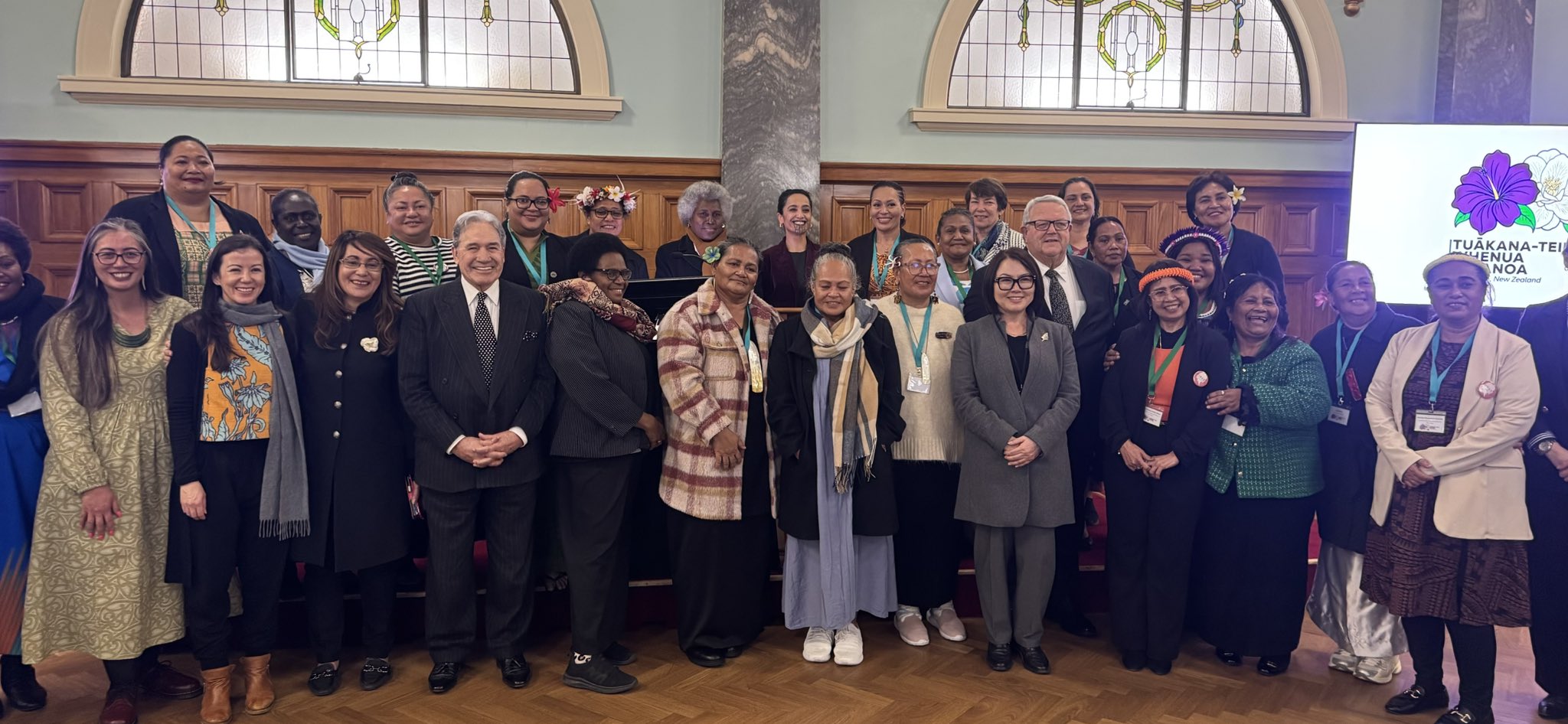
Welcoming ministers, members of parliament and representatives from across the Pacific to Wellington, Peters said the gathering provided an opportunity to strengthen regional relationships and cooperation.
“It is a pleasure to welcome women parliamentarians and other Pacific representatives to Wellington for this chance to share experiences, learn from one another, and strengthen the relationships between us that underpin our Pacific cooperation,” he said.
He said New Zealand was proud to support Pacific parliamentary cooperation through its overseas development programme and acknowledged the New Zealand Speaker’s support for the initiative.
Peters said democratic governance, the rule of law and accountability remained values shared across the Pacific.
“Democratic governance, the rule of law, and accountability to our citizens are core values that bind us all together in our Pacific Blue Continent.”
He described the Pacific as the central focus of New Zealand’s foreign policy.
“The Pacific is the central focus of our foreign policy. It’s New Zealand’s front yard and we are linked through our DNA, our history and cultural ties.”
Peters said New Zealand had visited all Pacific Islands Forum member countries during the current parliamentary term to hear regional views and discuss shared priorities.
“That’s why we are proud that in this three-year parliamentary term we have travelled to all Pacific Islands Forum countries for talanoa, to hear your views and to discuss our collective aspirations and problems,” he said.
Peters said the Pacific faced a range of challenges that required strong regional cooperation.
“Make no mistake, the region in which we live is beset with challenges – heightened strategic competition, food and fuel security, illicit drugs, natural disasters – issues that can only be addressed with strong regional cooperation.”
“As such, the role we all perform as representatives of our people has never been more important, nor urgent,” he said.
Peters acknowledged the challenges faced by elected representatives, particularly women, including online harms, security concerns and public scrutiny.
He said increasing women’s representation in parliament was an ambition New Zealand supported.
“Our representatives need to represent the communities from which they come, and increased women’s representation is an ambition we support.”
“The presence here of so many women parliamentarians from across the region is significant,” he said.
Peters also praised the contribution of women in political leadership.
“Let us tell you that in our experience, men are very good at talking with and past each other, present company excluded. Women, in contrast, get things done, so the more of you represented in your parliaments is, we think, a very good thing,” he said.
Looking ahead, Peters noted that Pacific leaders would meet in Palau in a few weeks for the Pacific Islands Forum Leaders Meeting.
“The Forum remains the region’s premier political institution and an important expression of Pacific regionalism.”
Peters said New Zealand would chair the Pacific Islands Forum in 2027 and called on Pacific representatives to help shape the agenda.
“We need your input into your country’s priorities, so that we can faithfully represent the views of all our Pacific family,” he said
Peters wished participants well for the meeting and said it would strengthen relationships and regional cooperation across the Pacific.