


New Zealand and Fiji have renewed their Duavata Partnership for the next five years, committing to closer cooperation on democracy, economic growth, security, social development, and climate resilience under a refreshed framework covering 2026 to 2030.
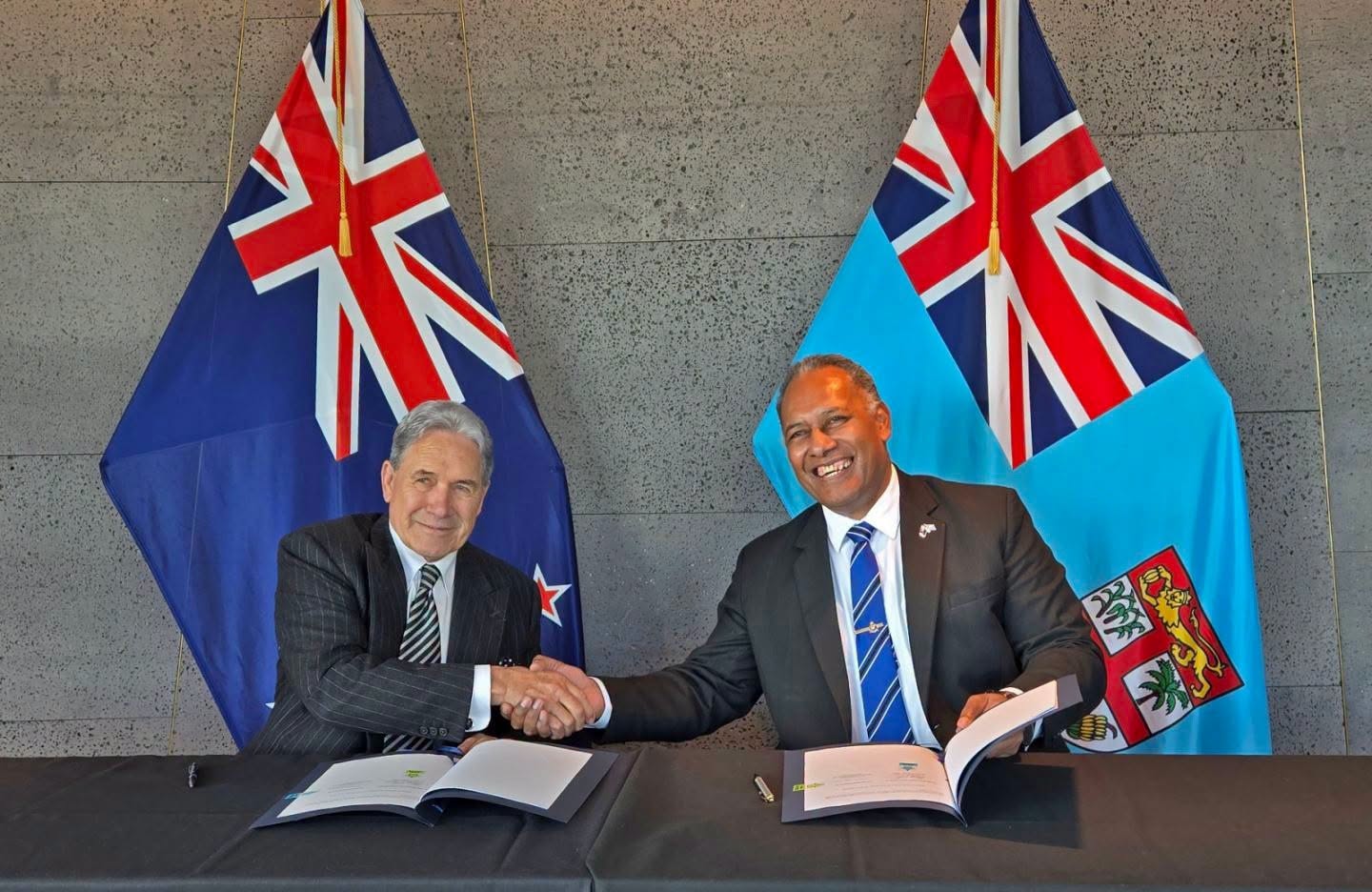
Signed in Auckland on 16 July by New Zealand Foreign Minister Winston Peters and Fiji’s Minister for Foreign Affairs and External Trade Sakiasi Ditoka, the agreement builds on the first Duavata Partnership, which ran from 2022 to 2025.
The partnership reaffirms the two countries’ commitment to strengthening their long-standing relationship, recognising their shared Pacific identity, growing economic links, and common interest in a safe, stable and resilient Blue Pacific region.
The renewed agreement identifies five priority areas for cooperation: partnership, democracy and values; economic resilience; peace and security; social well-being; and climate and disaster resilience.
Under the economic agenda, both governments reaffirmed their ambition to achieve NZ$2 billion (US$1.16 billion) in two-way trade by 2030, while expanding trade, investment, tourism, labour mobility and private sector cooperation.
On security, the two countries pledged to strengthen cooperation on maritime security, defence, policing, border management, cyber security, intelligence sharing and humanitarian assistance while supporting the Pacific as an Ocean of Peace.
The agreement also commits both governments to advancing gender equality, improving access to health, education and housing, supporting civil society, and expanding scholarship opportunities in areas of critical skills shortages.
Climate change remains a central pillar of the partnership, with both countries recognising it as “the single greatest threat to the livelihoods, security, and well-being of Pacific people.” The agreement includes commitments to renewable energy, climate finance, disaster preparedness, biodiversity protection and climate resilience.
To implement the partnership, New Zealand and Fiji agreed to hold regular ministerial meetings, annual high-level consultations and coordinate long-term development assistance while remaining mutually accountable for delivering agreed outcomes.