


Pacific Island countries have adopted a regional strategy aimed at improving access to climate finance, strengthening institutions and developing new financing mechanisms to help meet the region’s growing climate needs through to 2030.
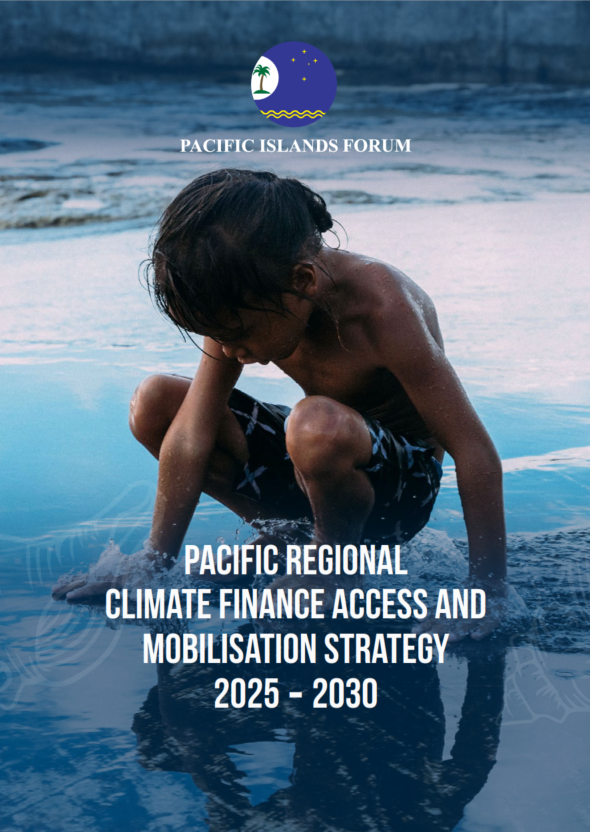
The Pacific Regional Climate Finance Access and Mobilisation Strategy 2025-2030 (CFAMS) says it is designed to help Pacific Island Countries (PICs) navigate the complex climate finance system by improving their ability to access, manage and effectively use funding for mitigation, adaptation, and loss and damage initiatives.
It was developed by the Pacific Islands Forum Secretariat and endorsed by Pacific Island Forum Economic Ministers at their Special Meeting in March 2025.
The strategy acknowledges that Pacific countries face limited institutional capacity, complex funding mechanisms and a growing need for financial resources to respond to climate change, while outlining measures to strengthen technical capacity, improve access to finance, enhance management of climate funds and promote innovative financing mechanisms.
According to the report, Pacific Island countries received US$3.4 billion in climate finance between 2010 and 2021, with 59 percent directed to adaptation, 31 percent to mitigation and 10 percent to cross-cutting projects.
More than half of the funding came from multilateral development banks.
The report estimates the region requires US$13.2 billion in climate finance by around 2030, noting that only about a quarter of that amount has been mobilised over the past decade.
It says the gap reflects insufficient climate finance to meet the region’s adaptation and mitigation needs and identifies complex application processes, stringent eligibility requirements and limited proposal development capacity as major barriers to accessing funding.
It also notes that much of the climate finance received has been delivered through short-term, project-based approaches that provide little basis for long-term planning.
The strategy’s objectives include improving access to international and regional climate finance, strengthening institutional capacity, promoting innovative financing options such as debt-for-climate swaps, blue and green bonds, strengthening regional cooperation, integrating climate finance into national development planning, improving accountability, supporting resilience and low-carbon development, and ensuring gender-inclusive approaches.
Among its targets, the strategy aims to simplify access to international climate funds, help Pacific countries secure direct accreditation to major climate funds, establish new public-private partnerships, strengthen climate finance management systems and explore innovative financing tools, including climate insurance, carbon pricing and debt-for-climate swaps.
The strategy says the Pacific Islands Forum Secretariat will coordinate implementation between 2025 and 2030, working with the Secretariat of the Pacific Regional Environment Programme, the Pacific Community, United Nations agencies, multilateral development banks and other partners through an expanded regional Climate Finance Working Group.