
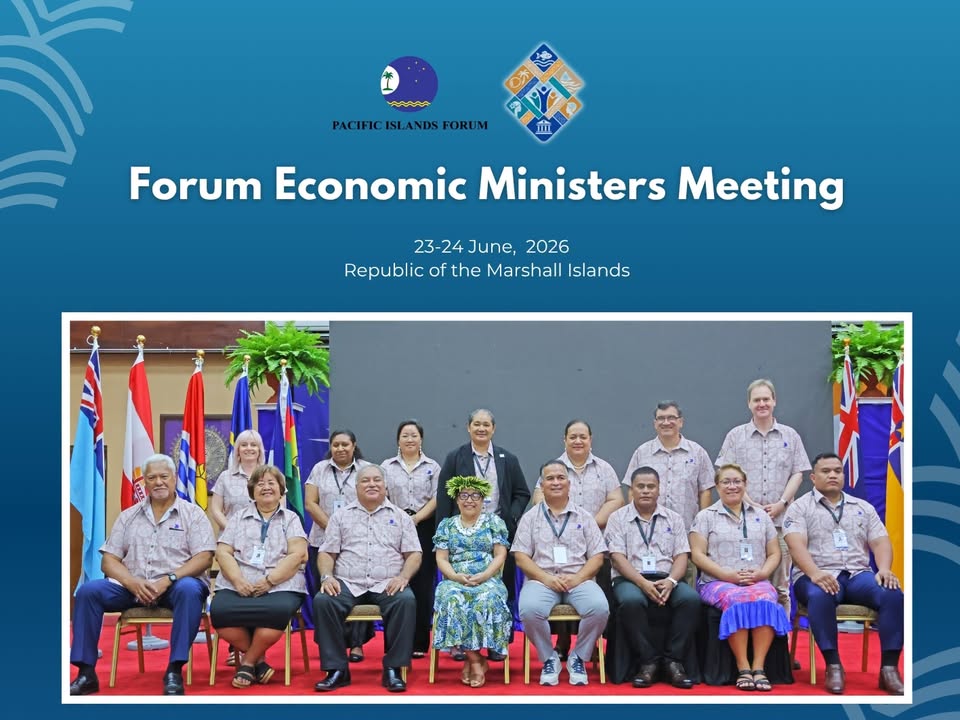
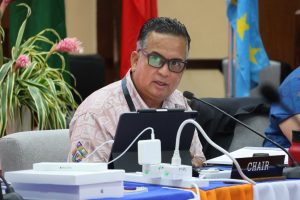
Pacific countries are not placing significant confidence in the emerging Iran-United States agreement and will continue preparing for fuel market volatility as uncertainty in global energy supplies persists, Marshall Islands Finance Minister David Paul says.
Responding to a question at the Forum Economic Ministers Meeting (FEMM) press conference on how developments in the Strait of Hormuz and negotiations between Iran and the United States are influencing Pacific decision-making, Paul said there is still too much uncertainty for Pacific nations to change course.
“Well, first of all, we all know that the MOU that was concluded between Iran and the United States, that’s basically an agreement to negotiate an agreement.”
“Now, let me repeat that. It is an agreement to start negotiating an agreement,” the FEMM Chair said.
Paul said it was too early to draw conclusions from the memorandum of understanding because hostilities continued after it was signed.
“I really cannot say too much on that because just right after the MOU was signed, there were continual hostilities. There were continually changing, blow by blow,” he said.
He said small island countries should not rely on the agreement as a sign that the crisis is nearing an end.
“From the perspective of small island countries like the Marshalls or the Pacific in general, we shouldn’t take too much stock on that one because it does not give you any certainty at all,” he emphasised.
Paul said Pacific countries remain highly exposed because they sit at the end of global fuel supply chains and warned that fuel prices would remain unstable while uncertainty persists in global markets.
“We continue to recognise the fact that we are at the end of the global supply chain when it comes to the supply of fuel in general.”
“As long as there is so much uncertainty in the market, prices are going to continue to be very volatile,” he said.
Paul said governments must continue implementing measures aimed at reducing energy consumption and limiting exposure to global fuel markets.
“As responsible leaders and stewards of this crisis, we have to continue to be cautious and continue to implement the same measures that we’ve been implementing.”
“We have to make sure that we cut down on energy consumption, minimise utilisation of electricity within the economy, minimise consumption of gasoline, diesel and other products that continue to be at the mercy of the global supply chain,” he stressed.
Paul acknowledged that predicting the outcome of the crisis remains difficult.
“Your guess is as good as ours with respect to the environment and the status of the crisis that we are all faced with.”
He said Pacific governments would continue to monitor developments closely and maintain existing response measures.
“We will continue to monitor it.”
“Yes, we will continue to follow the same formula that we would continue to implement while we weather the storm.”
“That’s where we are as far as our continued monitoring and response to the current energy crisis,” said Paul.