
The Secretariat of the Pacific Regional Environment Programme (SPREP) has urged Pacific communities to begin preparing for the impacts of El Niño after the World Meteorological Organisation’s Pacific Regional Climate Centre declared that an El Niño event is now underway.
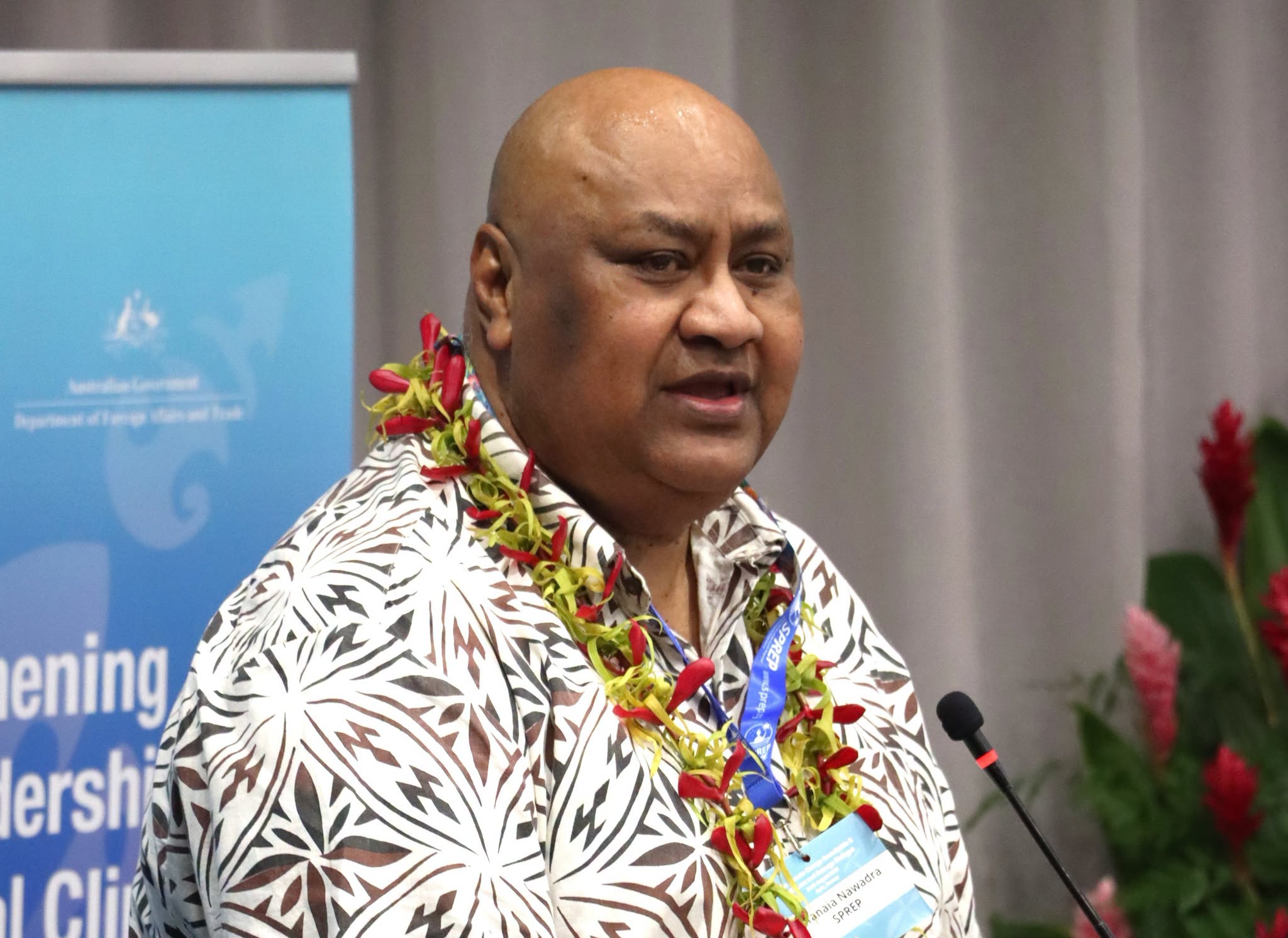
In a message to Pacific Islanders, SPREP Director General Sefanaia Nawadra said understanding the climate phenomenon and preparing early would be critical for protecting families and communities in the months ahead.
Nawadra said SPREP, as one of the node members of the World Meteorological Organisation’s Pacific Regional Climate Centre, joined partners in declaring on 12 June 2026 that an El Niño event is underway.
He said many Pacific Islanders are now asking what steps they should take to prepare and reduce risks.
“Knowledge empowers, and preparation essential.”
“I’m writing this column not only as the Director General of the Secretariat of the Pacific Regional Environment Programme (SPREP) but as a parent, and a Pacific Islander brought up in the islands knowing full well the impacts that weather and climate play in our lives and communities,” he said.
Nawadra said the impacts of El Niño could be significant across the Pacific and would vary from country to country.
“The impacts of El Niño can be far-reaching, making it critical that we understand the risks, stay informed, and take practical steps to prepare for the months ahead.”
He explained that the Pacific climate is influenced by the El Niño-Southern Oscillation (ENSO), which has three phases: Neutral, La Niña and El Niño.
According to Nawadra, the El Niño phase occurs when trade winds weaken, causing ocean temperatures in the central and eastern Pacific to become warmer than normal.
“SPREP and its RCC partners have declared that we are now in an El Niño phase. But what does this mean?”
He said countries across the Pacific would experience different impacts depending on their location and geography.
“El Niño will affect countries differently across our Pacific region based on size and geographic location. While some areas may experience drought, others may face heavy rainfall and flooding.”
Nawadra said twenty Pacific Small Island States located in the eastern and central Pacific face an increased likelihood of below-normal rainfall and drought conditions.
These include American Samoa, southern Cook Islands, Commonwealth of the Northern Marianas, Federated States of Micronesia, Fiji, southern French Polynesia, Guam, Palau, Papua New Guinea, Pitcairn Islands, New Caledonia, Niue, northern Marshall Islands, Samoa, Solomon Islands, southern Tokelau, Tonga, southern Tuvalu, Vanuatu, and Wallis and Futuna.
He warned that dry conditions could lead to water shortages, drought, lower crop production, increased wildfire risks, and added pressure on food security and livelihoods.
“These dry conditions may lead to water shortage and drought, reduced crop production and yield, increased risks of wildfires, and added stress on food security and livelihoods.”
Nawadra urged families and communities in affected countries to act immediately.
“For families and communities in these countries, preparation must begin now to minimise the impacts of El Niño.”
“You can do this by conserving your water usage and investing in water tanks for your homes and ensuring they are filled,” said Nawadra.
He also encouraged farmers and fishers to prepare for changing conditions.
“During this time, our farmers can adjust planting schedule and use drought-resistant crops as we head towards a likely prolonged dry period.”
“Fishers can heed the advisories from their national and regional fisheries agencies as warmer ocean temperatures will lead to the bleaching of coral reefs, impacting food security and livelihoods,” he said.
Nawadra noted that countries in the western Pacific would usually face lower sea levels during El Niño, exposing coral reefs to direct sunlight and warmer shallow waters.
He also warned that elderly people and young children could become vulnerable during periods of extreme heat.
“The global fuel crisis happening at the backdrop of an El Niño event will have severe compounding impacts on cooling systems reliant on power to combat prolonged extreme temperatures.”
“I encourage parents to source other forms of energy, if possible, to provide the required cooling and power supply if this fuel crisis continues,” he explained.
Nawadra said cooler temperatures are also associated with El Niño in some western Pacific countries.
“Some countries are already facing cooler temperatures than normal with the highland of Papua New Guinea experiencing frost in June.”
“I encourage us all to keep our elderly, and our children warm, especially those with respiratory illnesses.”
In other Pacific Small Island Developing States, including northern Cook Islands, far eastern Federated States of Micronesia, northern French Polynesia, Kiribati, southern Marshall Islands, Nauru and northern Tuvalu, Mr Nawadra said El Niño is expected to bring above-normal rainfall.
“This may result in the increased risk of flooding, coastal inundation, water contamination, and damage to infrastructure.”
He warned that increased rainfall could also affect public health.
“El Niño will also impact their health systems, with the increase in rainfall bringing about higher chances for water-borne diseases such as typhoid fever, and illnesses caused by mosquitoes, such as dengue fever.”
For communities in those countries, he recommended measures to reduce risks from flooding and contamination.
“For families and communities in these countries, it is important to prepare by ensuring that water storage areas are safe and free from risks of contamination from flood waters.”
“Prepare an emergency kit you can grab-and-go if and when needed.”
Nawadra also highlighted the importance of evacuation planning.
“Having an evacuation plan in place is also important for families and communities in low-lying areas in the case of flooding.”
“All family members or members of your community need to be aware of what to do, where to go, and how to get there.”
He said communities should identify evacuation areas, routes and triggers for evacuation decisions before emergencies occur.
Nawadra also warned that El Niño would influence the 2026-27 tropical cyclone season.
“El Niño will also affect the 2026-27 Tropical Cyclone season for the Southwest and northwest Pacific.”
He said countries in the central and eastern Pacific would face an elevated risk of tropical cyclone occurrence, while countries in the western Pacific would likely experience decreased cyclone activity.
“Families and communities are encouraged to strengthen their homes and infrastructure well before the tropical cyclone season, which typically runs from November to April.”
Despite the risks,Nawadra said some Pacific countries could also benefit from the event.
“While most of the impacts have been perceived as negative, and there may be much doom and gloom ahead, there are also positive impacts that the El Niño event will bring about for some of our Pacific Island countries.”
He said Kiribati, Nauru and Tuvalu could experience higher tuna catches due to warmer ocean temperatures attracting tuna stocks.
“For example, fishers in Kiribati, Nauru, and Tuvalu can expect higher tuna catch during El Niño, as the ocean temperatures around them will be warmer, attracting the tuna stocks to migrate there.”
He also said those countries could benefit from increased rainfall that would help replenish water supplies.
“These countries will now also receive more rainfall than normal and will be a good chance for them to fill up their water reserves and water tanks.”
Nawadra emphasised that El Niño is a slow-onset event, giving communities time to prepare.
“El Niño is a slow-onset event. This means that the impacts will not be felt immediately, but rather slowly over time.”
“This also means that we have time to prepare our families and communities for the impacts it will bring, but we must do so now,” said Nawadra.
He also urged Pacific Islanders to rely on official information from their national meteorological services and disaster management agencies.
“They will receive the latest science on El Niño, and the prediction for what the next few months will look like for our region.”
“They are our go-to source for all official information on El Niño, and how it will impact your country specifically.”
“I urge us all to heed the advice of our National Meteorological Service, keep an eye out for their latest updates, and use this information to prepare to protect our families and communities”
“An informed, empowered and prepared Pacific is a safer and more resilient Pacific,” said Nawadra.