
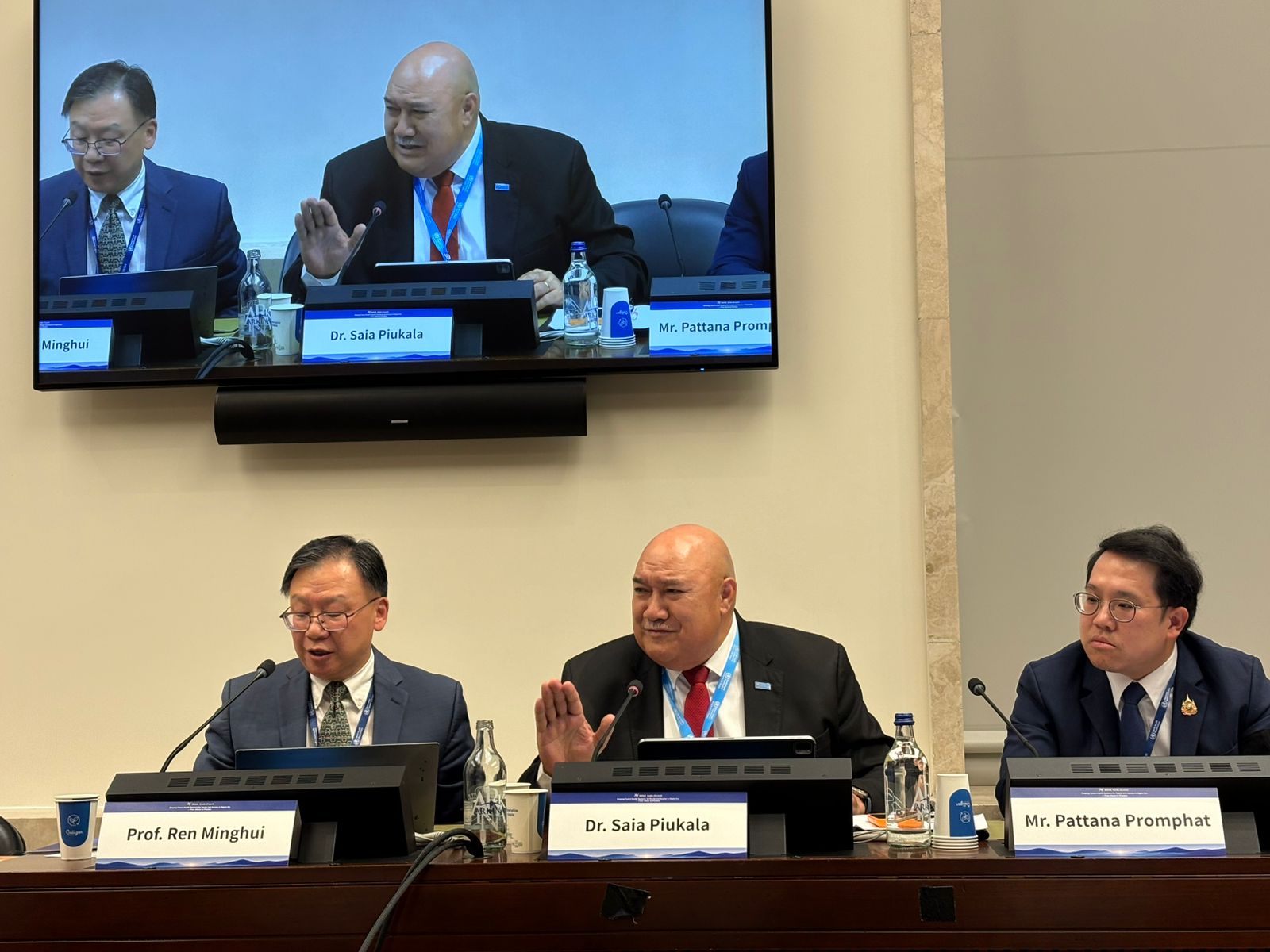
World Health Organisation (WHO) Western Pacific regional director Dr Saia Ma’u Piukala has called for urgent investment in digital health and artificial intelligence to close healthcare gaps facing small island nations, saying geography should no longer determine access to medical care.
Speaking at a World Health Assembly (WHA) side event in Geneva focused on healthcare in small states, Dr Piukala said too many Pacific people were still forced to travel overseas for specialist treatment because of where they live.
“There’s a simple truth that small island developing states in the WHO Western Pacific region understand deeply: geography should never be destiny,” Dr Piukala said.
The event was co-organised by Malta, Seychelles and Maldives.
Drawing on his experience as a doctor and surgeon in Tonga, Dr Piukala said patients in small island states often faced major barriers to accessing specialist healthcare.
“A child with a congenital heart defect. A mother facing a possible cancer diagnosis. An elder with a neurological illness,” he said.
“Too often, their only option is to travel overseas – far from family – just to access the care they need. And many cannot.”
Dr Piukala said digital innovation was now creating opportunities to transform healthcare access across the Pacific and other small island nations.
He higlighted telemedicine, artificial intelligence and digital health wallets as key tools already changing healthcare delivery.
“Across the Western Pacific, health workers in remote islands are connecting in real time with specialists in cities like Manila, Sydney and Auckland,” he said.
“What once required a medical evacuation can now begin with a simple consultation.”
Dr Piukala said telemedicine was becoming critical for remote communities.
“In this context, telemedicine is not a convenience. It’s the difference between a diagnosis and a missed opportunity.”
He also highlighted the growing role of artificial intelligence in medical diagnostics, including analysing X-rays, screening for diabetic eye disease and detecting abnormalities in pathology samples.
“These tools don’t replace doctors. They bring specialist insight to the frontlines of care,” he said.
Dr Piukala said digital health wallets could also improve continuity of care for Pacific patients seeking treatment overseas by allowing secure access to complete medical records through mobile devices.
“Care can begin immediately. Continuity of care is preserved – even across oceans,” he said.
However, he warned that digital transformation must be supported by strong governance, data protection and equal access.
“Because digital transformation mustn’t widen inequalities – it must close them.”
Dr Piukala said the digital era offered a major opportunity to improve healthcare access for remote and vulnerable communities.
“The digital era offers a unique chance to close the gap between where people live and the care they deserve,” he said.
“So let’s be bold. Let’s act with purpose. And let’s work together to expand what’s possible for every community,” Dr Piukala said.