


The United Nations General Assembly Wednesday adopted by overwhelming support a landmark resolution welcoming the Advisory Opinion of the International Court of Justice (ICJ) on the obligations of States in respect of climate change, marking a historic moment for international law, climate justice, and multilateral cooperation.
The resolution, introduced by Vanuatu on behalf of the Core Group of States – Barbados, Burkina Faso, Colombia, Jamaica, Kenya, Marshall Islands, Micronesia (Federated States), the Netherlands, Palau, Philippines, Sierra Leone, Singapore – leading the initiative, follows the Court’s unanimous 2025 Advisory Opinion clarifying that States have binding obligations under international law to protect the climate system and that failures to take appropriate action may carry legal consequences.
The adopted resolution welcomes the Opinion, calls on States to act consistently with their obligations under international law and the Paris Agreement, and establishes follow-up through a report of the Secretary-General and continued consideration by the General Assembly.
Speaking following the adoption, Ralph Regenvanu, Vanuatu’s Minister of Climate Change, said: “Today the international community affirmed that climate change is not only a political and economic challenge, but a matter of law, justice, and human rights. For vulnerable countries like Vanuatu, this resolution is deeply significant because it confirms that no State is above its obligations to protect people, future generations, and our planet. This is a victory for multilateralism, for the rule of law, and for communities on the frontlines of the climate crisis.”
The ICJ Advisory Opinion was requested by the General Assembly in March 2023 through resolution 77/276, following a global campaign initiated by Pacific youth and championed by Vanuatu. The Court’s Opinion clarified that obligations relating to climate change arise not only under the UN climate treaties, but also under broader international law, including human rights law, the law of the sea, and customary international law.
Ambassador Odo Tevi, Permanent Representative of Vanuatu to the United Nations, said: “The General Assembly has now taken the institutionally appropriate step of welcoming the Court’s guidance and committing to act upon it. This outcome matters enormously for the credibility of international law and the multilateral system. The Court spoke unanimously, and today the Assembly demonstrated that the United Nations remains capable of responding to legal clarity with seriousness, unity, and good faith.”
During the negotiations, the Core Group worked extensively with all regional groups and delegations to produce a balanced, cross-regional resolution grounded firmly in the Court’s findings and in agreed international frameworks, including the UNFCCC and the Paris Agreement.
Lee-Anne Sackett, Vanuatu’s Special Envoy for Climate Justice, said: “This resolution sends a powerful message to vulnerable communities everywhere that the United Nations will not look away from the legal and human consequences of the climate crisis.
The ICJ has provided a legal blueprint for climate action and climate justice. Today, Member States chose to stand behind that blueprint and reaffirm that the rule of law must guide the global response to climate change.”
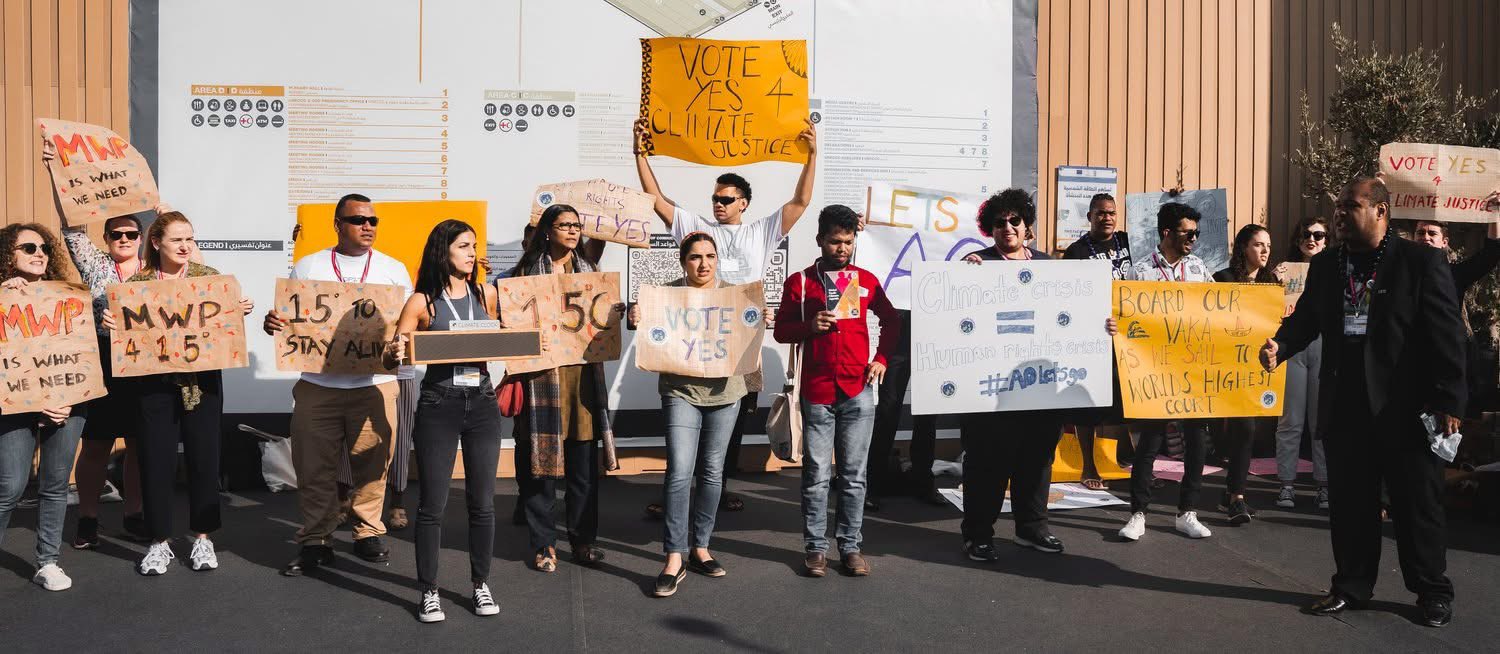
Vanuatu also paid tribute to the Pacific and global youth movement whose advocacy led to the request for the Advisory Opinion and helped sustain momentum throughout the process.
“The vision and determination of young people made this possible,” Minister Regenvanu added.
“From classrooms in the Pacific to the Peace Palace in The Hague, this movement has shown what principled leadership, and collective action can achieve.”
Vanuatu and the Core Group expressed appreciation to all 141 Member States that co-sponsored or supported the resolution and called for continued engagement in the implementation and follow-up process.